
In short
A pre-wedding shoot for camera-shy couples usually starts with simple movement-based prompts and a slower warm-up period rather than posed shots straight away, giving both people time to settle in front of the camera. Most of the self-consciousness fades within the first part of the session once the couple has a few easy, low-pressure moments to work through together.
- Feeling self-conscious in front of a camera is common and not something to worry about beforehand.
- Simple movement-based prompts, like walking or talking, help couples ease in before formal posing begins.
- A short warm-up period at the start of the shoot makes a noticeable difference to how relaxed later shots look.
- Tell your photographer directly if you are nervous, since this changes how they guide you.
- Choosing a comfortable location and outfit also reduces self-consciousness before the shoot even begins.
Why feeling self-conscious in front of a camera is common
Most people are not used to being photographed continuously for an extended session, so it is entirely normal to feel stiff or unsure what to do with your hands and expression in the first few minutes. This is especially true for couples who are not used to public displays of affection or who feel that a camera pointed directly at them changes how natural they can be, even in a private setting with no other onlookers present.
Recognising that this reaction is common, rather than a sign that the shoot is going badly, helps take some of the pressure off before you even begin, and most photographers expect to spend the first stretch of a session easing a couple into it.
Posing guidance techniques that help couples look natural
Rather than asking a couple to hold a fixed pose, many photographers give simple prompts like walking together, whispering something to each other, or reacting to a specific question, which produces more natural expressions than a static pose ever could. These prompts give the couple something specific to do, which shifts attention away from being watched and toward the interaction itself, and this is usually where the most natural expressions show up.
A good photographer also adjusts posing guidance based on how the couple responds, offering more structure to those who want clear direction and lighter prompts to those who prefer to move naturally, checking in occasionally to see what is working best.
Warm-up moments before the main shots begin
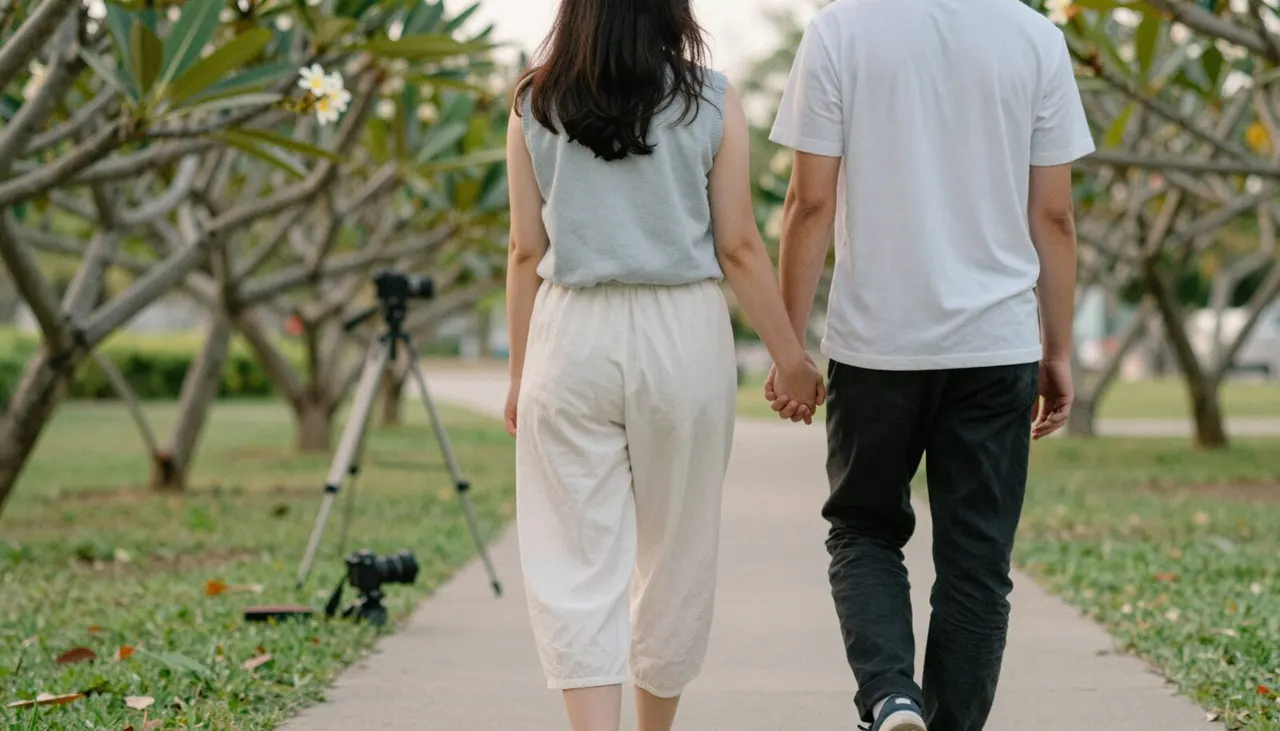
Many photographers start a session with a few low-pressure shots, such as walking shots or candid conversation, before moving into more deliberate posing later in the shoot. This warm-up period gives the couple time to get used to the camera's presence without the added pressure of trying to achieve a specific look immediately, and it also gives the photographer a chance to see how the couple naturally moves together.
By the time the more formal or detailed shots come around, later in the session, couples have generally settled into a rhythm that makes the remaining time far more comfortable than the opening minutes.
What to tell your photographer if you are nervous
Simply telling your photographer that you feel nervous or unsure in front of a camera, even in a short message before the shoot, gives them useful information to adjust how they guide the session, whether that means more specific direction, more warm-up time, or simply more encouragement along the way. Photographers who shoot pre-wedding sessions regularly are used to working with couples who feel this way and generally have techniques ready to help, so there is no need to feel like an unusual case.
It also helps to mention specific concerns, such as not knowing what to do with your hands or feeling unsure about a particular angle, so the guidance can be targeted rather than general, which usually resolves the specific concern faster than generic reassurance would.
Choosing a location and outfit that help you feel at ease
A location that feels comfortable and familiar, rather than one chosen purely for its visual appeal, can make a real difference to how relaxed a couple feels during the shoot from the very first few opening minutes. Similarly, an outfit you feel confident and comfortable moving in tends to translate into more natural body language than one that feels unfamiliar or restrictive, particularly for shots that involve walking or movement.
Discuss both location and outfit choices with your photographer in advance, since they can often suggest options that balance a good visual result with your own comfort during the session, particularly for couples who already feel unsure about being photographed for an extended period of time.
If you are feeling unsure about your upcoming pre-wedding shoot, mention it when you get in touch via pre-wedding so your session can be planned with this in mind, and see our guide on pre-wedding photoshoot locations for ideas that might suit a more relaxed session.