
In short
Some Chinese families in Singapore use the lunar calendar, together with the Chinese almanac or a geomancer's reading, to identify dates considered favourable for a wedding based on the month, the day and sometimes the couple's own birth details. Other families place little or no weight on this and choose a date on practical grounds instead. Where it matters, it is usually raised early by parents or an elder, and it works alongside, not instead of, venue and vendor availability.
- The lunar calendar shifts each year relative to the solar calendar, so dates considered favourable also shift from year to year.
- Consulting it usually involves the Chinese almanac or a geomancer, and is generally led by parents or an elder rather than the couple alone.
- Not every family observes this, so it is worth asking directly rather than assuming either way.
- Lunar considerations still need to be checked against venue and vendor availability before a date is confirmed.
What the lunar calendar factors into date selection
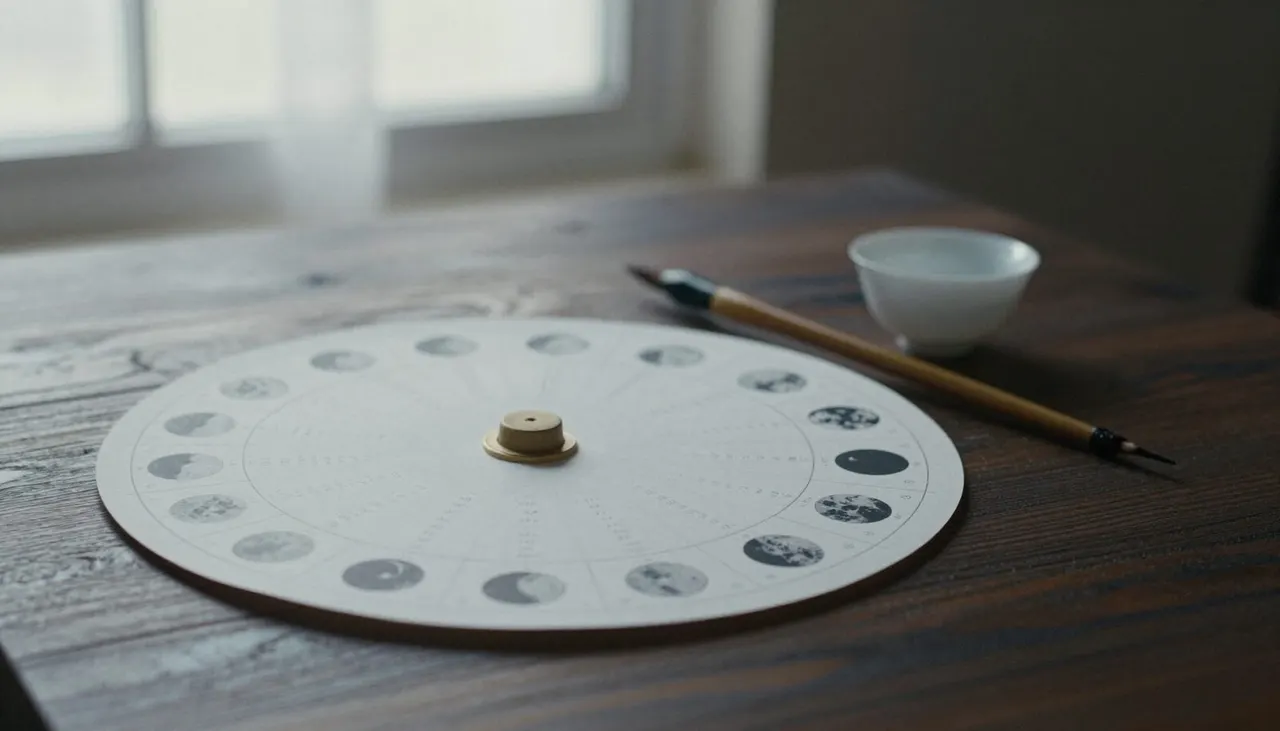
The lunar calendar tracks months by the cycles of the moon rather than the fixed months of the solar calendar most people use day to day, which is why lunar dates fall on different solar dates each year. For some Chinese families in Singapore, certain months and days within the lunar calendar are considered more or less favourable for a wedding, based on tradition passed down through the Chinese almanac.
This sits alongside other considerations covered in our guide on auspicious dates and peak wedding season, such as avoiding the seventh lunar month, commonly called the Hungry Ghost month, which many families who follow lunar considerations also observe. The two ideas are related but not identical: the lunar calendar is the underlying system, while specific customs like avoiding the seventh month are one application of it.
How families typically consult it before deciding
Where a family wants to use the lunar calendar to help choose a date, this is usually done through the Chinese almanac or by consulting a geomancer, who may also take the couple's birth details into account. This process is typically led by a parent or elder rather than the couple, and it often happens early in planning, sometimes before a venue has even been shortlisted.
If you are unsure whether your own family expects this step, it is worth asking directly rather than guessing. Some families treat it as an important part of the process, while others are comfortable leaving date selection entirely to the couple's own preference and practical scheduling.
Balancing lunar considerations with venue availability
A date considered favourable on the lunar calendar does not automatically mean it will be easy to book. Dates that many families see as favourable in the same year tend to attract interest from several couples at once, which can make popular venues and vendors harder to secure on those specific days.
Because of this, it is common for couples to work with a short list of a few acceptable dates rather than a single fixed one, giving some flexibility if the first choice is unavailable at a preferred venue. Some families also separate the ROM solemnisation date from the banquet date, allowing the legal ceremony to follow a lunar-favoured date more closely while the celebration is scheduled around venue availability.
Where to start if this is new to you
If neither you nor your partner grew up with this practice, the simplest starting point is a direct conversation with both families about whether it matters to them, before you get attached to a particular venue or season. Some families will want to involve a geomancer or refer to the Chinese almanac themselves, while others may be satisfied with a general sense of dates to avoid, such as the seventh lunar month.
It is worth having this conversation early enough that it can genuinely shape your date shortlist, rather than surfacing after you have already started viewing venues, which can make it harder to accommodate.
Common terms you may come across
A few terms tend to come up repeatedly in these conversations. The Chinese almanac is a traditional reference some families consult directly for favourable dates. A geomancer is a practitioner some families engage to interpret the calendar and, in some cases, the couple's birth details together. The Hungry Ghost month refers specifically to the seventh month of the lunar calendar, a period some families avoid for weddings as a matter of custom.
None of these terms describe a fixed requirement for every Chinese family in Singapore. Practices vary considerably between families, and it is common for two families from similar backgrounds to weigh these factors quite differently, so treat any guidance here as a starting point for your own conversation rather than a rule to follow.
Fitting this into your wider planning timeline
Once a lunar-favoured date or a short list of dates has been discussed with family, the next step is checking it against your venue and key vendors, including your photography and videography team, before treating it as confirmed. This keeps the lunar conversation from becoming disconnected from the practical side of planning, where a date that satisfies family expectations still needs a venue and a team willing and able to work on it.
Some couples find it helpful to separate the two conversations entirely: settle the lunar question with family first, arrive at a short list of acceptable dates, and only then start reaching out to venues and vendors about availability. This order tends to avoid the disappointment of falling for a venue on a date that turns out not to suit the family after all.
Our guide on the wedding day timeline is a useful next step once your date is close to settled, since it covers how a typical day is structured regardless of how the date itself was chosen.
If a lunar-favoured date or a short list of dates is starting to take shape, our guide on auspicious dates and peak wedding season covers related customs in more detail, and you can get in touch to check availability with our photography and videography team.