
In short
An outdoor ceremony asks more of a wedding videographer than an indoor one, mainly around capturing clear audio in open air and keeping footage steady without walls or fixed lighting to work with. A videographer who has filmed outdoors before will plan microphone placement and camera positions around these conditions well before your ceremony starts.
- Open-air audio needs a dedicated microphone close to the couple and officiant, not just the camera's built-in mic.
- Wind, traffic and nearby chatter are the main audio risks outdoors, and each is handled differently.
- A gimbal or stabiliser keeps footage smooth when there is no fixed vantage point to film from.
- Ask your videographer for their wet-weather plan before the day, not after the forecast changes.
Why outdoor ceremonies bring extra audio and stability challenges
Indoors, a videographer can usually rely on a quiet, enclosed room, a level floor, and sometimes house lighting. Outdoors, none of that is guaranteed. Wind, passing traffic, birds, or a nearby event can all bleed into the audio track, and uneven ground or moving guests make it harder to hold a shot steady without support.
These are not reasons to avoid an outdoor ceremony. They are simply factors a videographer needs to plan for, the same way a photographer plans for changing light. Ask how they usually handle outdoor audio and movement before you book, rather than assuming it works the same as an indoor ceremony.
How wind noise is managed during filming
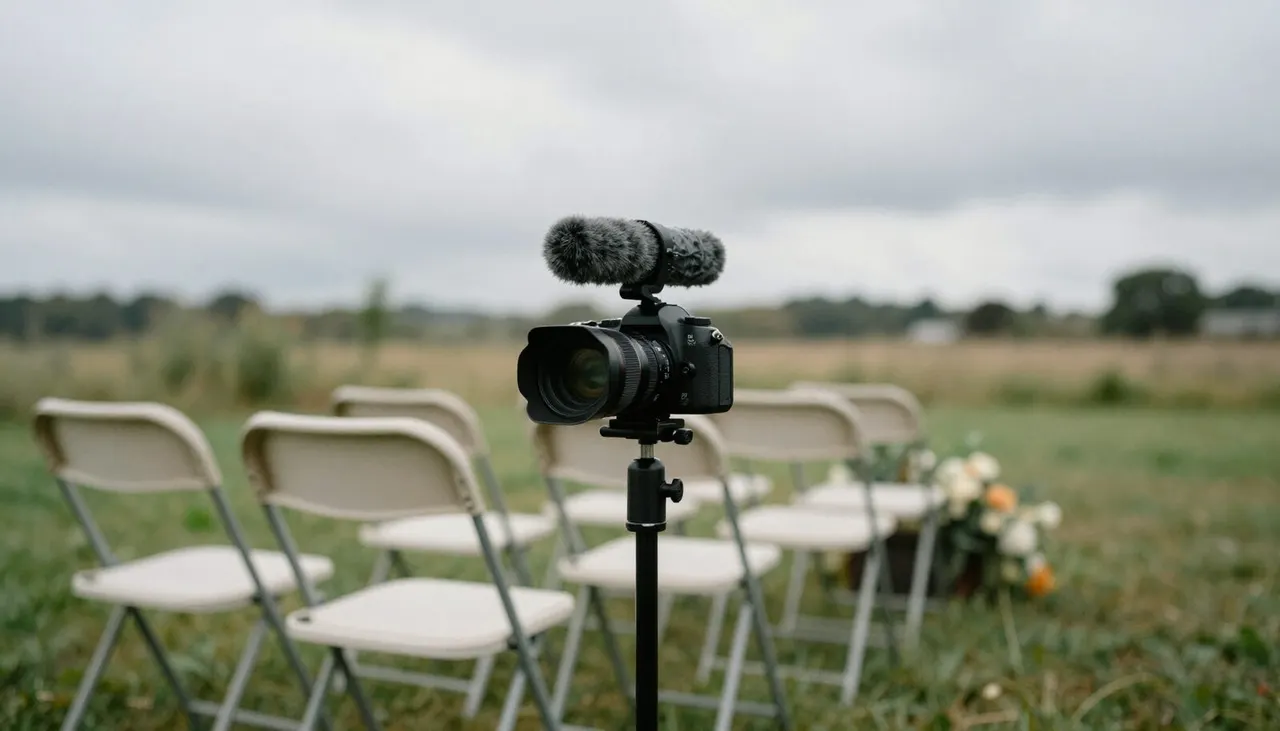
The most common fix is a lapel or clip-on microphone worn by the officiant or clipped near the couple, kept close enough to the voice that wind has less distance to interfere with. A foam or fur windscreen over the microphone also cuts down on the rushing sound wind makes across a bare mic.
Camera-mounted microphones placed further away pick up more ambient noise, including wind, so a videographer filming outdoors will usually combine a close microphone with the camera audio as a backup rather than relying on distance alone. If your ceremony venue is known to be breezy, such as a garden or beachfront space, it is worth asking directly how this will be handled.
Keeping footage steady in an open-air setting
Without walls, doorframes or furniture to brace against, handheld footage can look shakier outdoors, especially while moving between spots to capture different angles. Many videographers use a gimbal, a handheld stabiliser that smooths out natural movement, so footage stays steady even while walking or following the ceremony from a different position.
A tripod is still useful for a fixed wide shot of the full ceremony, giving a steady reference angle while the gimbal or handheld camera captures closer moments. The combination gives an edited film a mix of steady wide shots and more intimate, still-smooth close footage.
Choosing camera and microphone positions before the ceremony starts
Outdoor ceremonies often have fewer fixed vantage points than an indoor hall, so where the videographer stands matters more. Positions are usually chosen to avoid backlighting the couple against a bright sky, to keep guests' heads out of the main shot, and to leave a clear line to the officiant for both camera and microphone.
A short walk-through of the ceremony space beforehand, even briefly on the day itself, helps the videographer settle on positions rather than adjusting mid-ceremony. If the layout is unusual, sharing photos or a description of the space in advance gives them more time to plan.
What changes if the weather turns during filming
Singapore's weather can shift quickly, and a sudden shower during an outdoor ceremony is a real possibility. A videographer with outdoor experience usually carries basic rain protection for their equipment and has already discussed a backup indoor space with you, even if it is just a sheltered corridor or a marquee nearby.
If rain does interrupt filming, the priority shifts to protecting the gear and continuing coverage from cover rather than stopping altogether. This is worth raising directly when booking, particularly if your ceremony venue does not have an obvious indoor alternative close by.
Questions worth asking before booking outdoor coverage
Beyond general experience, it helps to ask specific questions: how they mic an outdoor ceremony, what happens if it rains, and whether they have filmed at your particular venue or a similar open-air setting before. Answers that sound specific and considered are generally a better sign than a general assurance that everything will be fine.
It is also reasonable to ask to see a short clip of previous outdoor ceremony footage, since audio clarity and steadiness are easier to judge by watching than by description alone. If your venue has a known layout, such as a garden with a fixed altar spot or a beachfront stretch with limited shade, mention it early so the videographer can plan equipment and positioning around it rather than working it out on arrival.
If your ceremony is outdoors, tell your videographer about the venue and layout as early as you can so they can plan audio and camera positions properly. Get in touch to talk through your ceremony setting, or read more about how a wedding day typically runs when planning around an outdoor segment.