
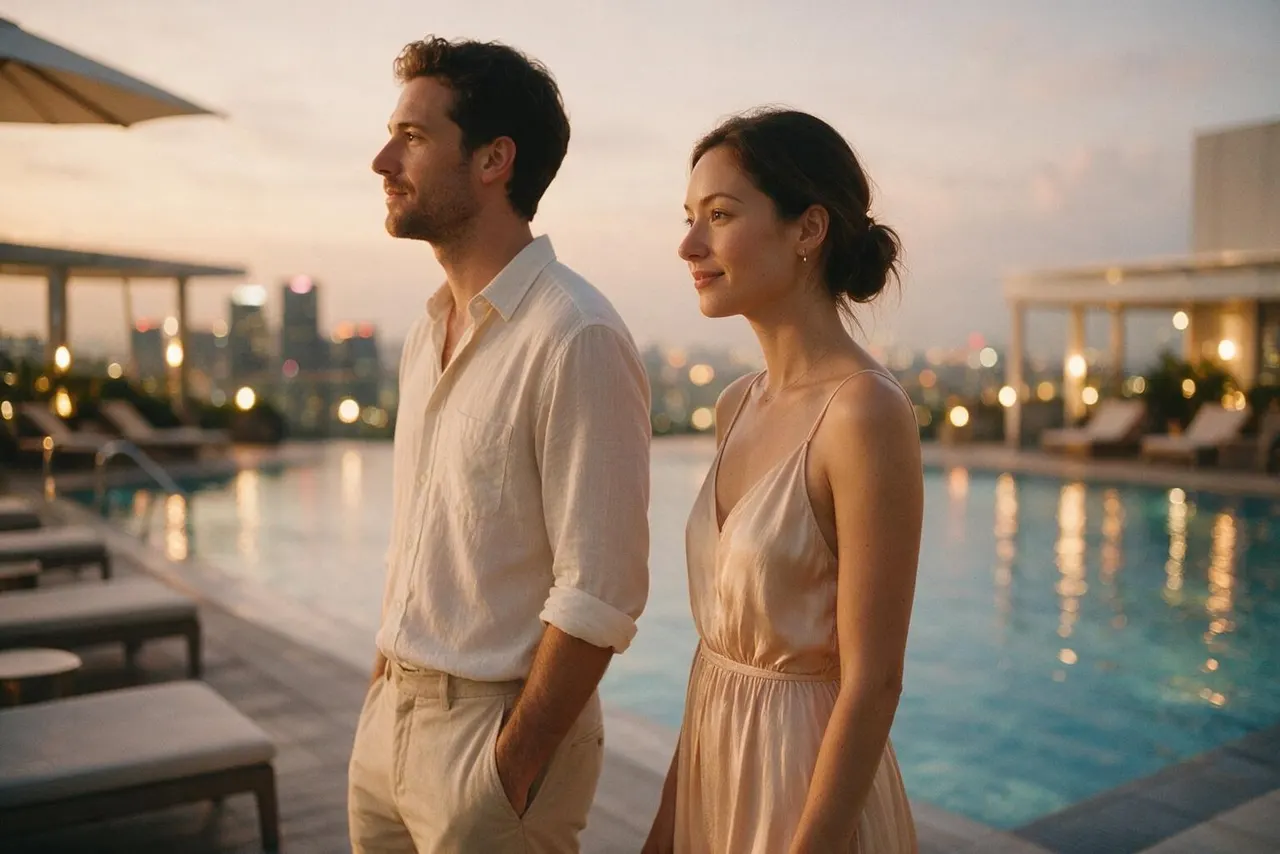
In short
Yes, a rooftop or skyline backdrop can be built into a pre-wedding shoot in Singapore, usually as one look within a longer session that also covers a different location. It works best when timed around the light and paired with a spot that offers a contrasting mood, such as greenery or an indoor set.
- A rooftop or skyline segment usually forms one look within a session that also covers other locations.
- Access to elevated spots can depend on opening hours, weather and any rules the building has on photography.
- The hour around sunset generally gives the most flattering light against a city backdrop.
- Pairing a rooftop look with a contrasting location, such as greenery or an indoor set, gives the gallery more variety.
Why couples want a skyline backdrop for pre-wedding photos
A skyline or rooftop backdrop gives pre-wedding photos a sense of scale and a clean, city feel that contrasts with softer, greenery-based locations. For couples who live and work in Singapore, it can also feel personal, showing the city they call home rather than a generic outdoor setting.
This look tends to suit couples who want at least one strong, graphic image in their gallery, something with clean lines and a wide view, alongside softer or more intimate shots taken elsewhere in the same session. It is rarely the only backdrop used across a full shoot, since a single elevated view can start to feel repetitive if every frame is taken from the same spot.
If you already know you want this look, raise it early when planning your pre-wedding shoot so your photographer can build the timing and other locations around it.
How rooftop and elevated locations get scouted
Not every building with a view is open to photography, and some spots that look promising from ground level turn out to have restricted access once you check. Scouting usually starts with a shortlist of possible spots, followed by checking which ones are realistically reachable on the day without needing arrangements beyond what a visitor would normally have.
Public viewing decks, sky gardens attached to buildings, and car park rooftops with a clear skyline view are common starting points, since these tend to be more accessible than private rooftop venues. Your photographer can suggest a few options based on past experience, but it is worth confirming access again closer to your date, since buildings do change their rules over time.
Bringing a backup spot into the plan is sensible in case your first choice is closed or crowded when you arrive.
Access considerations for rooftop locations
Elevated locations often come with practical limits worth checking before you build a shoot timeline around them. Some spots have set opening hours, others charge for entry as a visitor rather than for photography specifically, and a few restrict tripods, extra lighting or larger group sizes.
Weather adds another layer of uncertainty, since wind and rain affect rooftop locations more than sheltered ones, and a booking made weeks in advance cannot guarantee clear skies on the day. It is worth discussing a rain or haze contingency with your photographer so the session does not depend entirely on one uncertain location.
If a specific rooftop or elevated spot matters to you, mention it as early as possible so there is time to confirm access rather than finding out about an issue on the day itself.
Best light conditions for a skyline shoot
The hour before sunset, often called golden hour, generally gives the most flattering light for a skyline backdrop, softening shadows on faces while keeping the city detail visible behind you. Blue hour, the short window just after sunset, is popular too, since building lights start to come on against a darkening sky.
Shooting a rooftop look in the middle of a bright afternoon is possible, but harsh overhead light can create strong shadows and a washed-out sky, so photographers often save this backdrop for later in the session. Overcast days can soften the light nicely, though the skyline itself may look flatter without direct sun catching the buildings.
Because good light windows are short, a rooftop segment is usually placed near the start or end of your session rather than in the middle.
Pairing a rooftop look with other locations in the same session
A rooftop or skyline look tends to work best as one part of a session that also includes a location with a different feel, such as a park, a heritage building, or an indoor studio set. This gives your gallery contrast rather than a string of similar wide-view images.
Travel time between an elevated spot and a second location matters more than it might seem, since moving through lobbies, lifts and security checks can eat into your shooting window. Planning locations that are reasonably close together, or building in enough buffer between them, keeps the session unhurried rather than rushed from one stop to the next.
Discuss the order of locations with your photographer in advance, since starting or ending at the rooftop spot depends on which light window suits it best.
What to bring and wear for a rooftop segment
Wind is more noticeable at height, so structured fabrics, or a plan for managing a flowing skirt or veil, work better than very loose, lightweight pieces that might catch the breeze during the shoot. A small clip or pin kept in your bag can help settle hair or fabric between shots.
Bring a light jacket or cover-up if you are shooting near sunset, since it can feel cooler once the sun drops, especially on an open-air rooftop rather than an enclosed sky garden. Comfortable shoes for the walk to and from the location are worth packing separately from whatever you plan to wear in the photos themselves.
Check with your photographer beforehand whether the rooftop you have chosen allows props or additional equipment, since some locations are stricter than others.
A rooftop or skyline look can add real variety to your gallery when it is planned alongside other locations rather than used on its own. For more ideas on where these sessions can happen, see our guide to pre-wedding shoot locations, or contact us to talk through timing and locations for your own shoot.