
What a same-day edit is
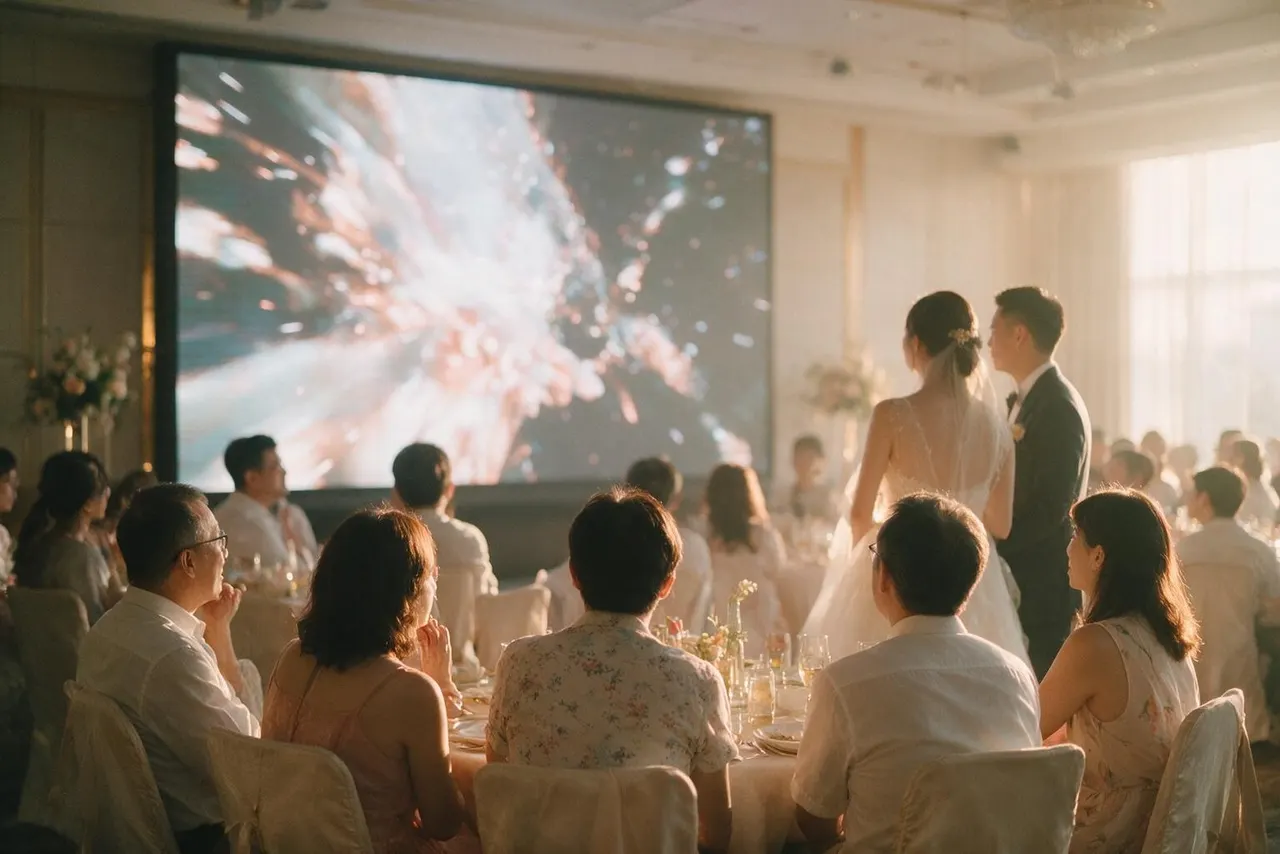
A same-day edit, usually shortened to SDE, is a short wedding film that is shot, edited and screened on the same day as your wedding — typically before your banquet ends. It runs for a few minutes rather than the length of the full wedding film delivered later, and its purpose is different too: an SDE gives your banquet guests, many of whom were not at the morning's ceremonies, a compressed look at what happened before they arrived.
It is not a replacement for your full wedding video. The SDE is cut under real time pressure, from a smaller pool of footage, so it leaves things out that the full film will include later. Think of it as a same-night preview rather than the finished story.
Which parts of the day the edit is cut from
An SDE editor can only work with footage that has already been captured and handed over by the time the cut needs to be finished. In a typical Singapore wedding day, that usually means:
- Morning preparation — hair and makeup, the groom getting ready, small details like the rings, the dress and the shoes
- Gatecrash and door games at the bride's home, if you are having one
- Tea ceremony — serving tea to parents and elders, and the moments around it
- Solemnisation, where it takes place earlier the same day rather than at a separate ROM appointment
- Any portraits or a first look taken before the banquet begins
What is usually not in the SDE is the banquet itself — speeches, cake-cutting, the first dance, table visits — and with RS Media the SDE stops before your first march-in. Everything from the first march-in onwards goes into your wedding highlight film instead, which is finished after the wedding with more time and more footage to work from.
Why the edit needs someone on site, cutting as the day happens
Because the film is screened on the same day, the SDE needs a dedicated editor, separate from whoever is shooting. That editor sets up a small work station — a laptop, a monitor, headphones — usually in a quiet corner of the venue, a green room, or a nearby hotel room, and works through the morning's footage as it is handed to them on memory cards throughout the day, rather than waiting until everything is shot.
This is also why the person cutting your SDE cannot be the same person holding a camera at your tea ceremony. Editing a few minutes of footage — selecting shots, syncing to music, colour correcting, exporting in a format the venue's screen can play — takes real, uninterrupted time, and it has to happen while the rest of the day is still going on around them.
Building a screening slot into the banquet programme
An SDE only works if there is an actual gap in the banquet programme to screen it in. This is a conversation to have early with your emcee or wedding planner, not something to raise on the day itself. In practice, we usually screen it just before your second march-in, a natural pause your emcee can lead into.
We plan the screening slot with you and your emcee in advance, working back from your run sheet. If your programme is compressed — a late solemnisation, an evening tea ceremony, or a short gap between ceremony and banquet — say so when you are planning the day, so everyone agrees on a realistic screening time rather than an optimistic one.
What tends to go wrong, and how to plan around it
Most SDE problems are programme and logistics problems, not editing problems. The most common ones:
- A late-running programme. If the tea ceremony overruns, the editor loses working hours they cannot get back. Build in buffer time rather than assuming everything runs to schedule.
- No dedicated screen or projector. Some ballrooms have a house screen and AV team; others expect you to bring your own. Confirm this with the venue, not just the emcee.
- No power point near the editing station. A laptop and monitor running for hours needs a stable supply — check this when you scout the room.
- The slot gets dropped from the programme. If speeches run long, an SDE slot is often the first thing an emcee cuts to save time. Flag in advance that the slot is fixed, not flexible.
What you receive that night, versus the full wedding film later
On the night itself, you and your guests see the SDE only — a short, same-day cut of the morning's events. The full wedding film, which covers the whole day including the banquet, speeches and any moments the SDE editor did not have time to include, is delivered weeks later once there has been time to go through all the footage properly, colour grade it fully and build a longer, more considered edit.
It helps to set this expectation with your families and guests too — some will expect the SDE to be the finished film, so knowing there is a fuller version still to come avoids disappointment on either side.
Getting this right takes planning, not just booking
An SDE is a genuinely useful addition to a Singapore wedding banquet, but it only works with planning: an editor on site for the whole day, a fixed slot confirmed with your emcee or planner, and a venue that can support a screen and power where the editing happens. None of that is difficult to arrange, but it does need to be arranged — an SDE booked the week before the wedding, with no gap agreed in the programme, is much more likely to be dropped on the night than one planned from the start.
If a same-day edit is something you are considering for your banquet, it is worth discussing your programme and venue early rather than close to the date. For more on how this fits into full-day video coverage, see our wedding videography page, or get in touch to talk through your day.