
In short
A traditional wedding album is usually built from thicker, layflat pages designed to last for decades, while a photo book is a lighter, more affordable format printed more like a magazine, and couples generally choose based on budget, how the item will be handled and how long it needs to last.
- A traditional album favours durability and a premium layflat presentation.
- A photo book is usually lighter, more affordable and easier to reprint.
- Consider how the item will be handled and stored, not just how it looks new.
- Some couples order an album for themselves and photo books for extended family.
What sets a traditional album apart from a photo book
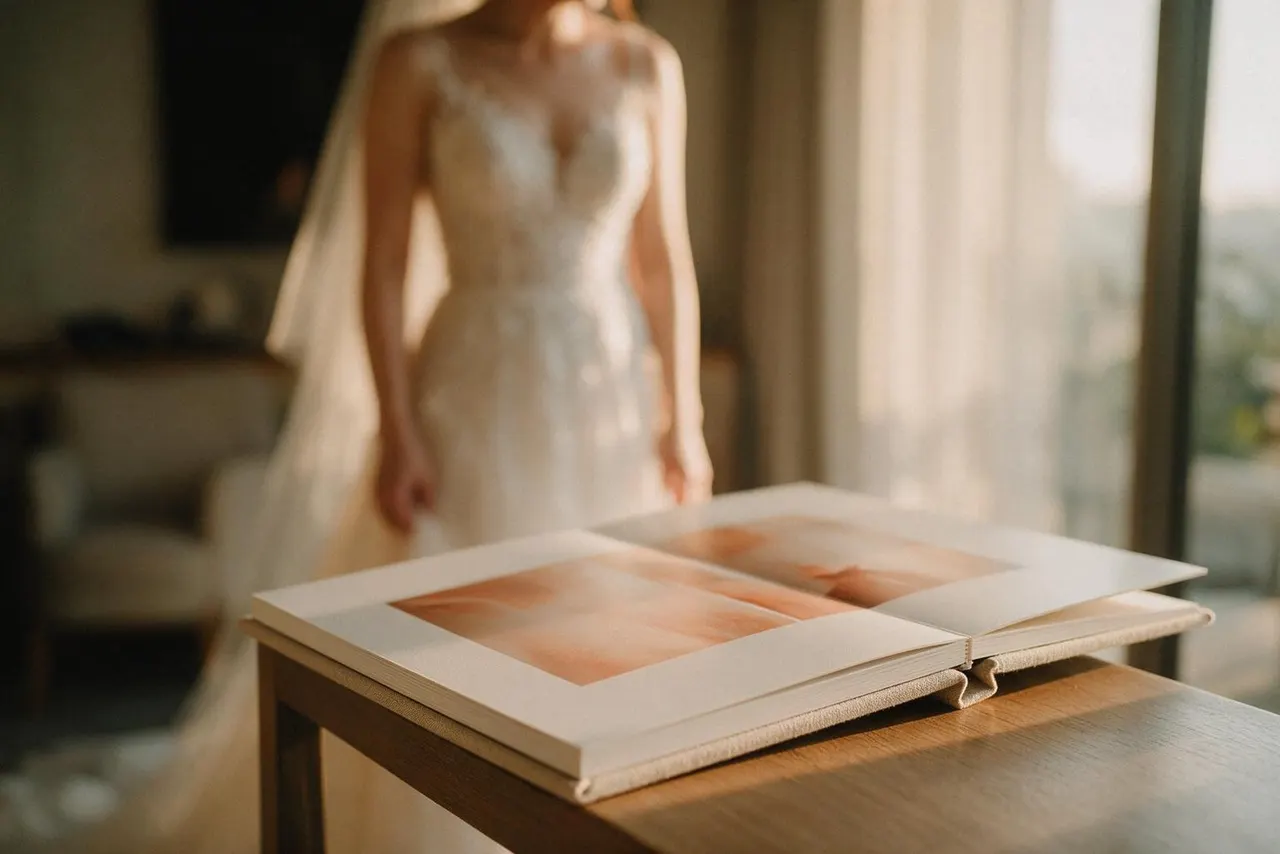
A traditional wedding album is generally built using thicker board pages with photos printed directly onto them, often with a layflat binding that allows pages to open completely flat, including panoramic spreads that cross the centre of the book. The cover is usually a separate, more substantial material such as leather, linen or a custom finish.
A photo book, by comparison, is typically produced with thinner pages bound more like a conventional printed book or magazine, which keeps the production process simpler and the item lighter overall. The photo quality itself can still be good, but the physical construction and finish are usually less heavy-duty than a traditional album.
Neither format is inherently better, and the right choice usually comes down to what you want the finished item to feel like in your hands and how long you expect it to last.
Cost, durability and presentation differences
Because of the heavier materials and layflat construction involved, a traditional album generally represents a larger investment than a photo book of a similar size. This is one of the main reasons couples weigh the two options against each other rather than assuming one is simply the standard choice.
In terms of durability, a well-made traditional album is generally built to withstand years of handling and display, whereas a photo book, while still a lasting keepsake, is typically treated more like a book you would keep on a shelf rather than one that is passed around often. If you expect the item to be handled frequently by many people over the years, this is worth factoring into your decision.
Presentation-wise, a traditional album tends to feel more like a formal keepsake, while a photo book has a more casual, everyday quality that some couples prefer for a secondary copy.
Which format suits different display preferences
If you picture your wedding photos as a piece you will display prominently on a coffee table or shelf and show to guests, a traditional album's presentation and layflat spreads often suit that purpose well. The larger panoramic images that a layflat binding allows can be a meaningful part of how the story is told across the pages.
If your priority is simply having an accessible, affordable copy of the photos in book form, perhaps as a gift for parents or close family rather than a formal centrepiece, a photo book may suit the purpose just as well at a lower cost. Some couples find that a photo book fits their needs perfectly well without the additional investment a traditional album represents.
Thinking about who will look through the item, and how often, can help clarify which format suits your situation better than comparing specifications alone.
Ordering both for different purposes
Rather than choosing one format exclusively, some couples order a traditional album for themselves as the main keepsake, and separate photo books as gifts for parents or close family who want their own copy without the higher cost of a full album. This approach lets you match the format to the purpose rather than applying one choice to every copy.
Because a photo book is generally simpler and less costly to produce, it can be a practical way to give more people a physical copy of the photos without ordering multiple traditional albums. Ask your studio whether both formats are available from the same photo selection, since this can simplify the ordering process.
This mixed approach is common enough that it is worth raising with your studio early, particularly if you already know you want more than one format produced.
Questions worth asking before you decide
Before committing to either format, it helps to ask your studio directly about the specific materials, binding and finish used for each option, since standards can vary between studios and it is worth understanding exactly what you are choosing between. Seeing a physical sample of both formats, if available, is far more useful than judging from photos alone.
It is also worth asking how each format handles your particular photo selection, since panoramic or wide compositions generally suit a layflat album's spreads better than a photo book's binding. If a specific photo matters a great deal to you, ask how it would appear in each format before finalising your choice.
Taking the time to compare samples and ask these questions upfront generally leads to a choice you are happy with long after the wedding itself.
If you would like to see sample formats and talk through which option suits your photos, get in touch, or read our general guide to wedding albums and prints.