
In short
There is rarely an even split of who gets invited to a Singapore wedding banquet. Couples usually agree on a rough allocation with both families early, based on the venue's table count and each side's own list of relatives, close friends and neighbours, then fine-tune it as replies come in.
- A perfectly even split between families is uncommon; work from a rough allocation instead
- Agree on the total headcount and table count with the venue before dividing names
- Bring both families into the conversation early, not after one side has already drawn up a list
- Round numbers up or down to fill tables rather than leaving seats empty
- Confirm final numbers with your photographer and videographer once RSVPs settle
Why guest lists are rarely evenly split between families
Two families rarely have the same number of people they want at the table. One side may have a larger extended family, more working colleagues to invite, or a longer list of childhood friends still in touch. The other side may simply know fewer people locally, especially if one partner has moved to Singapore from elsewhere or has a smaller family circle.
Trying to force a perfectly even split, such as insisting each side gets exactly half the seats, often causes more friction than it solves. A more workable starting point is agreeing on a total number the venue can seat, then figuring out a fair division from there rather than starting with an arbitrary fifty-fifty rule.
It helps to remember that fairness does not have to mean identical numbers. A household with more surviving grandparents, aunts and uncles will naturally need more seats than one without, and that is a reasonable difference to accept upfront.
Practical ways to balance numbers without hurt feelings
One approach is to set a shared cap on immediate family and closest friends that both sides commit to first, before adding extended relatives and colleagues. This protects the people who matter most to each partner regardless of how the rest of the list shakes out.
Another approach some couples use is giving each side a flexible range rather than a fixed number, for example allowing either family slightly more seats if the other side's list ends up shorter. This avoids anyone feeling boxed into an arbitrary quota.
Where one side genuinely has a much larger network, some couples accept the imbalance openly rather than trimming a long list artificially, and instead look at whether the venue can absorb a slightly larger total. Being upfront about the reason for the imbalance, rather than letting it go unexplained, usually prevents it from becoming a sore point later.
Setting a shared approach with both families early
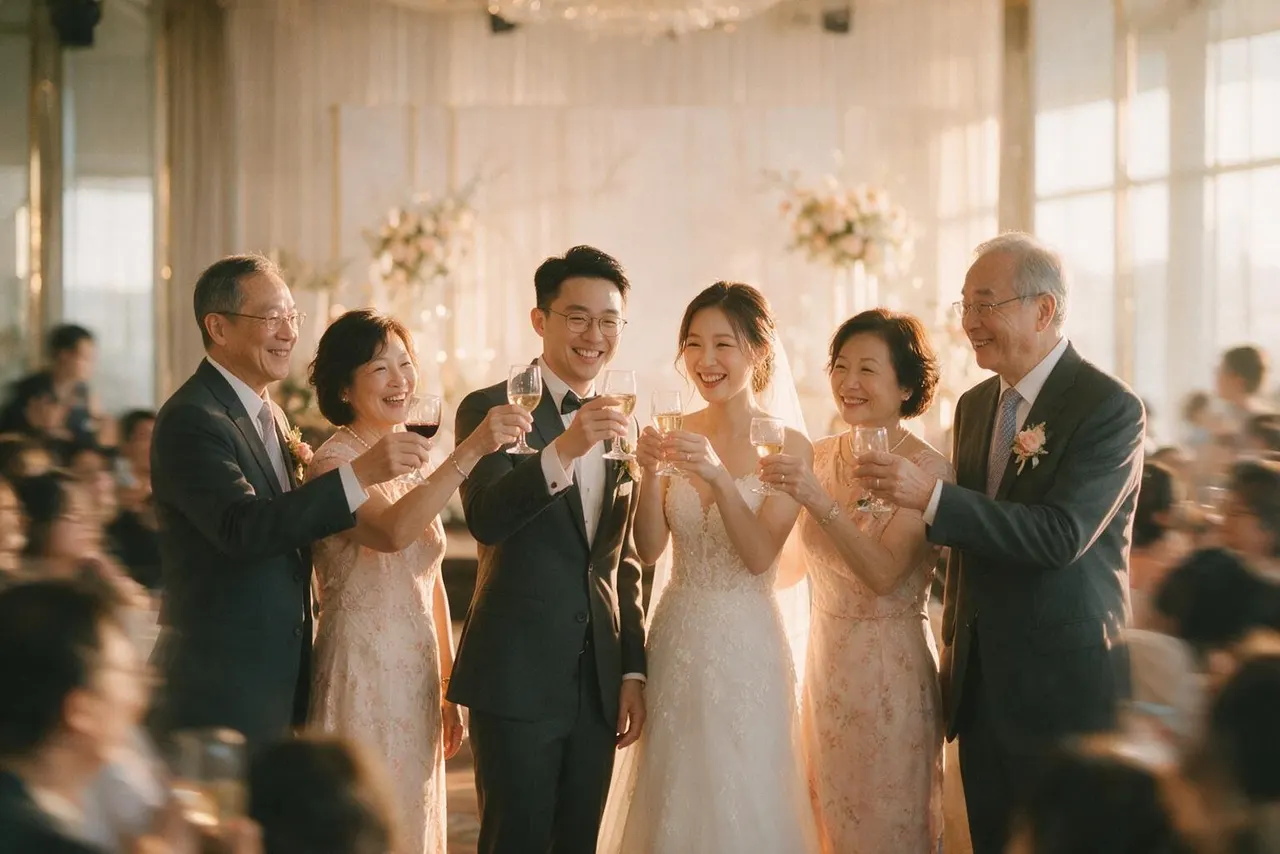
Bringing both families into the guest list conversation early, rather than presenting a finished list for approval, tends to go more smoothly. A short conversation early in planning about roughly how many people each side expects to invite gives everyone a chance to raise concerns before names are locked in.
It also helps to agree early on categories that both sides will follow consistently, such as whether plus-ones are extended to unmarried guests, whether children are included in the count, and whether colleagues are invited at all. Applying the same rules to both families avoids one side feeling an exception was made only for the other.
Parents often have their own expectations about who must be invited, particularly senior relatives or long-standing family friends. Hearing these expectations directly, rather than assuming what they want, prevents last-minute additions once the list is meant to be final.
Working around a fixed banquet capacity
Most banquet venues seat guests at round tables, and each table typically takes a set number of guests, so the final headcount tends to round up or down to fill tables rather than landing on an exact figure either family first proposed. This is worth explaining to both sides early, since it means neither list will likely be honoured to the last name without some trimming.
If the total guest count is tight against the venue's capacity, it is often easier to negotiate small reductions from both lists proportionally, rather than asking one family to cut more than the other. Keeping a short reserve list on each side also helps, so that any last-minute decline from a declining guest can be backfilled fairly.
Keeping the conversation collaborative, not transactional
Guest list discussions can start to feel like a negotiation over seats rather than a shared decision about who both families want present. Framing it as building one combined list together, instead of each side submitting a separate quota to be approved, generally keeps the tone warmer.
Where disagreements come up, it usually helps to separate the emotional weight of a specific name, such as a close aunt or a childhood friend, from the practical constraint of table space. Acknowledging that a name matters to someone, even if it cannot be accommodated, goes further than simply declining without explanation.
Couples who keep both sets of parents informed as the list evolves, rather than only sharing a finished version, tend to avoid the feeling that decisions were made behind closed doors. A short update after each major round of RSVPs is usually enough to keep everyone comfortable with where things stand.
Confirming final numbers with your vendors
Once the guest list settles, it is worth passing the confirmed headcount to your photographer and videographer alongside the venue, since a larger or more spread-out guest list can affect how coverage is planned across the day, including the march-in, table visits and group photographs.
If your final numbers shift meaningfully from what you first discussed, whether up or down, flagging this early gives your photography and video team time to plan accordingly rather than adjusting on the day itself. This is particularly worth doing if the change affects how many tables are involved, since table visits and group shots tend to take longer with a larger spread of guests.
Sharing a rough seating plan, once it exists, can also help your photographer anticipate where key family members will be seated, which makes it easier to capture candid moments at each table without needing constant direction on the day.
Guest list decisions are ultimately personal to each family, and there is no single right way to divide the seats. If you would like to talk through how your guest numbers might affect photography and video coverage on the day, get in touch, or read more about how a wedding day typically runs from arrival to the last dance.