
In short
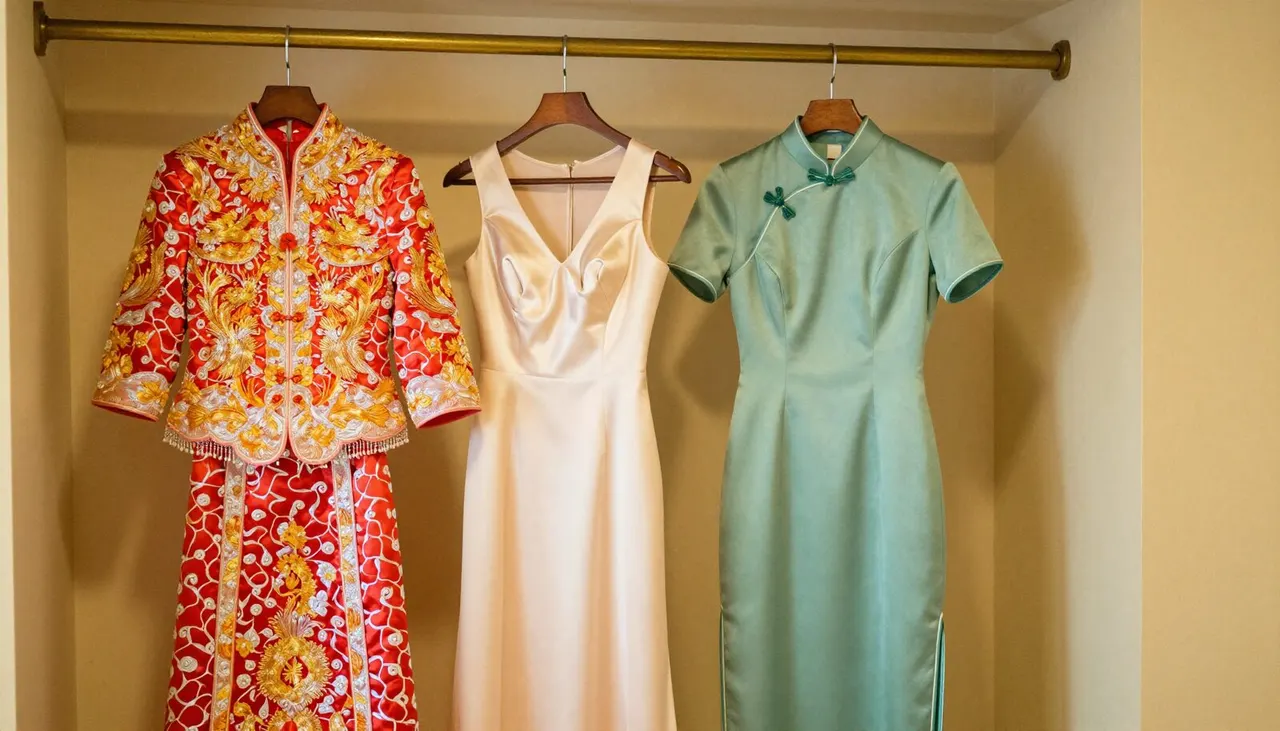
Changing outfits during a Chinese wedding banquet is a long-standing custom that grew from the idea of marking different stages of the evening with a fresh look, often moving from a more traditional outfit worn earlier in the day to something different for the banquet, and sometimes again for a later segment. It has become as much a personal style choice today as a strict tradition, and how many changes a couple makes is entirely up to them.
- Outfit changes traditionally mark different stages of the wedding day and evening.
- One or two changes during the banquet is common, though this varies by couple.
- Changes are timed around natural pauses in the meal, not during a key segment.
- Preparing outfits and a helper in advance keeps the changeover quick.
- Photography and videography teams need the exact timing to be ready at the reveal.
Where the tradition of multiple outfit changes comes from
The idea of changing outfits across a Chinese wedding day has roots in marking different stages of the celebration with a different look, moving from the outfit worn for the tea ceremony or actual-day rituals earlier on, into a gown or suit for the banquet itself, and sometimes into a further outfit later in the evening. Each change traditionally signalled a shift from one part of the day to the next.
Over time, this has also become a way for couples to enjoy wearing more than one outfit they like, rather than being tied to a single look for the whole event. Some families place importance on the earlier, more traditional outfit for specific rituals, while the later banquet changes are generally seen as a matter of personal style rather than obligation. If you are unsure how much weight your own family places on this, it is worth asking directly rather than assuming either way.
How many changes are common today
Many couples today choose one or two outfit changes across the actual day and banquet, though this varies considerably depending on personal preference, budget, and how much time is realistically available in the schedule. There is no fixed number expected, and couples who choose a single outfit for the entire evening are not seen as breaking with tradition.
Where a couple does plan multiple changes, it helps to think through the practical side early, including how much time each change genuinely takes with hair and makeup touch-ups included, rather than underestimating based on how quickly a change might look in photos or videos elsewhere. A realistic estimate here avoids a rushed or delayed banquet programme later, and gives your bridal team a genuine window to work within rather than a guess.
Coordinating changes without disrupting the banquet flow
An outfit change during the banquet is usually timed around a natural pause in the meal, such as between courses, so that it does not interrupt a toast, a speech, or a key segment such as the tea ceremony if that is being held at the venue. Coordinating this with your emcee and venue in advance means the pause is planned into the programme rather than improvised on the night.
It is also worth confirming where the change will take place, whether that is a bridal room at the venue or another nearby space, and how much time is needed to get there and back. A change that looks quick in theory can take longer in practice once travel between rooms and touch-ups are factored in.
What to prepare in advance for a smooth change
Having outfits laid out and ready, along with a helper such as a bridesmaid or bridal assistant on hand, makes a real difference to how smoothly a change goes during a busy banquet evening. It is easy to underestimate how much coordination a quick change needs once accessories, shoes, and any hair adjustments are factored in alongside the outfit itself.
Confirming this plan with your bridal team ahead of the wedding day, rather than working it out in the room itself, reduces the chance of a change running over and pushing back the rest of the evening's programme. A short walkthrough beforehand, even a rough one, is often enough to catch anything that might cause a delay once the evening is already underway.
Photographing each outfit as it debuts
Each outfit change is usually treated as its own small moment within wedding photography coverage, with attention paid to how the couple looks as they re-enter the banquet in the new outfit. Lighting conditions can shift over the course of an evening, particularly if the room has been dimmed for later segments, so this is worth flagging to your photographer in advance.
If you want detail shots of each outfit on its own, separate from the reveal itself, it helps to build a short window into the schedule for this, rather than relying solely on candid shots taken as guests react to the new look. Even a few minutes set aside near the bridal room can make a noticeable difference to the detail shots you end up with.
Working with your videography team around the changes
For wedding videography coverage, knowing the exact timing of each outfit change in advance means the team can be positioned and ready rather than reacting after the couple has already re-entered the room. This is particularly relevant if a same-day-edit highlight film is being prepared for the evening, since footage from each change may need to be reviewed quickly.
Sharing one confirmed run sheet with both your photography and videography teams, rather than separate versions, helps avoid any confusion over timing on a night with several moving parts already in play. It also gives both teams a clear point to return to if the evening runs slightly ahead of or behind schedule, rather than guessing at the timing on the night.
If you are planning one or more outfit changes for your banquet, working out the timing early with your emcee and vendors helps the evening run smoothly. Get in touch to talk through your programme and how your photography and videography coverage fits around each change.