
In short
Choosing a church for your wedding ceremony in Singapore involves more than denomination and location, since layout, natural light and the church's own guidelines for photographers all affect how your ceremony is captured. Churches such as St Andrew's Cathedral, the Cathedral of the Good Shepherd, Church of St Teresa, Wesley Methodist Church, Barker Road Methodist Church and Novena Church each have a different architectural character worth considering before you commit to one, and visiting more than one in person before deciding is generally worth the extra time it takes.
- Church layout, ceiling height and window placement all affect how ceremony photos and video turn out.
- Churches vary in their own rules for photographers, so ask directly rather than assuming.
- Visiting a shortlist in person, ideally at your planned ceremony time, helps you compare light conditions.
- Plan the transition time from the church to your banquet venue as part of your overall day schedule.
How church layout and lighting affect ceremony photography
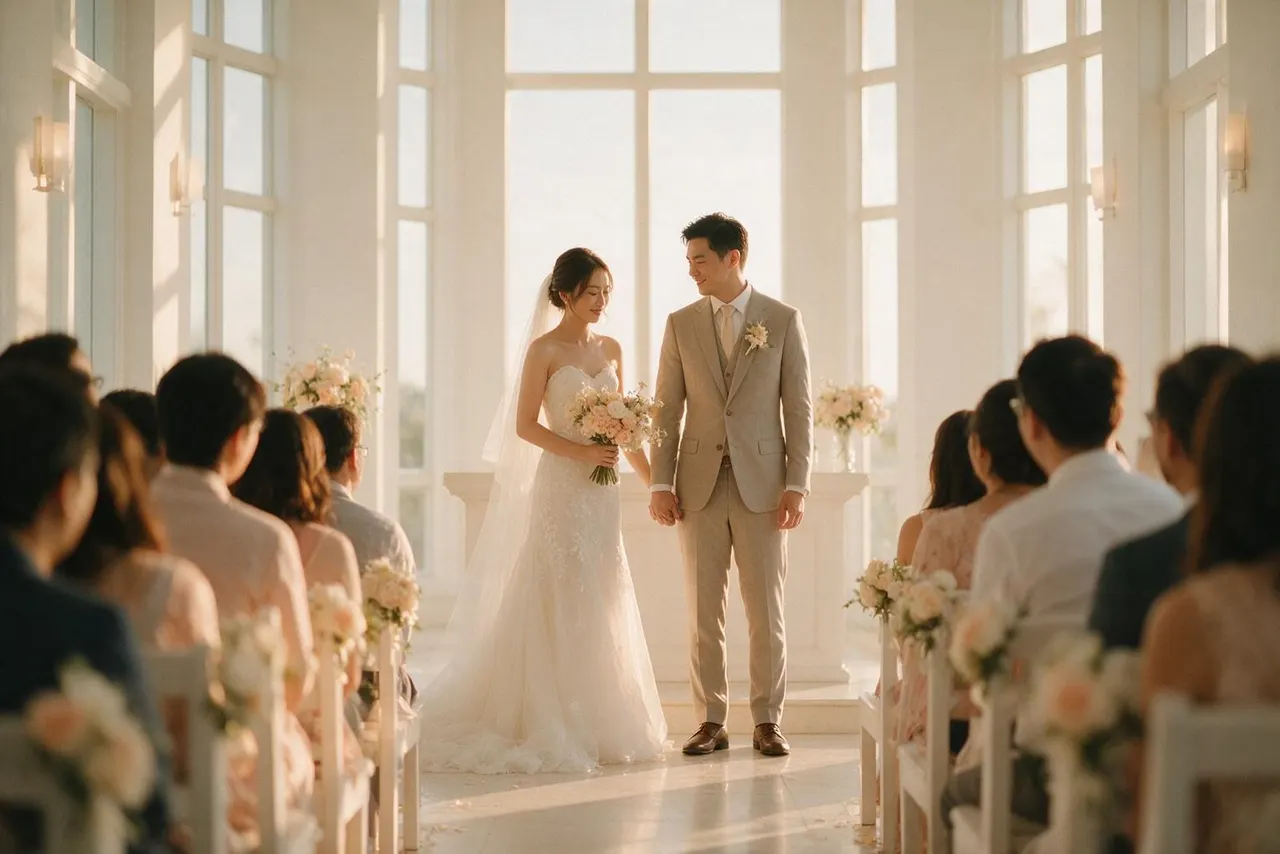
Churches vary considerably in ceiling height, window placement and how much natural light reaches the aisle and altar area, all of which affect how your ceremony photos and video turn out. A church with tall stained-glass windows will photograph very differently from one lit mainly by overhead fixtures, so it helps to see a church in person before assuming it will suit your preferred style.
The layout of the aisle and seating also affects where a videographer can position cameras without obstructing the congregation's view, which is worth discussing with your church contact ahead of the day.
Questions to ask when visiting different churches
When comparing churches such as St Andrew's Cathedral, Cathedral of the Good Shepherd, Church of St Teresa, Wesley Methodist Church, Barker Road Methodist Church or Novena Church, ask about typical ceremony length, whether the church has any restrictions on photography or videography positions, and whether flash or additional lighting is allowed during the service. These answers vary by church and denomination, so it is worth writing them down after each visit rather than relying on memory later.
It is also worth asking whether the church has hosted weddings with a similar guest list size to yours, since seating capacity and layout affect how comfortably your ceremony will fit the space, and whether parking or drop-off arrangements suit your guests.
Coordinating with the church's own photography guidelines
Many churches set their own guidelines for wedding photographers and videographers, including where they may stand during the ceremony and whether movement is restricted once the service begins. Sharing these guidelines with your photography team ahead of time, rather than on the morning of the wedding, gives them time to plan camera positions that respect the church's rules while still covering key moments.
If you are unsure what a particular church allows, ask your solemniser or wedding coordinator directly, since guidelines can differ even between churches of the same denomination.
Planning the transition from church to banquet venue
Once the ceremony ends, moving your wedding party and guests from the church to your banquet venue takes time, particularly if the two locations are some distance apart or if photos are planned outside the church before departure. Building a realistic buffer into your schedule avoids a rushed departure or a late arrival at the banquet, and gives guests time to make their own way over as well.
Sharing your full day timeline with your photographer, including the planned departure time from the church, helps them plan group photos and any final church-grounds portraits without running over into time set aside for the banquet.
Considering interfaith or mixed-family ceremonies
For couples navigating an interfaith ceremony or a mixed-family guest list, it is worth discussing with the church directly how it accommodates elements from a partner's own background, since practices vary between churches and denominations. Being upfront about your family's expectations early in the planning process avoids surprises closer to the day, when there is less room to adjust plans.
Respecting each church's own approach to this, rather than assuming one church's flexibility applies to another, is worth keeping in mind as you shortlist options. Your photographer can generally adapt to whatever format the ceremony takes once the structure is confirmed.
What to brief your photography team about your chosen church
Once you have chosen a church, share any confirmed guidelines on photographer positioning, flash use and permitted movement during the ceremony with your photography and videography team well ahead of the wedding day. This lets them plan camera angles that work within the church's own rules rather than adjusting mid-service.
It also helps to walk through your ceremony order with your team, including where key moments such as vows and the exchange of rings will happen, so coverage is planned around the actual flow of your service rather than guessed at from a general template.
If you are comparing churches for your ceremony, get in touch to talk through how we plan around a church's own guidelines, or see our guide on church wedding photography for more on how these ceremonies are typically covered.