
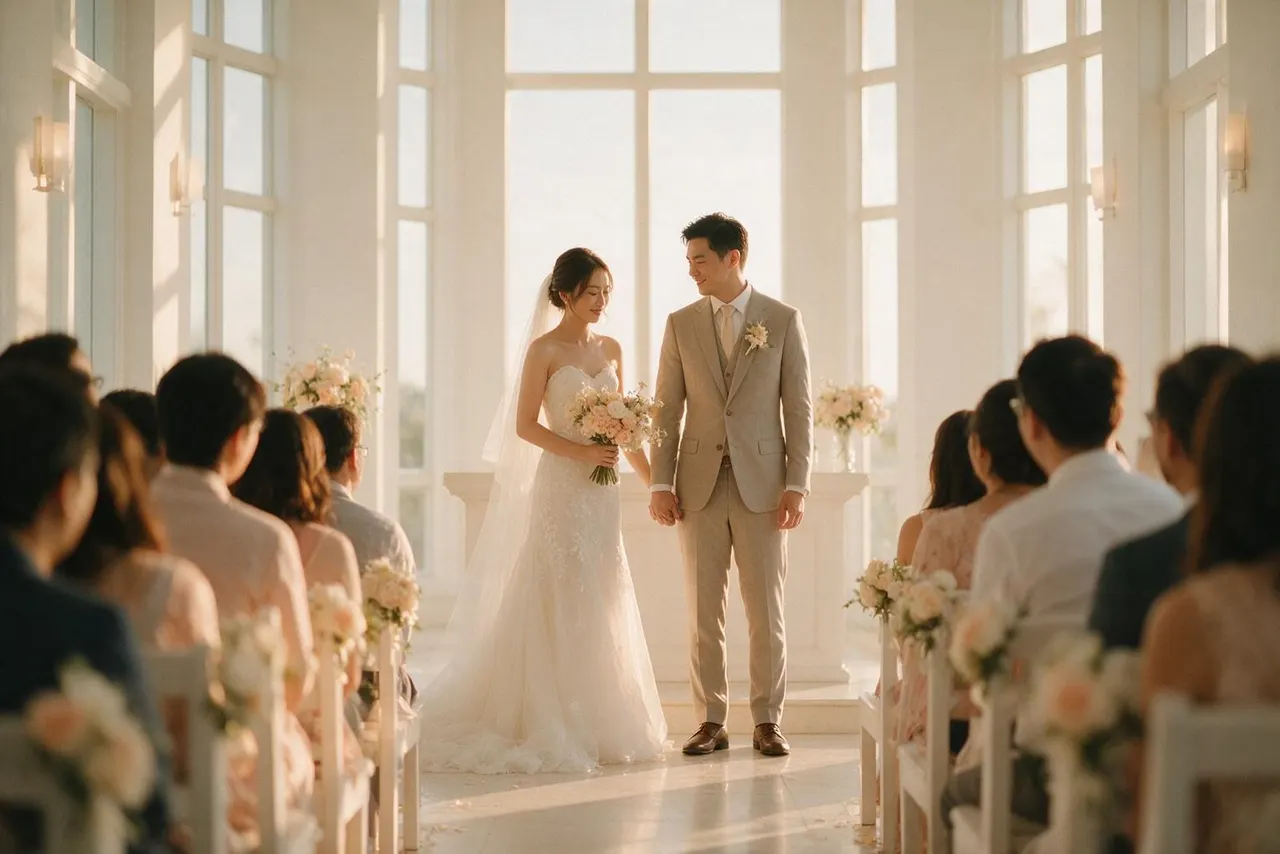
In short
A videographer filming inside a church works around the church's own guidelines on movement and positioning, usually staying to the side or back of the aisle and using longer lenses instead of walking close to the couple. The goal is full, clear coverage of the vows without becoming part of the ceremony guests can see or hear. This approach applies whether the ceremony is a shorter blessing or a longer nuptial mass with readings and hymns, and it holds regardless of which denomination or church tradition is involved, from a quiet chapel service to a fuller cathedral wedding.
- Most churches in Singapore set their own rules on where a videographer can stand and whether flash or extra lighting is allowed.
- Longer lenses let a videographer film closer-looking shots from a respectful distance at the side or back.
- Confirming any church guidelines in advance avoids surprises on the day itself.
- The nuptial mass or vows exchange is usually the section filmed with the most care for clear audio.
Filming respectfully within a church setting
A church ceremony has its own rhythm and, for many couples, real religious meaning, so a videographer filming inside one is expected to work quietly and without drawing attention. This usually means staying still for longer stretches, avoiding unnecessary movement during readings or the vows, and keeping equipment as unobtrusive as possible.
Some churches allow a videographer to move around more freely during less formal moments, such as before the service begins or after the couple has exited, while asking for stillness during the ceremony itself. Understanding which parts of the service are more flexible helps a videographer plan where and when to move.
Positioning that avoids disrupting the vows
Rather than standing close to the couple during the vows, a videographer typically films from the side of the aisle or from the back of the church, using a longer lens to bring the shot in closer without physically approaching. This keeps sightlines clear for guests and avoids becoming a visible presence during the most personal part of the ceremony.
A second, fixed camera is sometimes placed at another angle, facing the couple from a distance, so the edited film can cut between angles without either camera needing to move during the vows themselves.
Working within any church filming guidelines
Many churches in Singapore have their own house rules for photographers and videographers, covering where you may stand, whether flash photography is permitted, and sometimes limits on where equipment such as tripods can be set up. These rules vary from church to church and are usually shared by the church's own wedding coordinator or the couple themselves.
Sharing any guidelines you receive from the church with your videographer well ahead of the day means there are no surprises, and the videographer can plan camera positions that work within those limits rather than adjusting on the spot. Some churches also restrict where video equipment can be placed during a rehearsal, so it helps to ask whether a rehearsal walk-through is available for your videographer to attend.
Capturing the nuptial mass or vows clearly on video
Clear audio matters as much as a clear picture for this part of the service. A lapel microphone on the officiant, or sometimes on the groom, is the usual way to capture vows clearly, since a camera microphone alone, especially from a distance at the back of the church, often picks up echo from the space.
For a nuptial mass, coverage often extends beyond the vows to include readings and hymns, so it is worth discussing with your videographer how much of the full mass you want captured in the edited film versus just the core vows exchange.
Confirming details with the church before the day
It is worth checking directly with the church, or your church wedding coordinator, on their filming guidelines well before the wedding date, rather than leaving your videographer to find out on arrival. Some churches ask vendors to register in advance or brief them separately from the couple.
Passing this information on early gives your videographer time to plan lens choices and camera positions that fit within the church's rules, rather than working it out during the ceremony itself.
If your ceremony includes elements beyond the standard vows, such as a longer nuptial mass, a specific hymn, or a blessing involving family members, mention these when briefing your videographer so they know which segments to prioritise if positioning options are limited inside the church.
If your ceremony is taking place in a church, let your videographer know the church's own guidelines as early as you can. Get in touch to discuss your ceremony details, or read our guide on church wedding photography for how the same considerations apply to photos.