
In short
A dessert table is better understood as a more recent addition to Singapore wedding banquets rather than an old, established custom, and many couples choose to include one simply because it adds a personal, visual touch to the evening. It is generally set up separately from the main multi-course meal and is usually available for guests to enjoy later in the banquet, closer to the end of the evening.
- A dessert table is more of a modern addition than a long-standing tradition.
- It is usually set up separately from the multi-course meal itself.
- Couples typically position it towards the later part of the banquet.
- Contents are largely a matter of personal choice rather than customary items.
- Confirm with your venue or caterer whether a dessert table is permitted.
Whether the dessert table is a longstanding tradition or a modern addition
Unlike customs such as the tea ceremony or the march-in, a dessert table does not come from a long-established wedding tradition, and is better understood as a more recent addition that has become popular at many Singapore banquets. Couples generally choose to include one as a personal touch rather than because it is expected by family or custom.
This does not make it any less enjoyable for guests, and many couples find it a worthwhile addition to the evening precisely because it is flexible and not bound by the same expectations as more customary elements of the banquet. If you are weighing whether to include one, it is worth thinking about it as a personal styling choice rather than a box to tick for tradition's sake.
How it is typically positioned within the banquet programme
A dessert table is usually set up separately from the main course sequence, often at the side of the banquet room, and made available to guests towards the later part of the evening, sometimes overlapping with the final course or a segment such as a second march-in. This timing gives guests something to enjoy while mingling, without competing directly with the main meal.
The exact timing varies depending on how the rest of the evening's programme is structured, so it is worth confirming with your venue or caterer when the table will be set up and made available, particularly if you want it ready before a specific segment such as toasting or a final speech, so guests are not left waiting on an empty table.
What couples usually include on the table
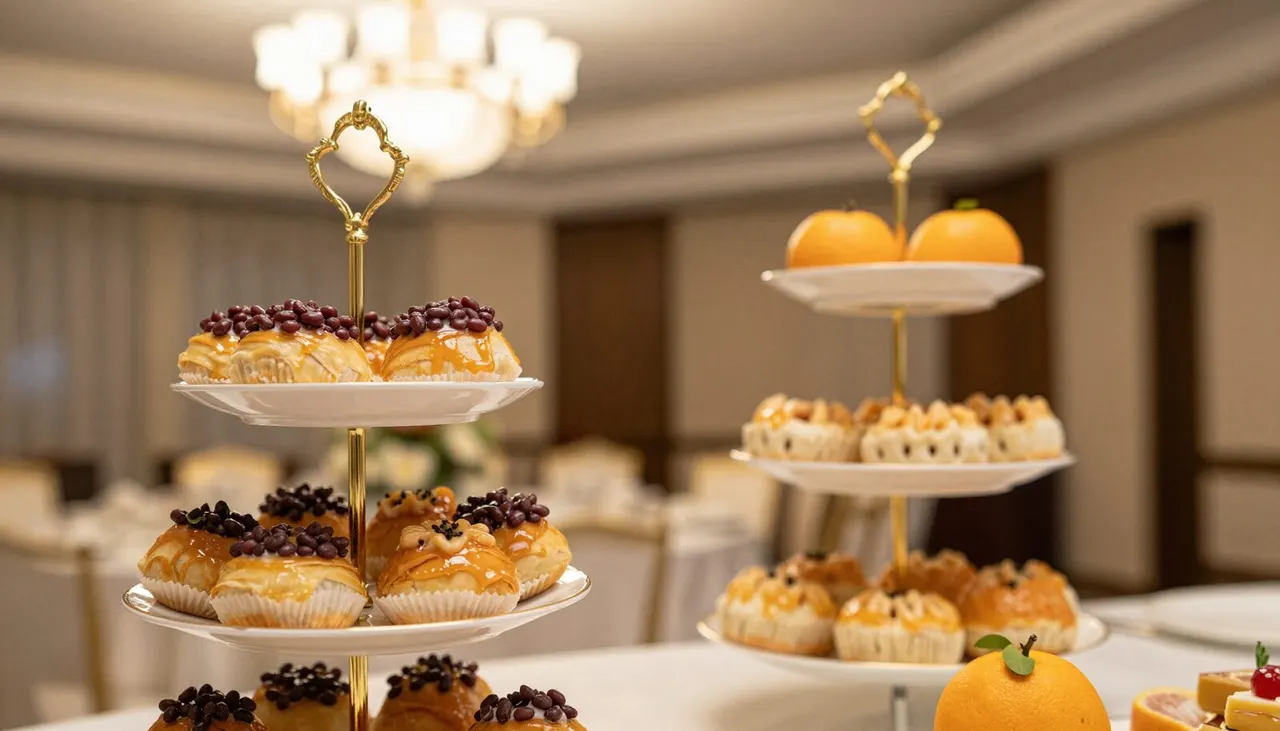
What appears on a dessert table is largely a matter of personal choice rather than tradition, and couples commonly choose a mix of small sweet items, sometimes styled around a colour scheme or theme that matches the rest of the banquet decor. There is no fixed or customary set of items expected, unlike some of the food traditions tied to the main course sequence.
Because this is a flexible, personal element of the evening, it is worth discussing options with your venue or an external vendor early, particularly around what your venue permits in terms of outside catering or table setup, since policies differ between restaurants and hotels, and a venue's own rules will usually take priority over your original plan.
Coordinating the table with your venue and caterer
Not every venue allows a dessert table to be brought in separately from their own catering, so it is worth confirming this early in your planning rather than assuming it will be permitted. Some venues are happy to accommodate an external dessert table, while others may prefer to provide their own version as part of the overall banquet package, so it is worth asking rather than assuming either way.
Where a dessert table is permitted, it also helps to confirm practical details such as who sets it up, how long before the banquet it needs to be ready, and where in the room it will be positioned, so this can be factored into the overall run sheet for the evening rather than arranged at the last minute.
Photographing the dessert table as part of the gallery
A dessert table, especially one styled around a specific colour scheme or theme, often photographs well as a detail shot within your overall wedding photography coverage, alongside other decor elements such as the banquet centrepieces or the entrance backdrop. It is worth flagging to your photographer roughly when the table will be fully set up and ready, so this detail shot can be captured before guests begin helping themselves and the arrangement starts to look disturbed.
If the table is a personal styling choice you have put particular thought into, mentioning this specifically when discussing your coverage plan helps ensure it is not missed among the many other things happening during a busy banquet evening, when a photographer's attention is pulled in several directions at once.
Deciding whether a dessert table fits your banquet
Since a dessert table is not tied to any customary expectation, deciding whether to include one comes down to personal preference, budget for styling, and whether your venue permits it. Some couples find it adds a nice personal touch to the evening, while others prefer to keep the programme simpler and skip it altogether, and neither choice needs justifying to anyone.
If you do decide to include one, working out the placement, timing and setup with your venue early avoids it becoming a last-minute addition squeezed in without proper planning, which can affect how smoothly it fits into the rest of the evening. A short conversation with your venue early on is usually all it takes to avoid that outcome.
If you are planning a dessert table for your banquet, confirm the details with your venue early and let your photography team know when it will be ready. Get in touch to talk through your banquet decor and coverage.