
In short
Guo da li items are the betrothal gifts a groom's family typically prepares for the bride's family, and while the exact list varies by household and dialect group, many Singapore checklists include betrothal money, bridal cakes, dragon-phoenix candles, jewellery, and a handful of symbolic foods. The bride's family usually returns a portion of these as hui li rather than keeping everything.
- Betrothal money (聘金), bridal cakes (喜饼) and dragon-phoenix candles appear on most checklists.
- Jewellery varies by dialect group: si dian jin (四点金) is traditionally Teochew, while Cantonese families commonly feature dragon and phoenix bangles.
- Symbolic foods such as oranges, sea products, wine or liquor, and pork or a substitute are common additions.
- The bride's family typically returns around half of certain items, along with gifts of their own for the groom.
- Couples in Singapore commonly source these items from bridal cake shops and traditional wedding shops rather than assembling everything separately.
The core checklist of common items
Most guo da li checklists in Singapore centre on a similar core set of items, even though the exact combination and quantities differ from family to family. Commonly included items are:
- Betrothal money (聘金 / pin jin), presented in a red packet or box, with the amount agreed between families in advance.
- Bridal cakes (喜饼), traditional cakes given in a set quantity, often later distributed by the bride's family to relatives and friends as a way of announcing the match.
- Dragon and phoenix candles, used symbolically to bless the couple; the number of candles and which ones are returned as hui li vary by dialect group and family.
- Jewellery, which can range from a single item to several pieces, depending on the family's means and dialect customs.
- Sea products, such as dried seafood, sometimes included as a symbol of abundance.
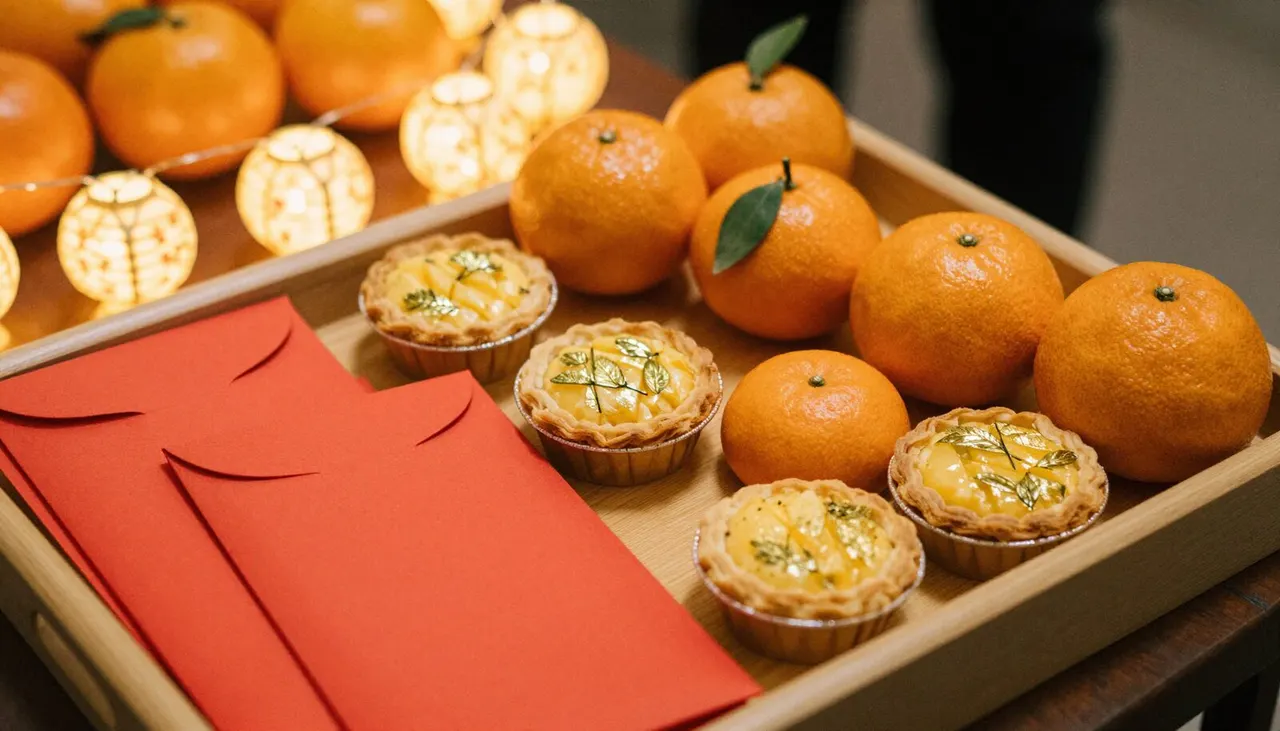
- Oranges, usually given in pairs, for their association with prosperity.
- Wine or liquor, traditionally included as a mark of respect, though some families substitute this with tea or leave it out.
- Pork or a pork-based item, in some families, or a different substitute where pork is not part of the family's customs.
Not every family includes every item on this list, and some add others not mentioned here, such as a set of clothing or a small tea set. Treat this as a general starting point to discuss with your own parents rather than an exhaustive or fixed list.
Bridal cakes (喜饼) and how they're used
Bridal cakes, often called xi bing (喜饼), are one of the more visible guo da li items, since they are typically bought in a set quantity and box style, and later given out by the bride's family to relatives, neighbours and friends as an informal way of letting people know the wedding is happening. The type of cake, and how many boxes are needed, is usually decided based on how many people the bride's family intends to share them with, so it is worth asking early rather than leaving it to the last minute.
Because bridal cakes need to be ordered ahead of time and collected close to the guo da li date, this is often one of the first practical items couples arrange once a date is set.
Jewellery, including si dian jin
Jewellery is one of the more significant items in guo da li, both in cost and symbolism, and the specific pieces can vary widely. Si dian jin (四点金), a set of four gold jewellery items, is traditionally a Teochew custom, though households from other dialect groups have also adopted a version of it. Cantonese families more commonly feature a pair of dragon and phoenix bangles. Where it is observed, the bride may wear some or all of the pieces on the wedding day itself.
Other families give a single item, such as a bangle or necklace, rather than a full set, and the choice often comes down to family tradition and budget rather than a fixed requirement. If jewellery matters to your family, it is worth discussing the specific pieces and their significance with your parents ahead of the guo da li date, since ordering and sizing can take some time.
Which items are typically returned
The bride's family generally does not keep every item outright. It is common for a portion of certain items to be returned to the groom's side, with the exact items and quantities (candles included) depending on dialect group and family, along with a portion of the betrothal money, often landing on an amount considered auspicious. Some families also send back gifts for the groom himself, such as a belt, wallet or set of clothing, as part of hui li.
The exact proportion returned, and which items are involved, varies between families, so it is worth confirming with the bride's parents what they intend to return rather than assuming a fixed rule applies. Our guo da li guide covers the return-gift process in more detail.
Dialect differences
Some items are more closely associated with particular dialect groups, though many modern families mix and adapt these customs rather than following one strictly. Broadly:
- Cantonese families often include dragon and phoenix bangles among the bridal jewellery.
- Teochew families are commonly associated with si dian jin, the four-piece gold jewellery set.
- Hokkien families sometimes include pig trotters or a similar pork item.
- Hakka families have their own variations in items and quantities, which differ between households.
These associations are commonly cited rather than universal, and even families within the same dialect group can differ. If your families come from different dialect backgrounds, it is worth having an early conversation about whose customs, or which mix of the two, will be followed.
Where couples in Singapore usually get these items
In Singapore, couples typically do not source every guo da li item individually. Bridal cake shops handle the cakes, and many also offer sets of the other common items, such as candles, tea sets and packaging trays, as part of a bundled package. Traditional wedding shops, particularly those found in areas such as Chinatown, are another common source for items like the trays, red packaging and some of the symbolic foods, while jewellery is usually bought separately from a jeweller the family trusts.
Because sourcing everything can take some coordination, especially where a family wants specific dialect-associated items, many couples start planning this a month or more ahead of the guo da li date, allowing time for cakes to be ordered and jewellery to be selected or resized.
Every family's guo da li checklist looks a little different, so treat this as a starting point rather than a fixed list. For the full process and timing, see our guo da li guide, or get in touch if you would like the occasion documented alongside your wedding photography.