
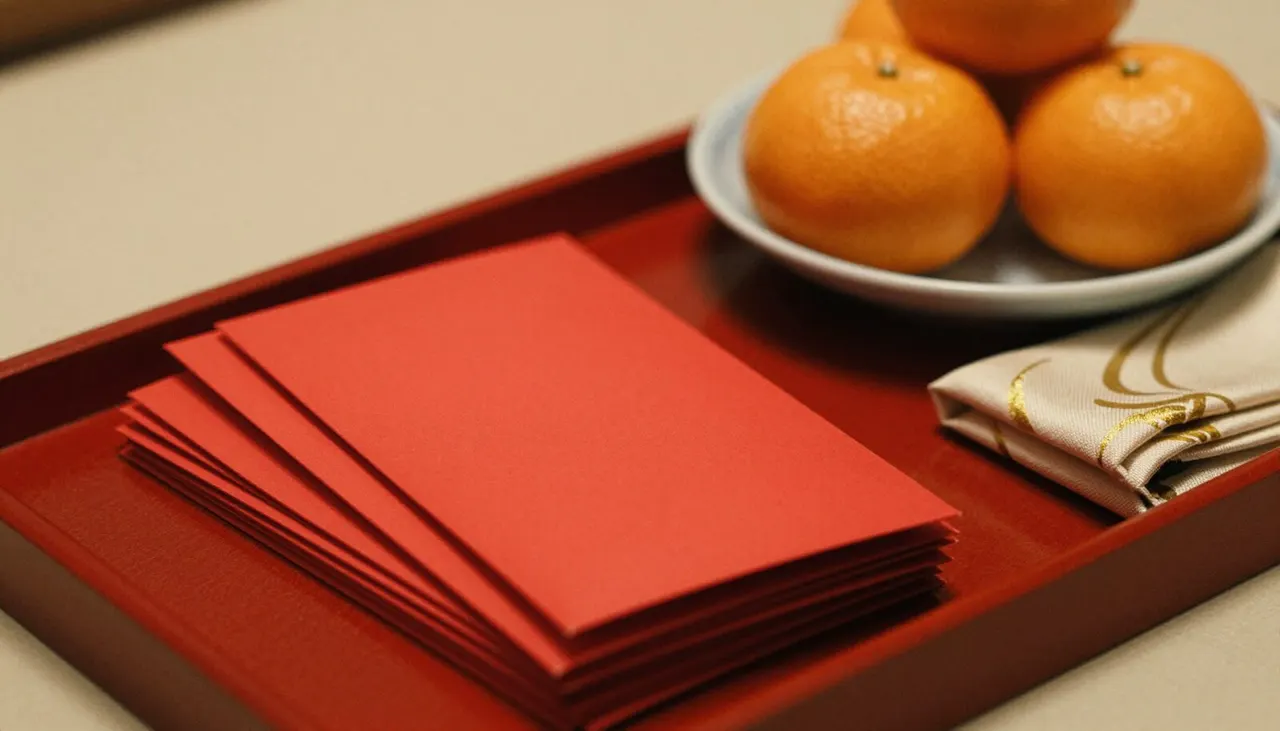
How should you give a red packet at a Chinese wedding in Singapore?
A red packet, or hongbao, is the customary gift given at a Chinese wedding in Singapore, and how it is given differs depending on whether you are attending the tea ceremony, the banquet, or both. The National Heritage Board’s Roots portal documents the tea ceremony as an exchange in which the couple serves tea to their elders and, in return, the elders give a red packet or a piece of jewellery. How much to give is always a personal decision, based on your relationship with the couple and your own means, rather than a fixed figure.
- A red packet, or hongbao, is a customary wedding gift in Chinese tradition; Roots links red with good fortune and happiness in its entry on Chinese weddings.
- At the tea ceremony, elders give the couple a red packet or a piece of jewellery in return for being served tea, according to Roots’ collection records.
- At the banquet, hosts can decide in advance how red packets will be received, for example at a reception table or by a trusted helper.
- Consider presenting a red packet with both hands, and ask your hosts if they have any preferences.
- The amount is always a personal decision, never a fixed rule; our guide to wedding ang bao rates goes through how guests commonly approach this.
- Dialect groups and individual families differ on several wedding customs, so ask your own parents or grandparents what they expect rather than assume.
What Roots records about giving red packets
Our guide to Chinese weddings in Singapore describes gift-giving before and on the wedding day, including guo da li gifts such as mandarin oranges for good luck and charcoal for a good life after marriage, and red packets or jewellery at the tea ceremony. The National Heritage Board’s Roots portal does not use the word hongbao in its main entry on Chinese weddings, but a Roots collection record of a Chinese wedding tea ceremony photographed in Singapore in 1962 notes that the elders are expected to give a hongbao, or red packet, or a piece of jewellery to the couple in return for being served tea, and that the ceremony marks the bride’s acceptance into the groom’s family.
Roots’ separate entry on tea customs adds that the couple also offer tea to each other during the ceremony, said to symbolise mutual trust and goodwill. Roots’ main entry on Chinese weddings also records that the red of the bride’s qun kua symbolises good fortune and happiness; our guide to auspicious wedding colours goes through where else this colour choice shows up across the day.
How giving differs between the tea ceremony and the banquet
At the tea ceremony, giving a red packet is part of the ritual itself. Roots’ collection records describe the couple serving tea to the senior members of the groom’s family, with the elders giving a red packet or a piece of jewellery in return; our guide to the Chinese tea ceremony goes through the serving order and what else to prepare. The sources reviewed for this guide describe this exchange at the groom’s home; where a separate ceremony is also held at the bride’s home, it is worth asking whether the same exchange is expected there too.
If you plan to bring a red packet to the banquet, check with your hosts where to hand it over. The sources reviewed for this guide do not document the banquet side of the custom in the same detail as the tea ceremony, so if you are hosting, it is worth deciding in advance how you would like red packets collected and letting your guests know.
Presenting a red packet respectfully
Consider presenting a red packet with both hands, and ask your hosts if they have any preferences. A Roots collection record describes elders giving the couple a red packet or jewellery in return for tea; confirm with your families who will attend. At the banquet, where a reception table or helper may receive it, the same care is worth keeping in mind even where the exchange is quicker.
If you are unsure how formal to be, it is reasonable to watch what other guests do, or to ask a family member or friend who knows the couple well. Practices can differ even between families who share the same dialect background, so ask rather than assume a custom applies uniformly.
Deciding on an amount
There is no fixed figure for a wedding red packet. What guests give is a personal decision shaped by their relationship with the couple, their own financial circumstances, and, in Chinese custom, a preference for certain numbers over others. Our guide to wedding ang bao rates goes through how guests commonly approach this, including the numbers many guests favour or avoid, and how the venue, meal and day of the banquet can factor into the decision.
If you are unsure what feels appropriate, it is reasonable to ask a friend or family member who knows the couple well, rather than guessing. Our guide to wedding ang bao rates notes that couples do not usually specify an amount and that guests’ own means and relationship with the couple come first.
What varies by dialect group and family
Wedding planner Rubina Tiyu, quoted in Roots’ main entry on Chinese weddings, describes dialect-group differences in bridal attire and gatecrash timing, rather than red packets specifically. Her advice to couples is to ask their own families, since “you don’t want to disrespect them at the end of the day.”
The same principle applies to red packets. The sources reviewed for this guide do not describe a red-packet custom that differs by dialect group specifically, so if you are unsure whether one red packet per household or one per guest is expected, ask a family member who knows the couple. Our guide to guo da li in Singapore covers a related occasion where symbolic gifts are exchanged and family differences are more clearly documented, and our guide to common wedding day taboos covers other customs some families observe more strictly than others.
Coordinating collection and safekeeping on the day
If your banquet will have a collection box or table for red packets, decide in advance who will look after it, since it may be unattended for stretches of the evening while guests continue to arrive. Assigning this to a specific trusted relative or friend, rather than leaving it to whoever happens to be nearby, is worth considering.
Once the event is over, ask whoever is holding the red packets to move them to a safe place promptly, rather than leaving them at the venue overnight. This is a small logistical detail, but one worth agreeing in advance, alongside the rest of your banquet run sheet, so it is not overlooked amid everything else happening at the end of the night.
What couples can do to make the etiquette clear for guests
Consider leaving the amount to each guest’s own judgment and means, while clearly explaining any arrangements for receiving gifts. Use your invitation or emcee to explain where guests should hand over red packets, especially if you have arranged a collection point.
If your day includes both a tea ceremony and a banquet with different guest lists, it is also worth clarifying which guests are invited to which event, since this affects when and where a red packet might be given. A short line on the invitation, or a word to your emcee, is usually enough to make the arrangement clear.
How RS Media handles this on the day
At the tea ceremony, our photographer (and videographer, if booked) stays beside the elders so the moment red packets are given in return for tea is captured. At the banquet, guest arrivals are covered when they fall within your agreed coverage hours. Tell us beforehand if your family would rather certain moments are not photographed. See our wedding photography.
Every family approaches red packet etiquette a little differently, and the guidance above is a starting point rather than a fixed rule. If you would like to talk through how red packets fit into your own tea ceremony or banquet, check your date with us, or read more about our actual-day wedding photography.