
In short
Saptapadi, meaning seven steps, is a central ritual in many Hindu wedding ceremonies in which the couple takes seven steps together, usually around a sacred fire, with each step traditionally associated with a specific vow or blessing for their married life.
- Saptapadi involves the couple taking seven steps together, each traditionally linked to a specific vow or blessing.
- It is usually performed around or near the sacred fire, guided by the officiating priest.
- The exact wording and order of the vows can vary between regional traditions and priests.
- Many communities consider the marriage formally complete once the seventh step is taken.
- Photographing this sequence needs a clear line of sight to the couple as they move through the steps.
What each of the seven steps traditionally represents
In many Hindu wedding traditions, each of the seven steps in saptapadi is associated with a specific vow or wish for the couple's married life, though the exact wording and emphasis vary between regional customs and individual priests. Common themes across many traditions include wishes for nourishment, strength, prosperity, happiness, progeny, long life, and harmony or companionship, though families and priests may phrase or order these differently.
Because interpretations and specific wording differ across communities and even between individual priests within the same broader tradition, it is worth treating any single description of the seven vows as one version among several rather than a fixed, universal script followed identically everywhere. Couples curious about the specific vows used in their own ceremony are usually best served by asking their officiating priest directly ahead of the day.
Where saptapadi takes place within the ceremony
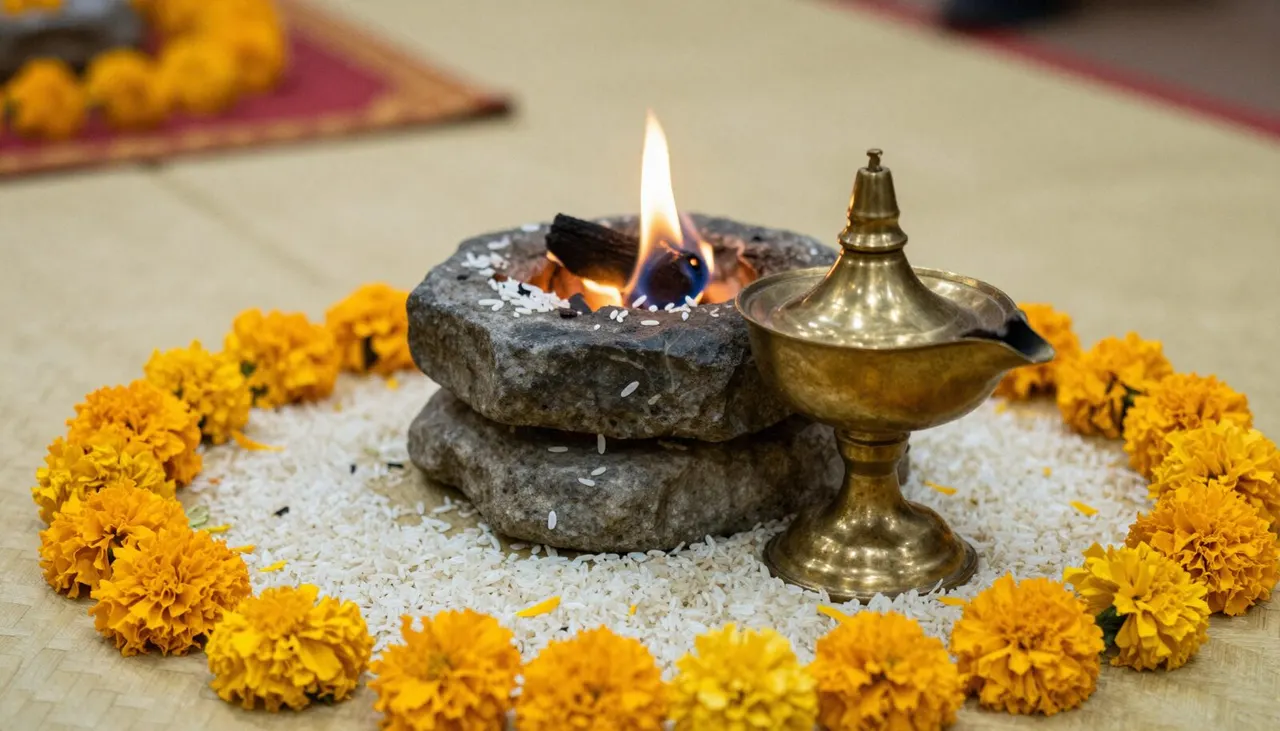
Saptapadi is typically performed around or near the sacred fire, known as the agni, which is considered a witness to the marriage in many Hindu traditions. The couple, often with their garments symbolically tied together, walks the seven steps guided by the officiating priest, who recites the corresponding vows or verses at each step.
This ritual usually takes place toward the latter part of the ceremony, following earlier steps such as the exchange of garlands and, in many traditions, the tying of the thali or mangalsutra, building toward what is often considered the formal completion of the marriage. The pace of this sequence is generally set by the priest rather than the couple, so it can move more slowly or quickly than expected.
Why this ritual is considered central to a Hindu wedding
In many Hindu traditions, the marriage is considered formally and spiritually complete once the seventh step of saptapadi has been taken, making this ritual one of the most significant moments of the entire ceremony rather than simply a symbolic gesture. This is part of why saptapadi is treated with particular care and attention by officiating priests and families alike.
Because of its significance, couples and families often want this specific sequence documented clearly and completely, rather than captured only partially or from an obstructed angle. Elders in the family sometimes watch this part of the ceremony especially closely, and their reactions in that moment are often worth capturing alongside the couple.
Photographing this sequence respectfully
Saptapadi typically takes place in a relatively contained area around the sacred fire, which can make positioning tricky if space is limited or if the priest, family members, or ceremonial items are close to the couple throughout. A clear line of sight that does not require stepping into the ritual space itself is generally the priority, balanced against the need to capture each step clearly as the couple moves.
Because the smoke from the sacred fire and the lighting around it can vary, it is worth discussing with your wedding photography team in advance how they plan to handle this part of the ceremony, particularly if the venue has limited natural light in that specific area. A low, steady position slightly to one side often works better than shooting directly through the smoke and heat rising from the fire.
Coordinating with the priest and family beforehand
Because saptapadi is guided closely by the officiating priest and follows a specific sequence, it helps to check in advance, through the couple or their family, whether the priest is comfortable with a photographer or videographer moving quietly around the ritual space during this portion of the ceremony. Some priests prefer photographers to remain in a fixed position during this specific ritual.
Confirming this ahead of time, along with a general sense of how long the sequence is expected to take, allows your photography team to plan their positioning respectfully without disrupting the flow of the ceremony itself.
Central rituals like saptapadi deserve careful planning so nothing is missed on the day. Get in touch to discuss how your ceremony's specific traditions can be covered with care.