
In short
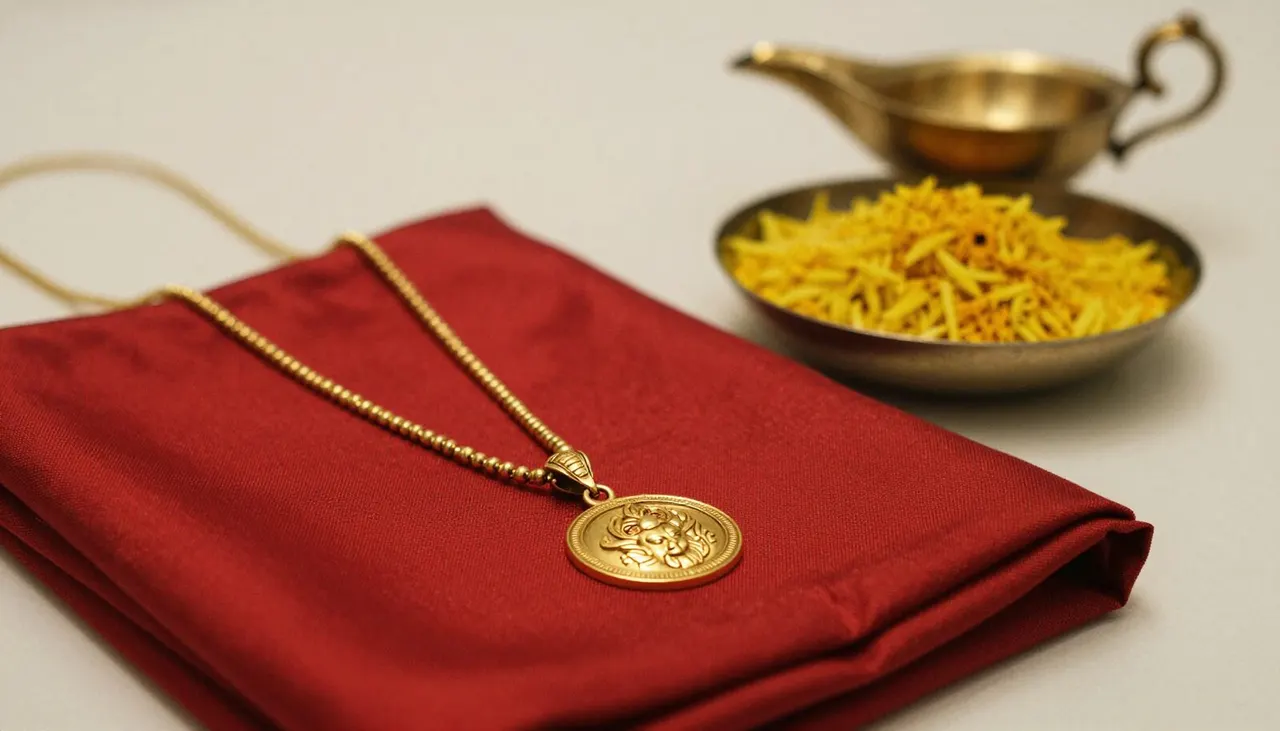
The thali and mangalsutra are sacred pendants, typically strung on a yellow thread or gold chain, tied or placed around the bride's neck during a Hindu wedding ceremony to mark her married status, and the exact form, name and manner of tying varies across different Hindu communities.
- Thali and mangalsutra refer to related but not identical traditions, with naming and form varying by community and region.
- The pendant is typically tied or fastened around the bride's neck by the groom during the ceremony.
- This moment is often considered one of the most significant in the wedding ritual itself.
- Design and materials vary widely, from simple gold pendants to elaborate designs specific to a family's tradition.
- Photographing this moment clearly requires knowing roughly when in the ceremony it will happen.
What the thali and mangalsutra symbolise
The thali, used more commonly in South Indian and Tamil traditions, and the mangalsutra, a term more widely used in North Indian traditions, both refer to a sacred pendant or set of pendants worn by a married woman as a sign of her marital status. The pendant is typically threaded on a yellow cord soaked in turmeric, or strung on a gold chain, and its exact design often carries meaning specific to the family's community, region, or caste tradition.
While the two terms are related and sometimes used loosely by people outside these traditions, they are not simply interchangeable words for the same object, since the specific form, symbolism, and manner of tying can differ meaningfully between communities. It is worth asking a couple directly which term and tradition applies to their own family rather than assuming based on general familiarity with either word. Some families also pass down a pendant design through generations, giving the object added personal significance beyond its ritual meaning.
The moment they are tied or worn during the ceremony
The tying or placing of the thali or mangalsutra typically happens at a specific, ritually significant point within the wedding ceremony, often considered one of the central moments of the entire ritual. In many traditions, the groom ties the pendant around the bride's neck himself, sometimes with the help of an officiating priest guiding the process, while family members and guests watch closely.
The exact timing of this moment within the broader ceremony varies depending on the specific rituals being followed, and it is often preceded or followed by other significant steps such as the exchange of garlands or specific chants recited by the priest. In some traditions, this moment happens close in sequence to saptapadi, the seven steps ritual, forming part of a fuller central sequence within the ceremony.
Why this moment matters so much to photograph well
Because the tying of the thali or mangalsutra is widely regarded as one of the most significant moments of a Hindu wedding ceremony, it deserves careful attention from a photography standpoint, both for a clear, well-composed shot of the pendant itself and for the expressions of the couple and close family in that instant. Poor positioning or a missed moment here is difficult to make up for elsewhere in the day.
Because the moment can happen quickly and is sometimes partially obscured by the priest, family members, or ceremonial items nearby, discussing camera positioning for this specific ritual in advance with your wedding photography team is worth the extra planning.
How this varies across different Hindu communities
Because Singapore's Hindu community includes families from a range of regional backgrounds, including Tamil, Telugu, and North Indian traditions among others, the specific ritual surrounding the thali or mangalsutra can differ noticeably from one wedding to the next. Some traditions place significant emphasis on the specific knot used to tie the thread, while others focus more on the pendant's design or the chants accompanying the moment.
Because of this variation, it is generally best practice to ask the couple or their family directly about the specific form their ceremony will take, rather than relying on assumptions carried over from a different wedding or community.
Planning for this moment with your photography team
Confirming with the couple or the officiating priest roughly where in the ceremony this moment will fall helps your photography team position themselves for an unobstructed view well before it happens. If the ceremony involves several close family members standing near the couple at this point, it is also worth asking in advance whether the family wants a specific angle that includes them in the frame.
Because this moment is generally regarded as central to the ceremony, treating it as a clear priority when briefing your photography and videography team helps make sure it is not compromised by an unexpected obstruction or a missed cue.
Getting the timing and positioning right for a central ritual like this takes some advance planning. Get in touch to talk through how your ceremony's specific traditions should be covered.