
In short
A haldi ceremony is a pre-wedding ritual in an Indian wedding where a turmeric paste is applied to the bride and groom's skin by family members, considered a purifying and auspicious step ahead of the wedding, and it is usually a colourful, playful event that photographs well in natural light.
- Turmeric paste, mixed with ingredients such as sandalwood or rosewater depending on the family, is applied to the skin.
- Family members take turns applying the paste, often to the bride and groom separately at their own homes.
- The atmosphere is generally playful and informal, quite different from more solemn wedding rituals.
- Haldi typically happens a day or two before the wedding, similar in timing to mehndi.
- Turmeric stains easily, so clothing and photography equipment need a bit of practical planning.
What a haldi ceremony involves and its significance
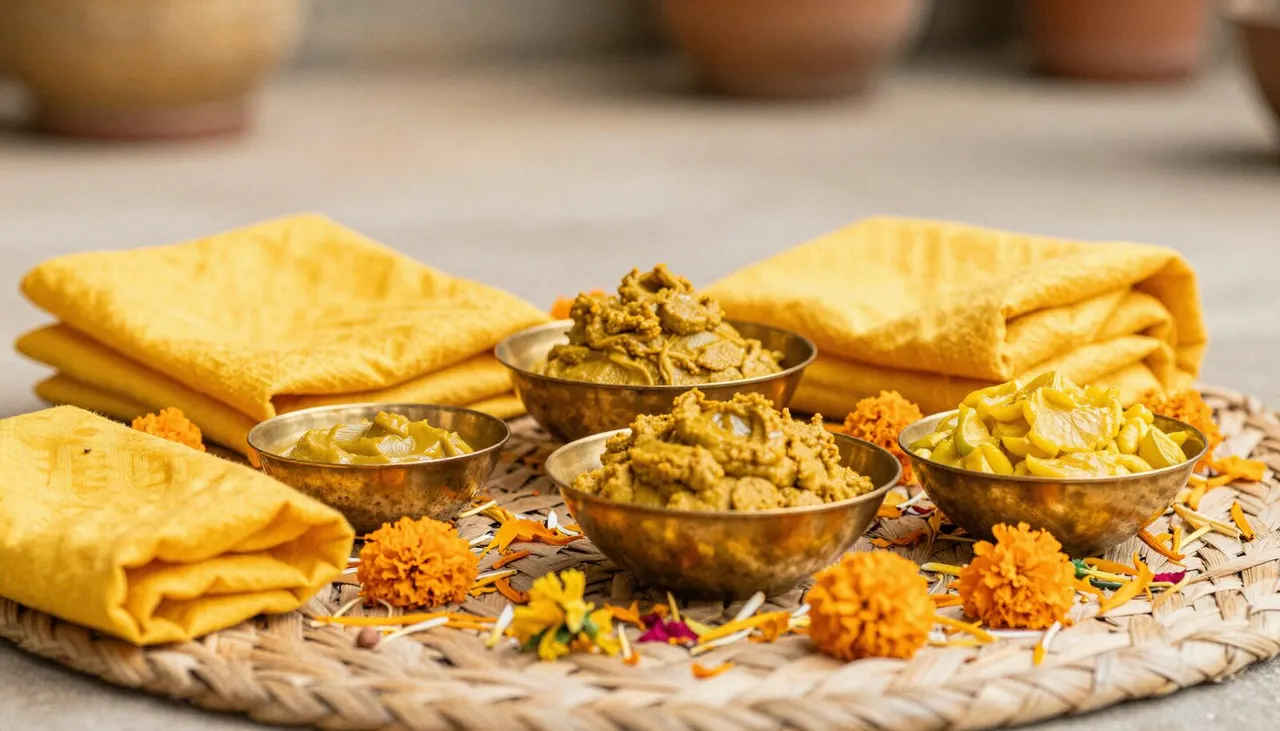
Haldi refers to a ritual in which a turmeric-based paste is applied to the skin of the bride and groom, typically by close family members, in the days leading up to the wedding. The paste is often mixed with other ingredients such as sandalwood, rosewater, or milk, depending on family and regional custom, and applied to the face, arms, and sometimes the whole body.
The ritual is generally understood as a purifying step that leaves the skin glowing ahead of the wedding, and it is considered an auspicious part of wedding preparations in many Hindu traditions. Some families hold haldi for the bride and groom together, while others hold separate ceremonies at each of their own homes on the same or different days. Elders often lead the application, with younger relatives and friends following in turn.
Why turmeric paste is central to this ritual
Turmeric has long held a place in South Asian customs beyond the kitchen, valued for its bright colour and associations with purity and good fortune in many communities. In the context of a wedding, applying it to the bride and groom is generally understood as a blessing for the marriage ahead, carried out by family members rather than a professional.
Because turmeric stains strongly, it is common for the bride and groom to wear older or simple clothing during the ceremony, often in a plain colour such as yellow, saved specifically for this event rather than anything more formal. Some families also set aside a cloth or sheet to protect furniture and flooring from stains during the application.
Capturing the playful, colourful atmosphere on camera
Haldi tends to be one of the more visually vibrant and light-hearted events in the lead-up to a wedding, with bright yellow turmeric paste, playful interactions between family members, and often a fair amount of good-natured mess. This makes it a rewarding event to photograph, particularly in natural daylight, which brings out the colour of the turmeric well.
Because the event can get physically messy, it is worth discussing with your photographer how closely they plan to work during the actual application, since some prefer to stay slightly back during the messier moments and move in for close-up detail shots once the paste has been applied.
Where haldi typically falls in the wedding timeline
Haldi is usually held a day or two before the wedding, often around the same period as mehndi, though the two are separate rituals with their own focus. Some families schedule haldi in the morning, followed by mehndi later the same day or on a subsequent day, depending on how the wedding week is structured.
Because it typically falls outside standard actual-day wedding photography coverage, it is worth mentioning haldi specifically when discussing your overall coverage, so it can be booked as part of your pre-wedding events rather than overlooked. Some families hold separate haldi ceremonies for the bride and groom at their own homes, which affects how coverage needs to be split across locations.
Planning haldi photography around the mess and movement
Because turmeric paste is applied by hand, often by several family members in quick succession, haldi photography benefits from a photographer who can move around the space and capture spontaneous moments rather than staged shots. Letting your photographer know roughly how many people are expected to take part in the application helps them plan where to position themselves.
If haldi is being held outdoors or in a space with strong natural light, this generally works in your favour for photography, though it is worth checking the venue and timing in advance to make sure the light will be good at the time the ceremony takes place. Shooting from a slightly lower angle can also help capture expressions clearly as turmeric is applied to the face.
If haldi or other pre-wedding rituals are part of your celebration, plan the timing and photography for them alongside your main event. Get in touch to discuss coverage for the days leading up to your wedding.