
What is a kompang, and when is it played at a Malay wedding?
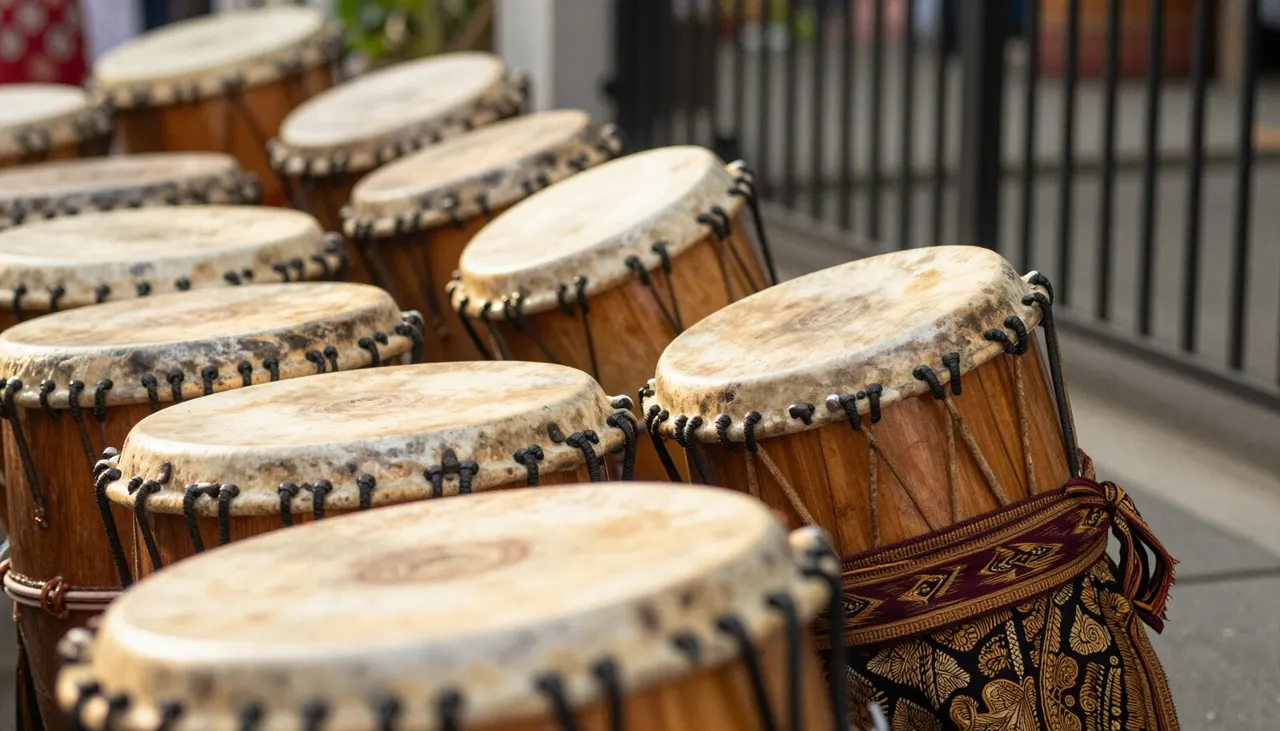
A kompang is a hand-held frame drum, and a kompang ensemble traditionally accompanies the groom’s procession and announces his arrival at a Malay wedding.
- Roots notes that cengal hardwood is often used for kompang frames and that the drum’s natural skin membrane is affixed with a rattan hoop.
- Roots’ account of Malay weddings describes the groom arriving with his entourage and the kompang ensemble, flanked by bunga manggar, palm blossoms.
- BiblioAsia describes the drumming as carrying on from the procession into the bersanding, the ceremony where the couple sits in state on the pelamin.
- Confirm who will arrange the kompang group and coordinate its timing with the groom’s arrival.
- Photographing and filming a moving procession needs a different approach from static ceremony shots.
What a kompang procession is and its role in the celebration
The kompang is a hand frame-drum. Roots, the National Heritage Board’s intangible cultural heritage portal, notes that cengal hardwood is often used for kompang frames and that the membrane is affixed with a rattan hoop; the practitioner it profiles, Yaziz Hassan, attributes Malay drums’ mellow, mid-range tone to their animal-skin membranes. He prefers goatskin or young cowhide, and holds that traditional Malay drums should only be played by hand. Roots reports that Singapore kompang practitioners regard instruments from Bengkalis, in Riau, highly, and that most Malay drums used locally are sourced from regional craft centres.
In a Malay wedding, Roots’ entry on Malay Weddings describes the groom arriving at the bride’s side with his entourage and the kompang, or drum ensemble, flanked by bunga manggar, palm blossoms, as he leads his relatives and friends to the bride’s home. BiblioAsia, the National Library Board’s heritage magazine, describes the sound of the kompang, sometimes referred to as rebana, and a troupe singing along to the drums signalling the arrival of the groom and his entourage, who begin a processional march known as berarak, with two men carrying the bunga manggar beside him.
How the rhythm carries from the procession into the bersanding
BiblioAsia notes that the kompang’s role does not end once the procession arrives. Its drumming commonly continues into the bersanding, the sitting-in-state ceremony that follows, carried over from the preceding procession rather than stopping once the groom reaches the venue. Roots’ account of the bersanding describes the groom needing to complete a series of tasks before the mak andam allows him to sit beside the bride, and BiblioAsia describes a silat pengantin, a Malay martial arts display, being performed for the groom once he has passed the tests and is seated before the bridal dais.
The drumming announces the groom’s arrival and can continue into the bersanding. Our guide to the majlis covers what else typically happens once the couple is seated at the pelamin.
Family variation: whose arrival it marks, and how
The kompang is traditionally associated with the groom’s arrival, and Roots’ description of a Malay wedding centres the drumming and the bunga manggar on his procession to the bride. The heritage sources describe the kompang with the groom’s arrival; if your family plans a different arrangement, tell your photographer and videographer in advance. Roots notes more broadly that Singapore’s Malay community includes sub-groups such as the Bugis and the Javanese, each of which may bring its own elements into a wedding, which is part of why practice differs from one household to the next.
Arranging kompang performers for the wedding day
Check whether your wedding arrangements include a kompang group or require a separate booking, then agree the group size, route and timing with your coordinator. Confirm with the group in advance how long the procession is expected to take, since this affects when other parts of the schedule, including the bersanding, can begin.
If the procession is planned to move through a specific route, such as from a car park to a hall entrance, walk the route beforehand if possible, so the group and the wedding party both know where to gather and where the procession will end. It also helps to check whether the venue, whether a void deck, a mosque or hall, or another setting, has any restrictions on noise or gathering points, so the group can plan around them.
Capturing the procession on camera as it moves
A moving procession is a different photography and videography challenge from a seated ceremony, since the group is in motion, often surrounded by guests, and the drumming makes for strong candid moments as well as posed shots. Wide shots capturing the full group in motion, paired with closer shots of individual drummers and the groom’s expression as he approaches, tend to work well together.
Clear audio of the drumming is worth discussing with your video team in advance, since ambient noise from a crowd or an open-air setting can affect sound quality if not planned for. If bunga manggar or a silat display are part of your family’s procession, mention this when briefing your team, so they know to watch for it.
Coordinating the procession with your photography and video team
Brief your photography and videography team on the procession’s expected route and timing well before the wedding; our guide to planning a wedding day timeline covers how this typically fits alongside preparation and the bersanding. Knowing roughly where the group will start and end lets your team position themselves for both wide and close shots without scrambling once the procession begins.
If your day also includes other events such as an akad nikah or a majlis, share the full running order, covered in our guide to Malay weddings in Singapore, so your team understands where the procession fits relative to everything else.
How RS Media handles this on the day
We confirm the groom's arrival time and the kompang group's position with you before the day. Our photographer goes ahead of the procession to frame it from the front, and if videography is booked the videographer records the drummers so the sound and movement are kept on film. We then stay with the entourage into the bersanding. See our wedding videography.
Every family arranges its kompang procession and arrival customs a little differently, so treat the details above as a starting point to confirm with yours rather than a fixed script. If you would like to talk through covering your procession and celebration together, check your date with us, or read more about our actual-day wedding photography.