
In short
A majlis is the wider wedding celebration in a Malay wedding, usually held at a void deck, hall, or event space, where the couple is seated on the pelamin and guests gather to eat, offer congratulations, and take part in the bersanding, distinct from the akad nikah, which is the solemnisation itself.
- The majlis is the celebratory event, while the akad nikah is the religious solemnisation, and the two are not the same thing.
- Some couples hold both on the same day, while others separate them by days or weeks.
- Guests typically greet the couple on the pelamin during the majlis, often over a meal.
- Venues range from void decks and community halls to hotels and event spaces, depending on family preference.
- Photography during a majlis usually focuses on the pelamin, guest greetings, and the overall atmosphere of the gathering.
What distinguishes a majlis from other wedding events
Majlis is a general term for a gathering or celebration, and in the context of a Malay wedding, it refers specifically to the reception where guests come together to celebrate the couple. This is distinct from the akad nikah, which is the religious solemnisation performed before an authorised solemniser, typically involving the groom, the bride's wali, and witnesses. The majlis is the social and celebratory counterpart to that legal and religious step.
Because the terms are sometimes used loosely, it helps to be clear with vendors, including your photographer, about which specific event you mean when planning coverage, since the atmosphere, setting, and what happens at each can differ significantly. A quiet morning solemnisation and a lively afternoon reception call for quite different coverage plans, even on the same day.
Typical elements included in the celebration
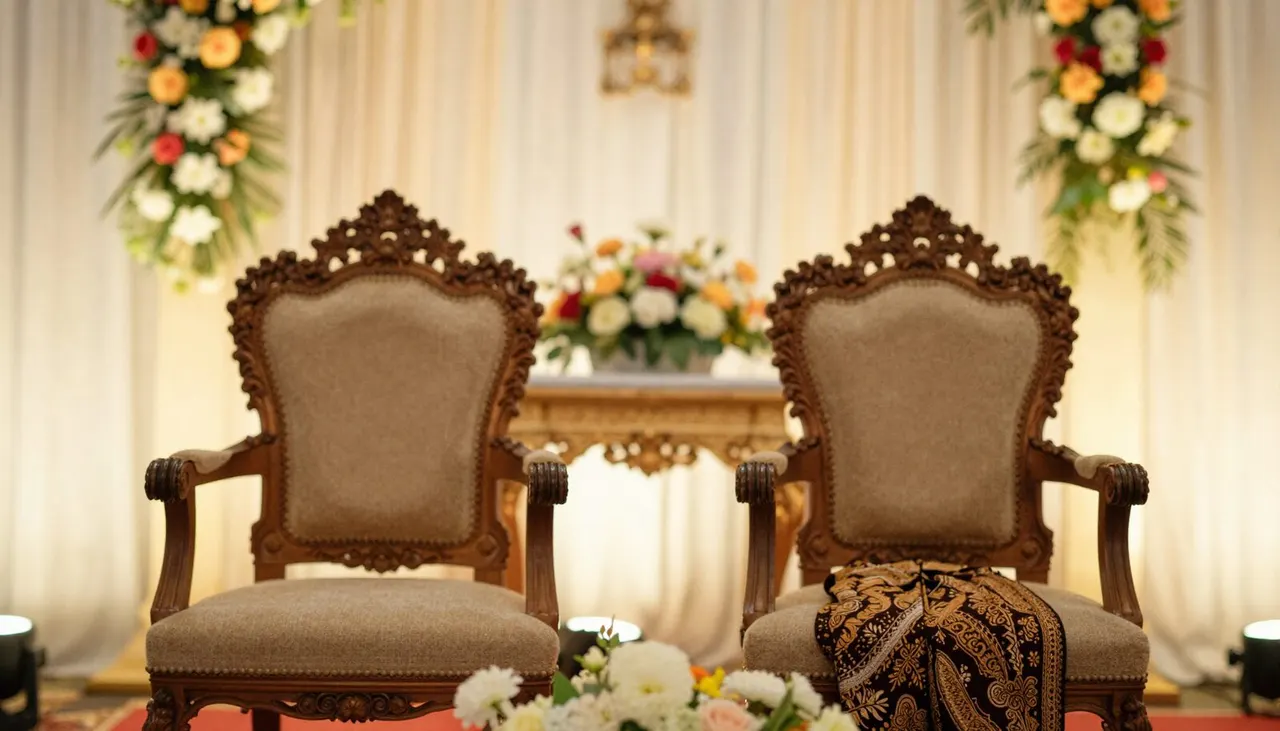
A majlis typically includes the bersanding, where the couple is seated together on the pelamin, the decorated dais, for guests to view and offer their congratulations. Guests are usually served food, and the couple may greet tables or receive well-wishers throughout the event. Some families include additional customs during the majlis, such as a kompang procession to mark the couple's entrance, or a formal exchange of hantaran gifts between families.
The scale of a majlis varies enormously, from a modest gathering at a void deck or community hall to a larger celebration at a hotel or event venue, depending entirely on the family's preference and the number of guests invited.
How the majlis fits alongside the akad nikah
Some couples hold the akad nikah and the majlis on the same day, with the solemnisation taking place quietly in the morning before the celebration begins later. Others separate the two events by days or even weeks, particularly if the solemnisation is kept small and private while the majlis is planned as a larger gathering at a different time.
There is no single correct approach, and the decision usually comes down to family preference, venue availability, and how the couple wants to balance a private religious ceremony against a larger celebration. If you are unsure how your family prefers to structure this, it is worth discussing it early, since it affects your overall wedding day planning.
What a photographer focuses on during this event
During a majlis, photography typically centres on the couple seated on the pelamin, guest greetings and well-wishes, and candid moments of family and friends enjoying the celebration together. Detail shots of the decorated dais, the food, and any specific customs included in the programme, such as a kompang procession or hantaran presentation, round out a fuller record of the day.
Because a majlis can involve a steady flow of guests over an extended period, coverage often works best when the photographer understands the rough running order in advance, so key moments such as the couple's entrance are not missed. It also helps to flag any guests or family members who should be prioritised for individual photographs during the reception.
Planning your majlis coverage in advance
Sharing your venue layout, expected guest flow, and any planned customs with your wedding photography team ahead of time helps them plan where to position themselves throughout the event. This is particularly useful for larger majlis celebrations, where guests may be spread across multiple areas of a venue, or where the pelamin and the dining area are in different rooms.
If your day includes both an akad nikah and a majlis, whether on the same day or separately, make sure your photography coverage reflects how you have structured the two events, since they call for different approaches and settings. A short walkthrough of the venue with your photographer beforehand, even informally, tends to make the day run more smoothly for everyone involved.
Planning a majlis involves several moving parts, from venue layout to guest flow, so it helps to walk your team through the day in advance. Get in touch to plan coverage that fits how your celebration is structured.