
In short
The heritage records discussed here describe historical Chinese Peranakan, or Baba-Nyonya, wedding customs, including a twelve-day celebration, the chiu thau coming-of-age ceremony, the lap chai exchange of gifts and feasts at the tok panjang, the long table. They describe customs of the past rather than a required programme for your wedding. This guide introduces what the records say about each one and suggests what to discuss with your family and your photographer.
- The twelve-day wedding is historical context; ask your family which customs, if any, they wish to observe.
- Chiu thau is the hair-combing, coming-of-age ceremony that museum records place at the start of the twelve days, at each family’s home; lap chai is the exchange of wedding gifts between the two families.
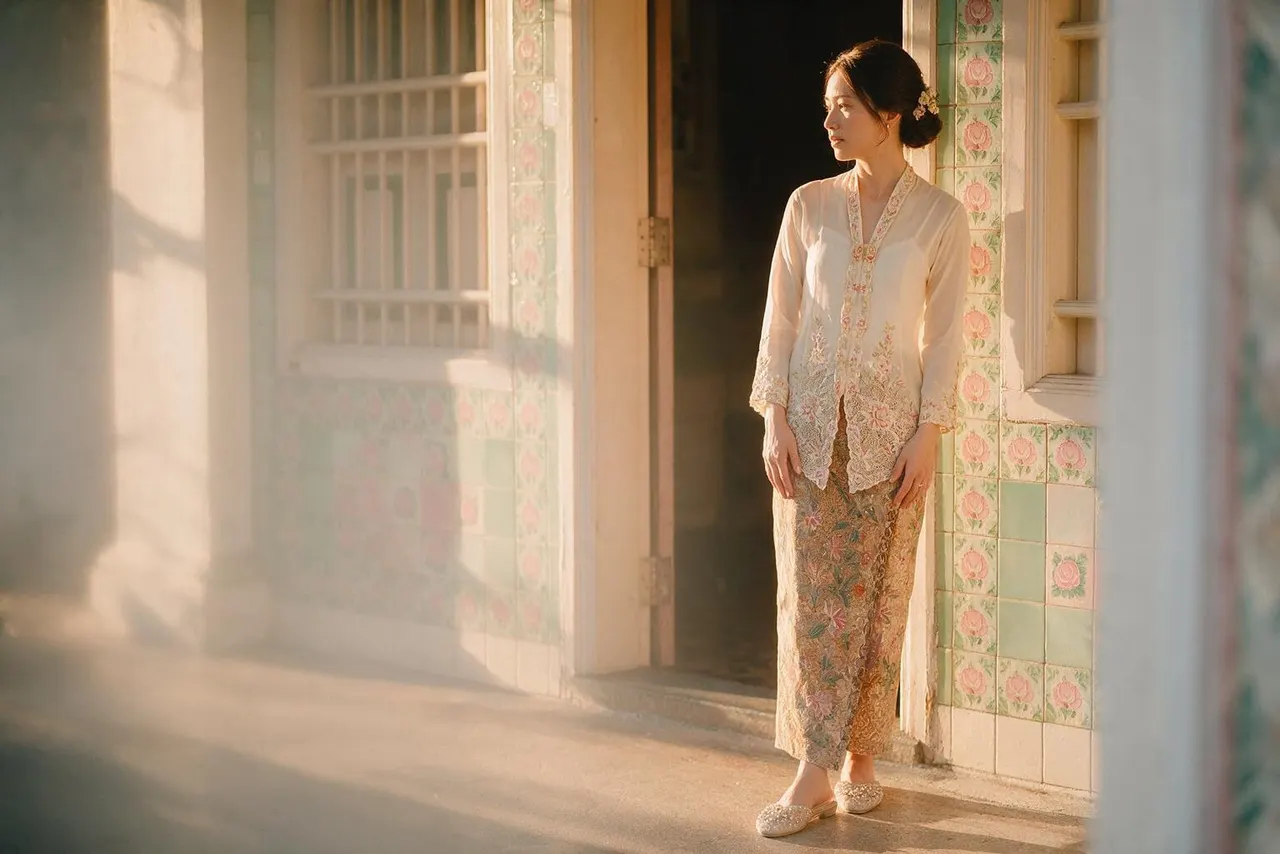
- The sarong kebaya, beaded slippers known as kasut manek and heirloom jewellery are details worth planning close-up photographs around.
- Customary celebrations sit alongside the legal requirements for marriage, which are met through the Registry of Marriages or, where both partners are Muslim, the Registry of Muslim Marriages.
- This guide focuses on Chinese Peranakan customs; do not assume they apply to Chetti Melaka or Jawi Peranakan families, who have their own traditions.
- Telling your photographer which customs your family plans to include, and which heirloom pieces will be present, lets them prepare rather than react on the day.
Who the Peranakans are
The Peranakan Museum traces the word to the Malay root anak, meaning child: peranakan means “born of”, and suggests someone locally born with heritage from somewhere else. The museum describes today’s Peranakan communities as a melding of ancestral cultures, Chinese, Indian, Arab, European and others, with the indigenous cultures of the Malay-Indonesian archipelago, and names several of them: Chinese Peranakans, Chetti Melakans or Peranakan Indians, and Jawi and Arab Peranakans.
A National Library Board BiblioAsia article describes the Chinese Peranakans, or Baba-Nyonya, as an acculturated community of Southern Chinese domiciled in the Straits Settlements since they first settled in Melaka in the 16th century. The wedding collection records used in this guide mainly concern their customs. The Chetti Melaka, according to the National Heritage Board’s Roots portal, are descendants of Tamil traders who settled in Melaka during the reign of the Melaka Sultanate and married local women of Malay and Chinese descent, and are predominantly Hindu. The Roots account describes traditional Chetti Melaka wedding rituals including parisom (the engagement), berhinai (the application of henna), menepah thali (making the wedding pendant) and berarak (the wedding procession); ask the family which traditions they observe.
The sources used here do not describe Jawi Peranakan wedding rituals in detail, so ask the family directly. Where both partners are Muslim, the marriage is registered with the Registry of Muslim Marriages rather than the civil registry described later in this guide.
The twelve-day wedding, as history
Museum records describe the traditional Chinese Peranakan wedding as a twelve-day affair. A collection record for a pair of chiu thau trousers from Penang places the hair-combing, coming-of-age ceremony on the first day; another record describes relatives receiving a formal invitation on the sixth day before the wedding; and the bride wore more than one wedding outfit over the celebration, with turquoise or green-coloured robes on the twelfth and last day. In Penang, one collection record notes, the final day was when the bride was formally accepted into the family by the groom’s parents.
Use the historical twelve-day structure as background when discussing your family’s wedding plans: it is a list of moments a family might choose from, such as a hair-combing ceremony, a gift exchange or a long-table feast, rather than an itinerary to complete end to end.
Lap chai: the exchange of gifts
Lap chai is the ceremony in which wedding gifts are exchanged between the bride’s and groom’s families. A National Museum of Singapore collection record on Roots describes a four-tiered bakul siah used to carry these gifts during lap chai. The record also describes the basket’s use during sang ih, six days before the wedding, when a party led by the master of ceremonies delivered formal invitations and bowls of kueh ih, small red and white glutinous rice balls in syrup, to relatives. Irish carpets, imported from England and commonly used by Peranakan families, covered the table on which the gifts exchanged by the bride and groom were displayed.
If your family also uses the term guo da li, ask how they understand its relationship to lap chai; the heritage records used here do not establish whether the terms are interchangeable. If the baskets and gifts are family heirlooms, a few minutes to photograph them laid out, before the exchange begins, is worth building into the plan.
Chiu thau: the coming-of-age ceremony
Chiu thau is the hair-combing ceremony that marked the bride’s and groom’s passage into adulthood. A Peranakan Museum collection record on Roots, describing chiu thau trousers from Penang, places the ceremony on the first day of the twelve-day wedding, at the bride’s and groom’s respective homes before a sam kai altar, which the record associates with weddings and the Jade Emperor’s birthday. Another record describes white garments worn by the bride and groom at the start of the ceremony as a symbol of their purity, and a Baba Malay song, “Pasang lilin”, describes the lighting of candles during the ceremony.
If your family plans to observe chiu thau, confirm its timing, location, participants and any photography restrictions with the people leading the ceremony, then brief your photographer. If you also plan an an chuang bed-setting ceremony, confirm its timing and location with your family and include it in the photography schedule.
Wedding attire then and now
The national collection holds elaborate garments from the twelve-day wedding. A Peranakan Museum record on Roots describes a red silk bridal tunic embroidered with a lotus, associated with purity, alongside phoenix and peony motifs found on Peranakan wedding garments; the bride wore it with a pleated silk skirt. A separate songket record notes that Peranakan wedding garments usually consist of a plain silk tunic worn with a songket sarong and Peranakan wedding jewellery, songket being favoured for its association with royalty, and another record notes that for Peranakans in Malacca and Singapore, wedding robes were often specially ordered from Shanghai or made by Shanghainese tailors living in Singapore.
If you choose a nyonya kebaya and sarong for your wedding, discuss the outfit with your photographer; the National Heritage Board describes the nyonya kebaya as typically a sheer blouse made from lightweight fabric. Roots names the beaded slipper, kasut manek, and the sarong kebaya as two iconic examples of nyonya beadwork and embroidery, and notes that the bride would bead and embroider the groom’s slippers and belt, with wedding motifs such as pairs of ducks to symbolise conjugal fidelity and phoenixes representing the couple. The kebaya was inscribed on UNESCO’s Representative List of the Intangible Cultural Heritage of Humanity in 2024, as a joint nomination from Brunei Darussalam, Indonesia, Malaysia, Singapore and Thailand. See our guide to auspicious colours in Chinese wedding tradition for how colour is generally read across a wedding day.
Where the tea ceremony overlaps with Chinese custom
Museum records note that Peranakan wedding practices closely resembled old wedding customs in Fujian province, from which many Peranakans hail, but they do not set out a standard Peranakan tea ceremony sequence. If your family includes a tea ceremony, confirm who will be served, the serving order, seating and any gifts with the family before briefing your photographer.
For how the tea ceremony is usually run at Chinese weddings in Singapore, our guide to the Chinese tea ceremony in Singapore covers the serving order, seating and how a crew works the room, and our guide to red packet etiquette covers what is given at that point. Where a Peranakan family has its own customs for the ceremony, such as particular phrases or a distinct seating arrangement, mention these to your crew in advance so they are not missed.
Tok panjang, the long-table feast
Tok panjang refers to the long rectangular table found in many Peranakan Chinese homes, and makan tok panjang, museum records explain, literally means to eat at a long table, dining at home on celebratory occasions such as the tok panjang wedding feast. Nyonya ware plates and dishes were mostly bought as part of dinner services for such occasions, with wealthy families commissioning rare designs, and glass epergnes bought in Europe by well-to-do Peranakans held flowers and pot-pourri as centrepieces on the table.
If your family plans a tok panjang feast, ask how the table will be arranged and whether it can be photographed before guests are seated, since a laid table, porcelain and centrepieces make a detail set of their own.
The legal side: ROM
Whatever customs a family chooses to observe, the legal requirements for marriage are met separately. In Singapore, a civil marriage is registered with the Registry of Marriages; where both partners are Muslim, the marriage is registered with the Registry of Muslim Marriages instead. Our guide to ROM in Singapore covers who can marry, the notice period, witnesses and what happens on the day.
When planning your solemnisation, confirm a suitable date and venue and decide how it will fit around your customary celebration.
Choosing which customs to revive
Discuss which Chinese Peranakan customs, if any, your family wishes to include and how these fit into your wedding plans. Ask parents and grandparents which customs matter to them, and share those priorities with your photographer, so that quieter moments at home are planned for alongside the larger celebration. This is also a natural point to settle your date, with reference to the Chinese almanac if that matters to your family, as covered in our guide to auspicious dates and peak wedding season in Singapore.
Photographing kebaya, beadwork and heirlooms
Beadwork and fine embroidery catch and reflect light differently depending on the angle, so a considered, well-lit close-up generally serves this kind of detail better than a shot taken quickly under flat lighting. Tell your photographer in advance which pieces are heirlooms, borrowed, or newly commissioned, since this can shape how much time goes into detail shots of the kebaya, kasut manek or jewellery, as against wider portraits.
Where a family pairs a Peranakan look with a more contemporary outfit elsewhere in the day, treating the two as separate, deliberate segments, in the way our guide to pairing a cheongsam with a modern gown describes, generally works better than blending both looks into a single set of images. Before photographing an heirloom, agree who may handle it and whether a relative should position it for the shot.
Katong, Joo Chiat and heritage settings
The history of Katong-Joo Chiat on Roots, drawing on National Library Board resources, notes that Peranakan families settled in Joo Chiat and built many shophouses conserved today, and that Joo Chiat became Singapore’s first Heritage Town in 2011. You could consider the area for portraits that draw on Peranakan heritage; check access and any permission requirements for your chosen spot, including five-foot ways and building frontages, and keep entrances and pedestrian routes clear. Our guides to pre-wedding photoshoot locations in Singapore and pre-wedding shoot permits cover this area and the permissions question in more detail.
If a museum, gallery or other heritage venue is part of your plan, check that venue’s own photography rules directly with them beforehand rather than assuming a permit is not needed.
Two families, one blended tradition
If your families have different cultural or religious backgrounds, discuss which traditions each wishes to observe and whether any requirements affect how the ceremonies can be combined. That applies whether one side is Chinese Peranakan and the other is not, or whether a Chetti Melaka or Jawi Peranakan background is part of the picture.
Talking through both families’ expectations before the day, and sharing them with your photography and videography crew, helps avoid a situation where a custom that matters to one side is missed because the crew was not told about it in advance.
Peranakan customs vary between families, and the customs described above are historical starting points rather than a fixed programme to expect at every wedding. If you would like to talk through which elements your family plans to revive, check your date with us, or read more about our actual-day wedding photography.