
In short
The an chuang, or bed-setting ceremony, is a quiet ritual held before a Chinese wedding day in which a couple considered fortunate in marriage arranges the new marital bed and places symbolic items on it, such as red dates and mandarin oranges, to wish the newlyweds a sweet and fruitful union.
- The an chuang is usually done a few days before the wedding, not on the day itself.
- A couple or relative with a stable, well-regarded marriage is traditionally asked to set the bed.
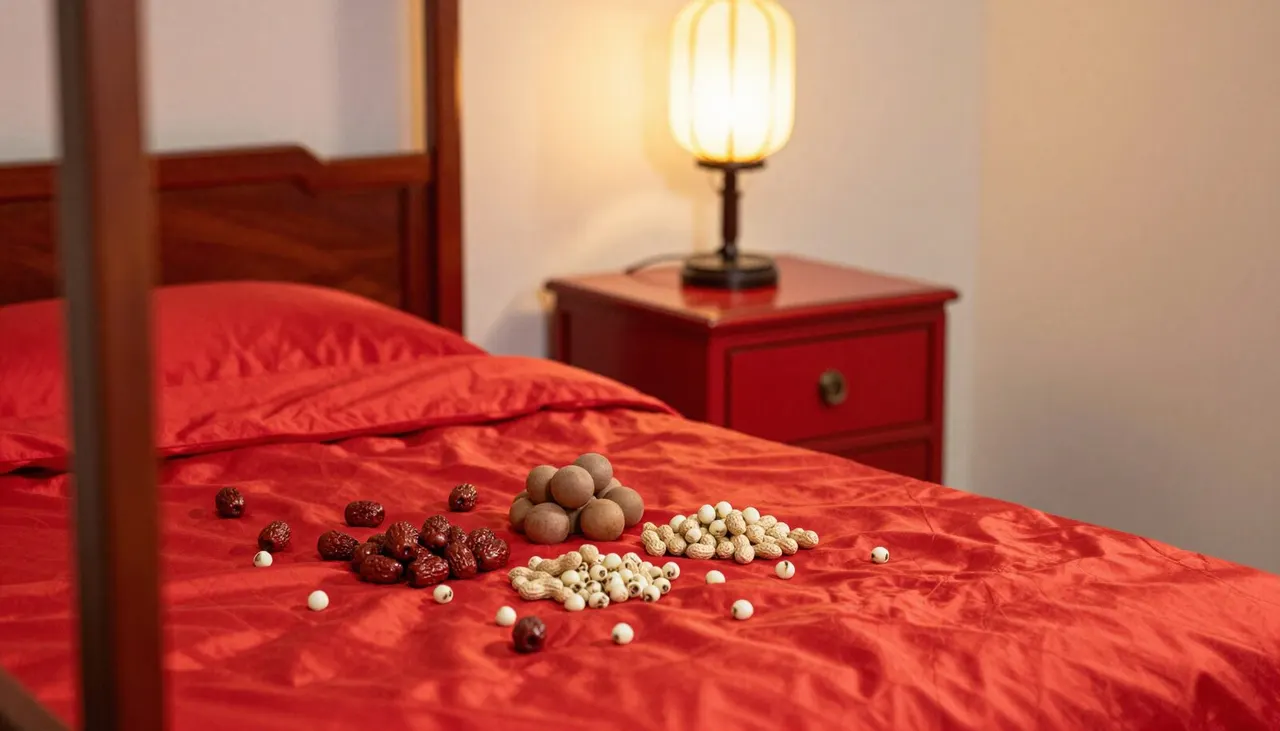
- Red dates, longans, peanuts and mandarin oranges are common items placed on the bed for their symbolic meaning.
- The ritual takes place at the new home the couple will share, away from the main celebration.
- Because it happens quietly and in advance, you need to plan ahead if you want it documented.
What the an chuang ceremony involves
An chuang literally means to settle or arrange the bed, and it refers to the ritual of preparing the marital bed before a Chinese wedding. The bed is made up with new linens, usually in red or another auspicious colour, and then symbolic items are scattered across it. Red dates, longans, peanuts, and mandarin oranges are commonly used, each chosen for a meaning tied to sweetness, fertility, or a smooth start to married life.
Some families also include a bowl of tang yuan, sweet glutinous rice balls, as part of the same visit. The exact items vary between families and dialect groups, and some households keep the practice simple while others follow a fuller set of steps passed down from grandparents. If your family observes this custom, it is worth asking an elder early what specific items they expect, since the details differ from household to household.
Who is usually invited to perform it
The person asked to set the bed is traditionally someone considered to have a fortunate or stable marriage, often an aunt, family friend, or an elder relative. The idea is that their good fortune in marriage is passed on symbolically to the new couple through the act of preparing the bed. In some families, a young child is also invited to roll or sit on the bed briefly afterwards, as a wish for children in the marriage.
Not every family insists on a specific person for this role, and some simply ask whoever is available and willing among close relatives. If your parents or grandparents care about this custom, it is worth confirming early who they have in mind, since this is usually decided by the older generation rather than the couple themselves.
When it typically takes place before the wedding
The an chuang is usually carried out a few days before the wedding, often timed according to an auspicious date and hour chosen with reference to the Chinese almanac. Because it needs to happen before anyone sleeps in the newly prepared bed, it is scheduled ahead of the wedding night itself, sometimes as early as a week before, sometimes just a day or two prior.
Once the bed is set, some families avoid letting anyone else sit or lie on it until the couple does so together after the wedding. If this matters to your family, ask directly whether the room needs to stay untouched in the days leading up to the wedding, since this can affect how you use the space during a busy planning period.
How this quiet ritual differs from the main wedding day
Unlike the tea ceremony or the banquet, the an chuang is a small, private affair involving only a handful of close family members, usually held at the couple's new home rather than at a venue. There is no guest list, no programme, and no formal dress code. It tends to pass quietly, often on a weekday evening, well before the busier events of the wedding weekend begin.
Because of this, many couples do not think to mention it when planning their wedding day coverage, even though it is one of the more personal moments in the lead-up to the celebration. If it holds meaning for your family, it is worth treating it as its own small event worth remembering, separate from the actual-day schedule.
Deciding whether to have it photographed
Because the an chuang usually happens on a different day from the wedding itself, it is not automatically included in actual-day wedding photography coverage, and it is easy to forget to book it separately. If it is important to your family, raise it early when discussing your wedding photography coverage so it can be planned as its own short visit rather than an afterthought.
Some couples choose to photograph it informally themselves, since the setting is intimate and does not need elaborate equipment, while others prefer to have it documented properly alongside other pre-wedding customs such as the tea ceremony. Either way, deciding in advance means the moment is not missed simply because nobody thought to bring a camera.
If the an chuang or other pre-wedding customs matter to your family, it helps to plan them alongside your main-day coverage rather than as an afterthought. Get in touch to talk through which moments you would like documented before the wedding itself.