
In short
A baraat is the groom's wedding procession, traditionally arriving with music, dancing and an escort of family and friends before the ceremony begins, and photographing it well depends on planning positions in advance since the procession moves through a public or semi-public space.
- A baraat traditionally marks the groom's arrival at the wedding venue, often accompanied by music and dancing.
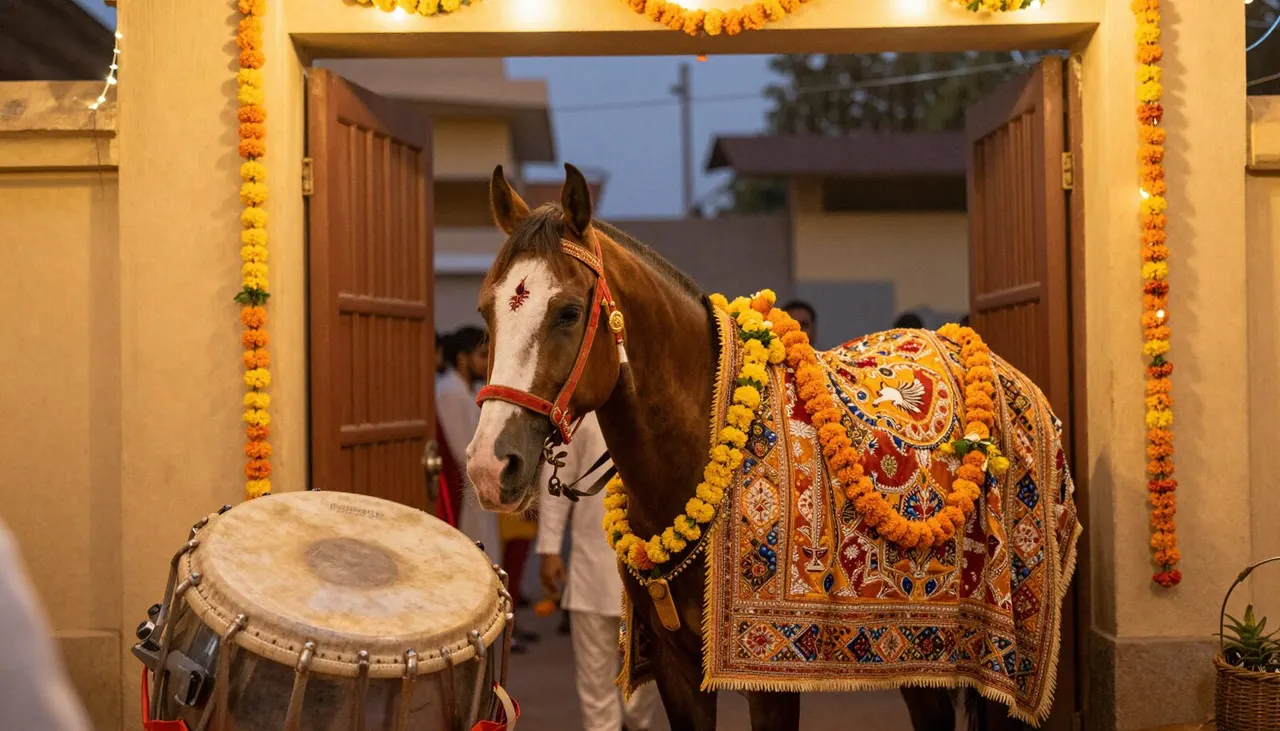
- The groom may arrive on foot, in a decorated vehicle, or occasionally on a horse, depending on family tradition and venue.
- The procession is usually energetic, with family and friends dancing alongside the groom as it moves.
- Coordinating timing with the venue matters, since a baraat can take longer than expected to reach the entrance.
- A mix of wide procession shots and closer reaction shots gives the fullest record of the moment.
What a baraat procession involves
A baraat is the traditional procession that brings the groom to the wedding venue, accompanied by family, friends, and often music. The groom may be accompanied by a band, drummers, or recorded music played through a sound system, with guests dancing alongside him as the group moves toward the venue entrance. In some families, the groom arrives on a decorated horse or in a car, while others keep the procession entirely on foot.
The scale and style of a baraat vary considerably depending on family preference and venue setting, with some kept relatively brief and others extended into a longer, more elaborate procession with a larger group of dancing guests. Close family members, including the groom's parents and siblings, are usually near the front of the group as it approaches.
How the groom's arrival is traditionally celebrated
The baraat is generally treated as a joyful, high-energy moment, marking the transition from preparation into the main wedding celebration itself. Music and dance are central to the atmosphere, and guests often participate actively rather than simply watching, which gives the procession a distinctly celebratory feel compared to more formal parts of the wedding.
At the end of the procession, some families include a greeting ritual between the groom's family and the bride's family before the wedding proceedings continue, marking the formal welcome of the groom's side to the venue. This greeting can involve an exchange of garlands or a short round of introductions between the two families before everyone moves on to the next part of the day.
Photographing a moving procession through public space
Because a baraat moves through a public or semi-public area, such as a car park, driveway, or building entrance, photographing it well requires a different approach from a seated ceremony. Positioning ahead of the group, rather than following from behind, generally gives clearer shots of the groom's expression and the dancing as it approaches, while a second position closer to the venue entrance captures the arrival itself.
For video coverage, capturing clear audio of the music amid crowd noise is worth planning for in advance, and discussing this with your wedding videography team helps avoid muddled sound in the final footage.
Coordinating the procession's timing with the venue
A baraat can take longer to reach the venue entrance than expected, particularly if the group stops to dance along the way, which means the procession's duration is worth discussing with family members organising it rather than assuming a fixed length. This affects when the rest of the day's schedule, including the greeting between families and the ceremony itself, can realistically begin.
If the venue has specific access points, noise considerations, or space limitations for a large group, it is worth checking these details in advance so the procession route can be planned around them. Some venues also restrict where music and drumming can be played, so confirming this ahead of time avoids surprises on the day.
Planning your photography and video coverage for the baraat
Sharing the expected route, approximate timing, and scale of your baraat with your photography and videography team well before the day helps them plan where to position themselves for both wide shots of the group and closer shots of the groom and his family. If the procession includes a horse, vehicle, or other specific element, flagging this in advance helps your team plan accordingly.
Because the baraat often marks the start of the more public part of the wedding day, having your team ready and positioned before the procession begins helps avoid missing the earliest, often most energetic moments of the arrival. It also gives them time to scout the surrounding area for safe, unobstructed vantage points before the crowd gathers.
If a baraat is part of your wedding day, sharing the route and timing with your team in advance helps them capture the arrival properly. Get in touch to plan coverage for your full wedding celebration.