
In short
Yes, a photography crew can cover both a morning solemnisation ceremony and a separate evening banquet in a hall on the same wedding day, as long as the schedule between the two is planned with a realistic buffer. This kind of split day is common, and the main planning task is coordinating travel and rest time between the two segments rather than anything about the photography itself. Families choosing this structure often do so to invite different guests to each part of the day, which the crew simply plans around.
- A morning solemnisation and an evening hall banquet on the same day is a common arrangement and can be covered by one crew.
- Build in a generous gap between the two segments for the wedding party to rest and prepare.
- Brief your photographer separately on each setting, since lighting and layout usually differ.
- A void deck or community hall often has different lighting and space constraints than a hotel ballroom.
- A well-edited gallery should present the whole day as one continuous story, not two separate shoots.
A morning solemnisation and an evening hall banquet in one wedding
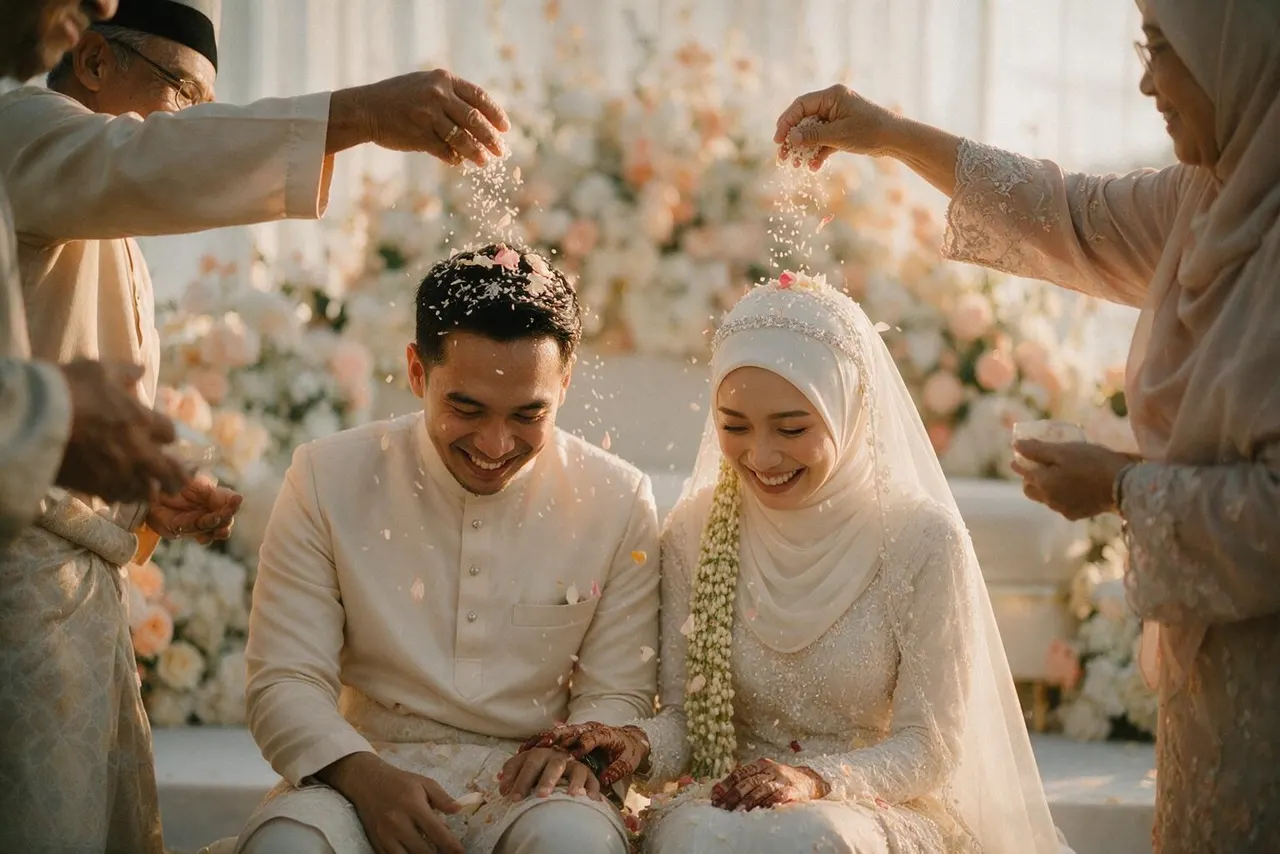
Some Malay weddings in Singapore hold the akad nikah or solemnisation in the morning, often at home, a mosque or another venue, and then hold the majlis, the reception, later the same day or on a different day, sometimes at a void deck, community hall or hotel function room. When both events fall on the same day, the photography crew needs to plan around the gap between them, which can range from a few hours to most of the afternoon.
This structure gives families flexibility to invite different groups of guests to each segment, but it does mean the photography brief needs to cover two distinct settings rather than one continuous event.
Coordinating the photographer's schedule between the two
The crew typically covers the morning ceremony, then has a break before returning for the evening majlis, using that window to review footage, recharge equipment and prepare for a different setting. This gap also gives the wedding party time to rest and change, which matters for how everyone looks and feels by the time the evening segment begins.
Confirm the expected timing of both segments with your photographer well in advance, including how flexible the gap needs to be if either part of the day runs behind schedule.
Some crews also use this window to back up the morning's files and do a quick review, so nothing from the earlier segment is at risk before the day is complete.
What to brief for each setting
The morning ceremony often involves close, intimate moments among family members, so briefing your photographer on who should be included and any specific traditions to capture, such as the exchange of vows or the signing of documents, helps them prepare. The evening majlis in a hall usually involves a larger crowd, a dais for bersanding if that is part of your celebration, and different lighting conditions depending on the venue.
Sharing photos or a floor plan of the hall ahead of time, along with your guest list expectations, lets the photographer plan positioning before arriving rather than working it out on the spot.
Mentioning who will be leading or officiating each part, such as the person conducting the akad nikah, also helps the crew know where to focus during the quieter, more formal moments.
Delivering a gallery that tells the whole day's story
Even though the morning and evening take place in different settings with different moods, an experienced photographer edits the full gallery so it reads as one wedding day rather than two disconnected events. This comes down to consistent tone and sequencing in the final gallery, presenting the day in the order it happened.
If you want the two segments treated as a single narrative, whether in your gallery or in a highlight film, mention this preference when you first discuss your day so it is planned for from the start. This is worth raising early, since it can affect how footage from both segments is organised during editing.
Questions worth asking before the day
Ask how the crew plans to use the gap between the two segments, whether they will need to travel between venues, and how they handle a schedule that shifts due to family timing on the day. It also helps to name one family member as a point of contact for last-minute updates, since coordination between two separate events benefits from a single clear channel.
Raising these questions early gives your photographer time to plan properly rather than adapting on short notice, which matters most on a day with two distinct segments to manage.
If your wedding day includes both a morning ceremony and a separate evening banquet, share the timing and both venues with us via contact, and see our guide on Malay wedding photography for more on how these traditions are typically covered on the day.