
In short
Berinai takes its name from inai, the Malay word for henna, and traditionally meant a series of henna ceremonies around a Malay wedding. The National Heritage Board’s Roots entry on henna notes that henna has particular cultural significance for the Malay and Indian communities in Singapore, while an NLB BiblioAsia account of Malay-Muslim weddings traces how the traditional berinai ceremonies were reduced and then largely disappeared. This guide sets out what each ceremony involved, what changed, and what to consider if henna is part of your own plans.
- Roots notes that in Singapore henna is used primarily by the Indian and Malay communities, especially during weddings and festive events, and is believed to convey prosperity, good health and well wishes.
- BiblioAsia describes three traditional berinai ceremonies: berinai curi, berinai kechil and berinai besar, each centred on a tepung tawar blessing.
- BiblioAsia notes that all three are rarely conducted today, partly because of the cost and time involved; by the 1980s only the berinai besar was commonly performed, and it too had disappeared by around the early 2000s.
- Whether your family plans any henna gathering, and in what form, is a family decision, so ask early.
- Good light matters for photographing the fine detail of henna patterns.
What henna is meant to convey
Roots’ entry on henna notes that in Singapore, henna is used primarily by the Indian and Malay communities, especially during weddings and festive events such as Deepavali and Hari Raya Puasa, and that it is believed to convey prosperity, good health and well wishes to those who use it, as well as serving as a form of beautification. It also records a belief that henna has cooling properties, which is one reason it has been applied to the hands and feet during crowded, potentially stressful events such as weddings in warm climates.
Roots adds that men may use henna too, and it gives the Malay word for henna, inai. Its description of a pre-wedding mehndi ceremony, with henna believed to symbolise protection, health and fertility of the bride, is written about the Indian community, so do not assume the same meanings apply to a Malay wedding; ask your family what the custom means to them.
The three berinai ceremonies: curi, kechil and besar
The BiblioAsia account of Malay-Muslim weddings describes three traditional berinai ceremonies, with the tepung tawar blessing as the central element of all three:
- Berinai curi, curi meaning “steal”, was traditionally held without the knowledge and consent of the groom’s side, usually in the evening two days before the nikah. The bridal party performed the tepung tawar for the bride before applying henna to her hands and feet.
- Berinai kechil, the small henna ceremony, was held the next evening and involved both the bride and the groom, who each underwent the tepung tawar separately, the groom first.
- Berinai besar, the big henna ceremony, was held right after the solemnisation, usually at the bride’s home, and comprised the tepung tawar and a photography session in which the bride might change outfits many times.
In the tepung tawar, BiblioAsia describes the person giving the blessing sprinkling rose water and yellow rice on the newlyweds and dotting henna and rice flour mixed with water on their palms. The same account notes that all three ceremonies are rarely conducted today, partly because of the cost and time involved: berinai curi and berinai kechil fell out of favour first, by the 1980s only the berinai besar was commonly performed, and it too disappeared by around the early 2000s. BiblioAsia also links the almost complete disappearance of the tepung tawar to its purported Hindu origins and a stricter adherence to Islam. Our guide to Malay weddings in Singapore covers where these customs sit in the wider sequence of the day.
If your family plans a henna gathering today
The sources used here describe the traditional ceremonies rather than a standard modern format, so how any henna gathering is arranged today, who attends and whether it includes a blessing is for your family to decide. Ask your parents and older relatives which, if any, parts of the tradition they would like to keep, rather than assuming based on other weddings you have attended.
Planning henna into your wedding preparations
Henna needs some time to develop before the colour is fully visible, so if you plan to wear henna, agree the timing with your henna artist and family in advance. Deciding who will attend, where it will be held and whether you want it documented helps the occasion run smoothly.
Henna is a separate custom from bridal preparation with a mak andam, which covers hair, make-up and attire closer to the wedding day itself. If you are planning both, along with other customs such as hantaran or a kompang procession, a simple written plan shared with close family keeps everyone clear on where and when to gather. Our guide to planning a wedding day timeline covers how to sequence several customs without overloading any one day.
Photographing henna
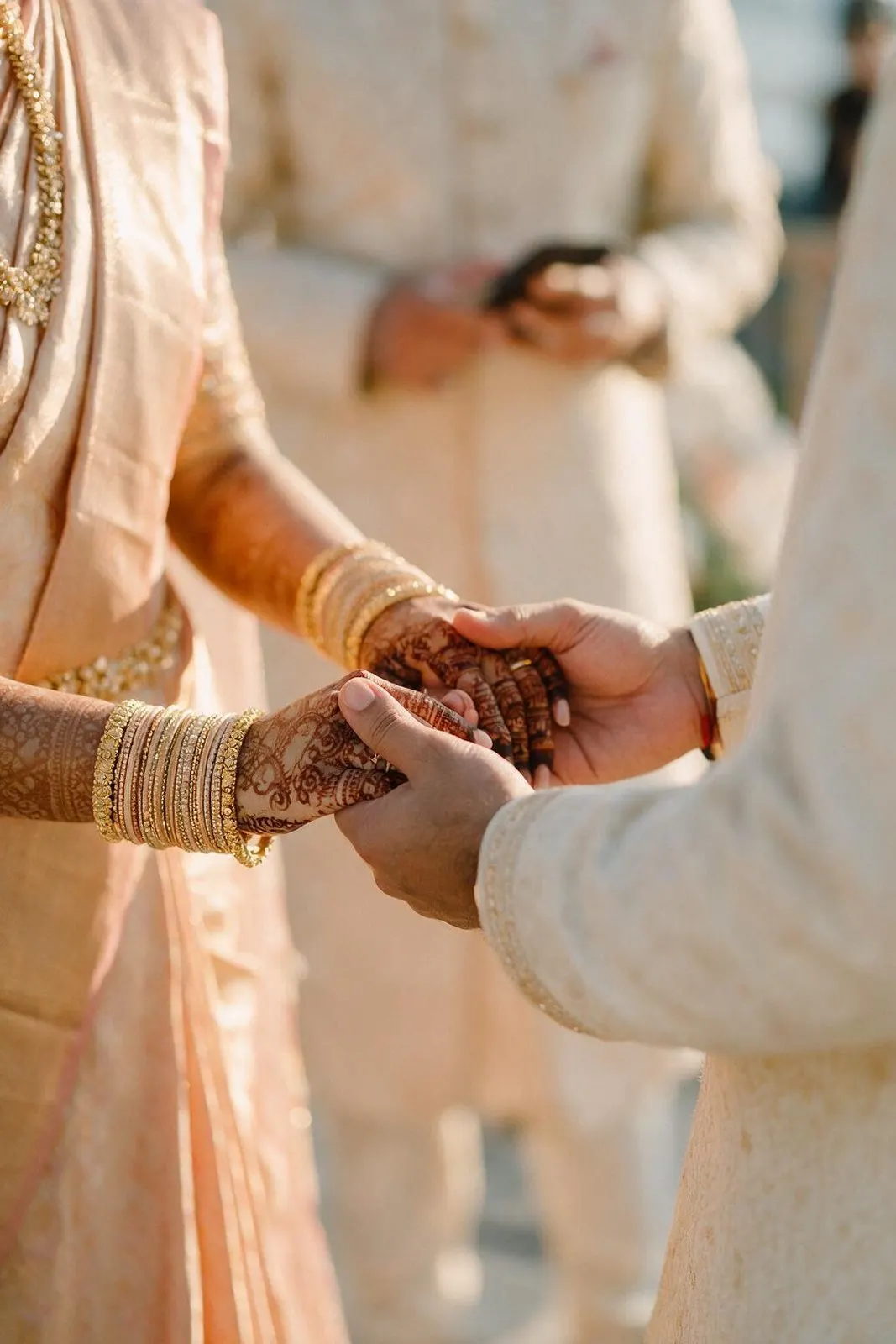
A henna gathering offers a different kind of photograph from the wedding day itself: close-up detail of the patterns, the concentration of whoever is applying them, and candid moments among family gathered around the bride. Good lighting matters here, since the fine detail of henna can be lost in a dimly lit room.
If you would like your henna gathering photographed, discuss the date, duration and coverage with your photography team in advance.
If your family plans a henna gathering, confirm the details together well ahead of the day. If you would like to talk through coverage for this or any other custom, check your date with us, or read more about our actual-day wedding photography.