
In short
Yes, a pet can be included in part of a pre-wedding shoot in Singapore, usually as a short segment at a pet-friendly location rather than across the whole session. Planning around your pet's comfort and having someone dedicated to handling them tends to make the segment go smoothly.
- A pet segment is usually planned as a short, separate part of the session rather than the whole shoot.
- Not every outdoor location welcomes pets, so this should be checked when the shoot location is chosen.
- Placing the pet segment early, before your pet gets tired or the outfits get more delicate, tends to work best.
- Briefing your photographer on your pet's temperament in advance helps them plan realistic expectations for the shots.
Why more couples want their pet in pre-wedding photos
For many couples, a pet is part of the household, so it can feel natural to want them included in photos that are meant to capture this stage of life together. A pet segment often becomes one of the more relaxed, candid parts of a shoot, since the focus shifts briefly away from posing and onto play.
This does not need to be a large production. Even a handful of frames with your pet, worked into an otherwise standard pre-wedding shoot, can become some of the most personal images in your final gallery. Couples who want this should raise it early, since it affects both the location choice and the outfits worn for that segment.
Not every pet enjoys new environments or unfamiliar people, so it helps to be realistic about how much your own pet can comfortably take part in.
Choosing a pet-friendly location for part of the shoot
Some parks, gardens and outdoor spaces in Singapore welcome pets on a leash, while others restrict or do not allow animals at all, so this needs to be checked specifically rather than assumed. A familiar spot, such as a park near your home where your pet already feels comfortable, is often an easier choice than an unfamiliar location purely because of how photogenic it looks.
Shaded, open areas tend to work better than crowded or enclosed spaces, since your pet has room to move and is less likely to feel boxed in by strangers or traffic. If your pet is more comfortable at home, a short segment there before heading out can also work well.
Discuss a shortlist of possible spots with your photographer so the pet segment fits naturally alongside your other locations for the day.
Timing the pet segment so everyone stays relaxed
Placing the pet segment earlier in the session, while your pet still has energy and before outfits risk getting muddy or covered in fur, generally works better than saving it for the end. A tired or overstimulated pet is harder to photograph well, no matter how patient everyone is.
Keeping this segment short and specific, rather than open-ended, also helps. A clear block of time, even just fifteen to twenty minutes, gives your photographer room to get a range of shots without the segment dragging on and testing your pet's patience.
If your pet needs breaks, water, or a familiar toy to settle, build that into the plan rather than treating it as an afterthought once you are already on location.
Briefing the photographer on your pet's temperament beforehand
Telling your photographer in advance whether your pet is calm, easily excitable, nervous around strangers, or prone to bolting after squirrels helps them plan a realistic approach rather than assuming every pet behaves the same way. This also shapes how close they get, what kind of prompts they use, and how much they rely on treats or toys to hold attention.
If your pet responds well to a particular command, sound, or person, mention this too, since it can be the difference between a distracted pet and a cooperative one. Sharing a recent photo or short clip beforehand can also help your photographer picture how your pet moves and reacts.
Being upfront about limits, such as how long your pet can realistically stay engaged, keeps expectations grounded for everyone involved.
Bringing a helper to handle your pet during the shoot
Having a friend or family member on hand purely to manage your pet, rather than expecting your photographer to also act as a handler, generally makes the segment run more smoothly. This person can hold the leash between shots, offer treats on cue, and step in quickly if your pet gets distracted or anxious.
This frees you and your partner to focus on the couple, rather than splitting attention between posing and pet-wrangling. It also means your pet has one consistent, familiar person managing them throughout, which tends to keep them calmer than being handled by someone they do not know.
If no one is available to help, let your photographer know in advance so they can plan the segment with that limitation in mind.
What to bring for your pet on the day
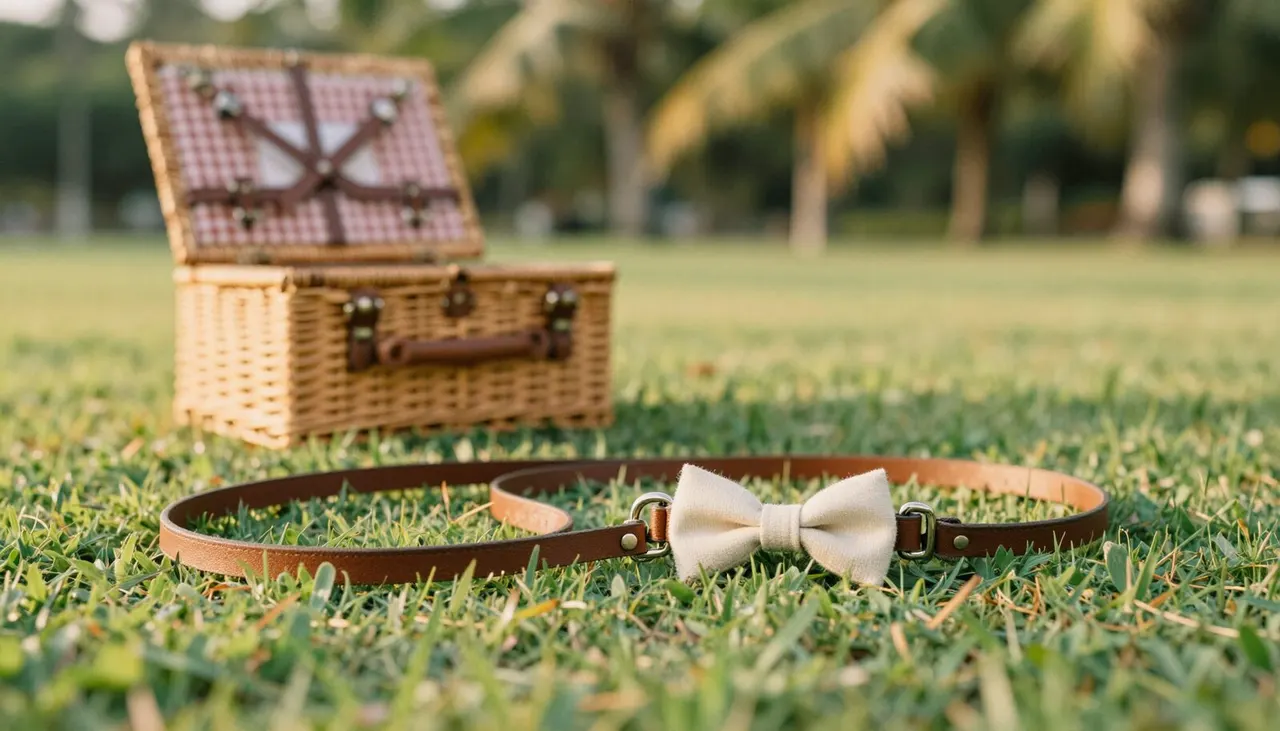
A leash your pet is used to, a favourite toy, a few treats, and water are worth packing regardless of how short the segment is expected to be. Familiar items tend to help a pet settle more quickly in a new environment than anything unfamiliar, even something designed to look nice in photos.
If your pet will wear anything for the shoot, such as a bandana or small accessory, test it at home beforehand to check they tolerate it comfortably, rather than introducing it for the first time on location. A towel or wipes are also useful in case of mud, water, or an unexpected mess.
Keeping this small kit ready and easy to grab means less scrambling once you are at the location with everyone waiting.
A pet segment works best when it is planned deliberately rather than added in on the spot, from choosing a comfortable location to briefing your photographer on what your pet needs. If you would like to talk through how this could fit into your own pre-wedding shoot, contact us and we can plan it together.