
In short
Photography time on ROM day is usually allocated across arrival, the ceremony itself, and a short session of portraits afterward, with the exact balance depending on how much time your venue allows and whether a banquet follows the same day. Having a short backup list of extra portraits ready is useful in case the ceremony finishes earlier than expected.
- Arrival and getting ready photos usually come first, even if this window is short for a ROM
- The ceremony itself is often brief, so photography needs to work efficiently within that window
- Portraits and group photos typically follow immediately after the ceremony, while everyone is still gathered
- The overall flow adjusts if a banquet or celebration is scheduled later the same day
From arrival and getting ready to the ceremony itself
Photography on ROM day typically begins with a short window covering arrival, whether that is you stepping out of a car, greeting witnesses, or a few quiet moments before the ceremony starts. This window tends to be brief compared with a full wedding day, since a ROM ceremony does not usually involve the longer hair and makeup preparation seen before a banquet.
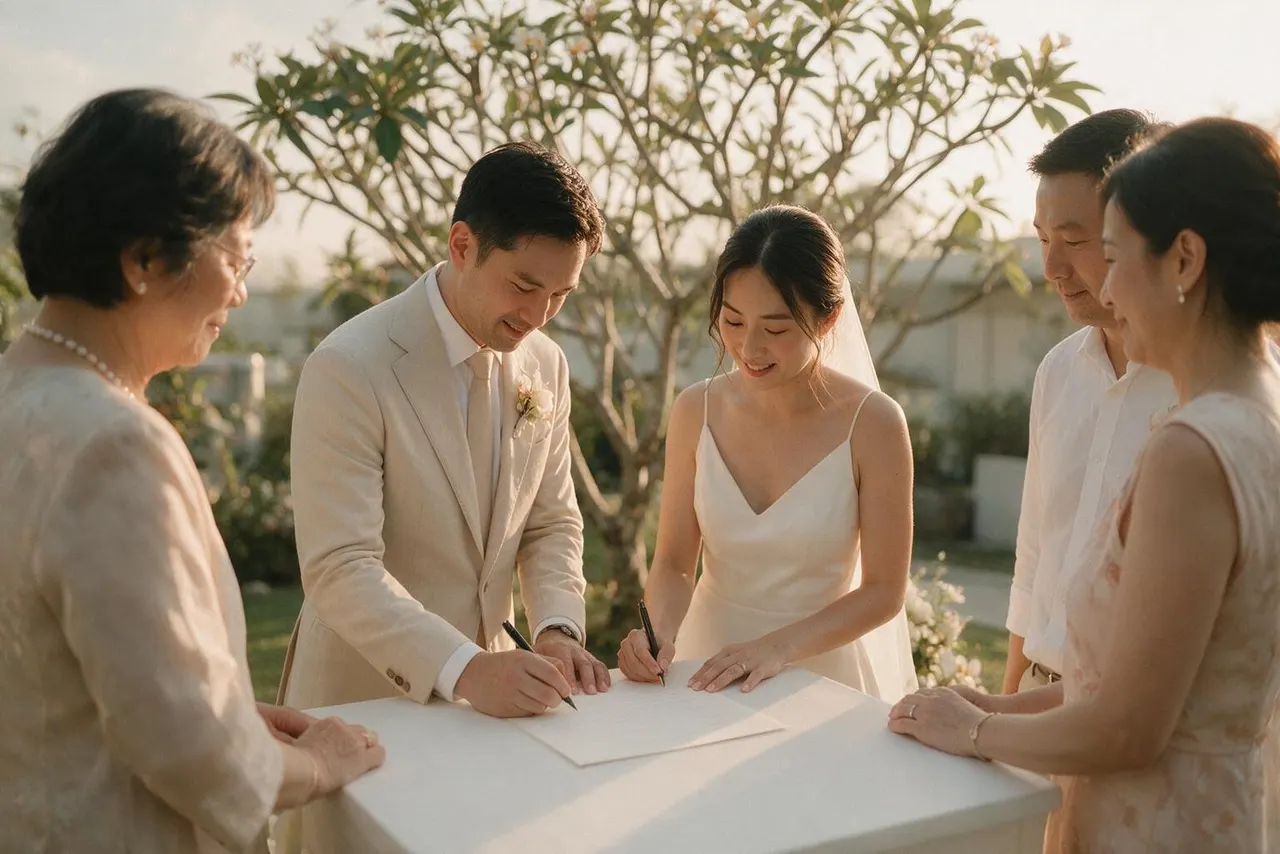
From here, the photographer moves into covering the ceremony itself, positioning to capture the exchange of vows, the rings if there are any, and the signing, all within what is often a fairly short and structured block of time on the day.
What happens right after the vows are exchanged
Right after the vows are exchanged and the signing is complete, there is usually a brief window of natural reactions, a hug, a smile, or a moment shared with witnesses standing nearby. Photographers often prioritise capturing this immediately, since it tends to be unscripted and does not repeat itself later.
This is also when any signing photos are taken, such as the two of you and your witnesses signing the ceremonial certificate, which is part of a Registry ceremony and optional at your own venue. Because this sequence happens quickly, a photographer working from a clear sense of the ceremony's running order can capture it more smoothly than one guessing at what comes next.
Portraits and group photos after the ceremony ends
Once the ceremony itself is done, the focus usually shifts to portraits, first of the couple together, then with witnesses, family or other guests who are present. How much time is available for this depends heavily on the venue, so it is worth confirming this with the registry or venue directly rather than assuming a fixed amount of time will be available.
At a less busy or private venue, there may be more flexibility to take a broader set of portraits in different spots. Either way, having a short, prioritised list of the group combinations you want photographed helps make efficient use of whatever time is available.
How this flow adjusts for a banquet happening later
If a banquet or celebration is planned for later the same day, the ROM photography timeline is usually kept tighter and more focused, since time and energy also need to go toward preparing for the event that follows. Some couples choose to keep ROM day photos simple and let the banquet be the larger, more elaborate photography occasion instead.
If there is a gap between the ceremony and the banquet, this can sometimes be used for a slightly longer portrait session, though this depends on your overall schedule and how much time you realistically have between the two events.
Why timelines can differ between the registry and a private venue
At the Registry of Marriages, photography time is shaped by whatever appointment schedule the registry sets, which is worth confirming directly since it can be tighter than at a private venue. A private venue, such as a home or a smaller booked space, generally offers more flexibility in pacing, since there is no external appointment schedule to work around in the same way.
Knowing which situation applies to your ceremony helps set realistic expectations for how much time photography will have, rather than assuming the same flow applies everywhere you might solemnise.
What to do if the ceremony runs shorter than expected
Some ceremonies move even more quickly than expected, leaving a little extra time before the next commitment of the day. If this happens, having a short backup list of a few additional portrait combinations ready means this extra time is not wasted deciding what to do next.
Discuss this possibility with your photographer beforehand so they have a sense of what to prioritise if time allows for a little more than the minimum plan, rather than improvising on the spot.
It also helps to build a small buffer into the overall plan wherever possible, since ceremonies can occasionally start a little later than scheduled due to factors outside anyone's control, such as an earlier appointment overrunning slightly at a registry venue. A little flexibility in the surrounding schedule reduces pressure on everyone involved. Keeping this in mind from the outset makes the whole sequence feel considered rather than rushed together at the last minute.
If you want help planning how photography time will be used on your ROM day, get in touch with your ceremony details and venue. We can help build a shot list that adapts to however much time you have.