
In short
Clear vow and speech audio on a wedding video usually comes down to placing a dedicated microphone close to whoever is speaking, whether that is a lapel microphone on the couple or a handheld one for speeches, rather than relying on the camera's built-in microphone from a distance across the room. This one decision generally has more effect on final audio quality than any other part of the setup.
- A dedicated microphone placed close to the speaker captures clearer audio than a camera's built-in microphone
- Lapel microphones are commonly used during vows, while handheld or podium microphones suit speeches
- Background noise in a busy banquet hall is managed through microphone placement and audio editing afterward
- Clear audio matters as much as the visuals, since vows and speeches are often rewatched for the words themselves
- Mention any planned speeches or readings to your videographer in advance so audio can be set up properly
Why clear vow and speech audio matters more than visuals alone
Many couples rewatch their wedding video specifically to hear the words exchanged during vows or said during a meaningful speech, which makes clear audio just as important as sharp visuals in these moments. A beautifully shot scene loses much of its value if the audio is muffled or hard to make out.
This is why an experienced videographer treats audio capture as a priority during vows and speeches, not an afterthought handled by whatever the camera happens to pick up from a distance.
Years later, it is often the words themselves that matter most to a couple watching their film again, more than any particular camera angle.
Microphone setups used during the ceremony and toasts
A lapel microphone clipped discreetly to the groom or worn by the couple is a common setup for capturing vows clearly, since it stays close to the speaker regardless of where they are standing or facing during the ceremony.
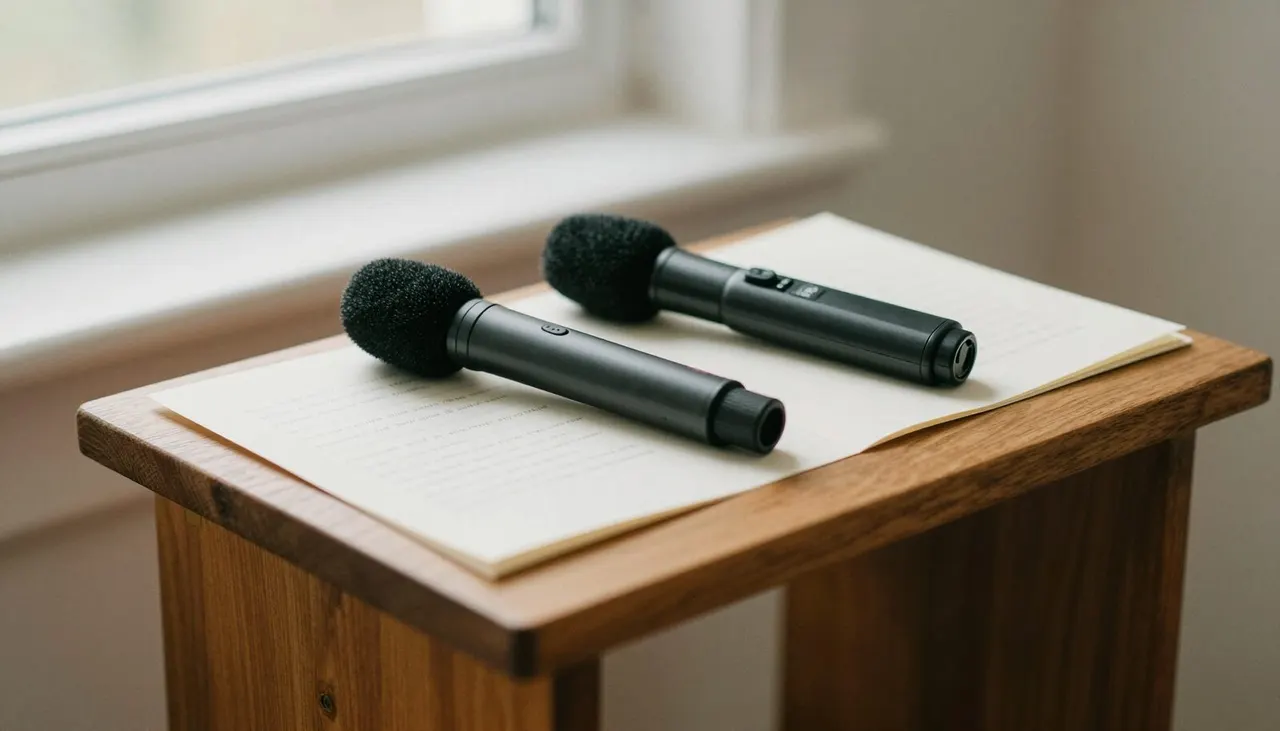
For speeches during the banquet, a handheld microphone or one connected to the venue's own sound system is often used instead, since speakers are usually standing at a fixed point such as a podium or table, making it easier to capture consistent audio throughout.
Using the right type of microphone for each moment, rather than one setup for the whole day, generally produces clearer results across both the ceremony and the banquet.
Handling background noise in a busy banquet hall
A banquet hall is rarely silent, with background chatter, clinking cutlery and music all competing with whoever is speaking. Placing a microphone close to the speaker helps prioritise their voice over this background noise from the outset, rather than trying to fix it entirely after the fact.
Some background noise is unavoidable in a live setting, so a small amount of ambient sound in the final video is normal and helps the recording still feel like it was captured in a real, lively room rather than an artificially quiet one.
An experienced videographer generally knows how much ambient sound to allow through without letting it overwhelm the speech itself.
What the final audio mix sounds like in your film
During editing, the audio from vows and speeches is balanced so that the spoken words come through clearly, while background music or ambient banquet sound is brought in at a lower level to support rather than compete with the dialogue.
The result is a mix where you can hear both the emotional core of what was said and enough of the surrounding atmosphere to remember what the room felt like on the day.
Getting this balance right takes a careful ear during editing, which is part of why audio deserves as much attention as the visual cut.
Planning ahead for speeches and readings
If you know in advance who will be giving a speech or reading during your wedding, share this with your videographer so a microphone can be set up and ready in time, rather than being arranged hastily once someone is already walking up to speak.
This is particularly useful if a speech is unplanned or added at short notice, since knowing roughly how many speeches to expect helps the audio setup keep pace with the programme.
A short list shared ahead of time, even if it changes slightly closer to the day, gives your videographer a useful starting point.
What to check with your venue about the sound system
Some venues have their own sound system already set up for speeches, which a videographer may be able to connect into directly for a cleaner audio feed than a standalone microphone alone. Checking this with your venue ahead of time can improve the final result.
If the venue's system is not accessible or suitable, your videographer will usually bring their own microphone setup as a reliable alternative, so this should not be treated as a blocker either way.
Either way, raising this question with your venue early gives your videographer time to plan around whichever setup is available on the day.
If you want to talk through audio setup for your ceremony and speeches, get in touch and we can plan this as part of your coverage.