
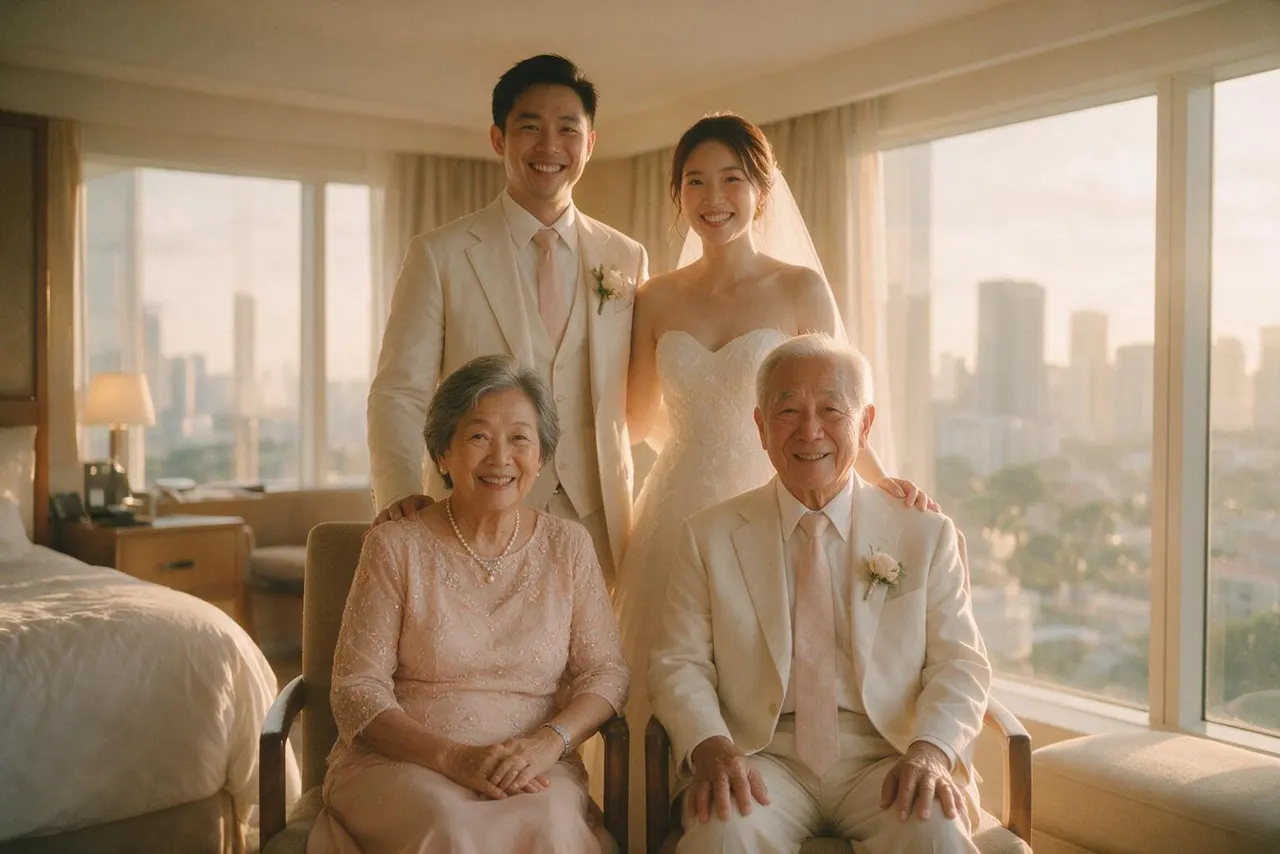
In short
You can ask your photographer to spend less time on posed group photos and more on candid, documentary-style coverage, as long as you tell them this preference before the day. A shorter, well-organised family photo list still captures the formal shots that matter, leaving more time for natural moments elsewhere in the programme.
- Couples can ask for less time on formal group photos without losing key shots.
- A shorter, well-planned family list is usually more effective than a long one.
- Documentary coverage fills the gaps around the formal photo segment.
- Briefing your photographer on this balance in advance matters more than briefing on the day.
- Setting expectations with family members ahead of time keeps the segment moving smoothly.
Why couples want less time on posed group photos
Many couples find that a long, formally posed family photo session eats into time that could go toward the parts of the day they most want more of, such as mingling with guests or having a quieter moment together. Standing through a lengthy list of group combinations can also feel repetitive for the couple and for the family members waiting their turn.
This does not mean formal photos are unimportant. It usually means couples want the list trimmed to the combinations that genuinely matter, with the rest of the time given over to more natural, documentary-style coverage.
How to brief a photographer on the balance you want
Tell your photographer early, ideally when you first discuss your programme, that you want less time spent on posed groups and more on candid coverage. This gives them room to plan the day's schedule differently from a default that assumes a longer formal session.
It also helps to be specific about what candid coverage means to you, whether that is more shots of guests interacting, more attention on quiet in-between moments, or simply a looser, less directed style throughout the day rather than only during the formal segment.
Putting this preference in writing, even briefly in an email, gives both sides something to refer back to as the day approaches, rather than relying on a single conversation from months earlier.
Keeping the family list efficient without losing key shots
A shorter family photo list works best when it is organised in advance rather than decided on the spot. Grouping combinations logically, for example moving from immediate family outward to extended family, reduces the time spent repositioning people between shots.
Sharing this list with your photographer beforehand, and having someone designated to help gather family members quickly on the day, keeps the segment efficient. This way you lose time, not shots, by trimming the list thoughtfully rather than cutting it at random.
It helps to name the combinations that matter most to you specifically, rather than leaving the photographer to guess. A short written list, shared a week or two before the day, is usually enough.
What a documentary-style photographer does differently
A documentary approach means the photographer spends more of the day observing and reacting rather than directing poses. This usually shows up as more candid shots of guests talking, laughing, or reacting to a moment, rather than everyone looking at the camera on cue.
It does not mean the photographer disappears entirely. Key moments like the ceremony, the couple's entrance, or a toast still benefit from some positioning and anticipation, but the emphasis shifts toward capturing what is already happening rather than arranging it.
This style also tends to produce a wider variety of images across the gallery, since the photographer is moving through the room and responding to different pockets of activity rather than staying fixed in one spot for long stretches.
What documentary coverage fills in around the formal photos
The time saved from a shorter formal photo session typically goes toward candid coverage of getting ready, guests arriving, small interactions between the couple and their families, and reactions during the ceremony or banquet. These moments are harder to plan for directly, which is part of why they benefit from a photographer who has more time free to watch for them.
Couples often find these candid images become some of their favourites from the gallery, precisely because they were not staged.
This kind of coverage also tends to work well alongside a highlight film, since a videographer following the same loose, observational approach can capture similar in-between moments on video rather than only the planned segments.
Setting expectations with family members beforehand
A shorter, faster-moving family photo segment works more smoothly when relatives know what to expect in advance. Letting close family know roughly how the list will run, and asking them to stay nearby during that window, reduces delays caused by people wandering off between shots.
This is especially useful for combinations involving elderly relatives or young children, where gathering everyone quickly makes a real difference to how relaxed the segment feels for everyone involved.
A parent or sibling who knows the family well can also help round people up between combinations, which keeps the segment moving without the photographer needing to leave their position to search for the next group.
If you want to plan a balance between posed and candid coverage for your own day, get in touch and we can talk through your programme together.