
In short
A wedding photographer for a church ceremony in Singapore typically stays through the arrival, the vows and the recessional, then moves with the couple and wedding party for portraits before travelling on to the banquet. The flow is continuous, but each stage, the church, the portrait session and the banquet, calls for a slightly different approach from the photographer. Planning realistic timings for each stage in advance keeps the whole sequence running smoothly.
- Coverage typically runs from arrival through the vows, recessional and post-ceremony portraits.
- Church rules on flash, movement and photography positions vary and should be confirmed in advance.
- Portrait time between the ceremony and banquet should be planned into the schedule, not left open-ended.
- Travel time to the banquet venue needs its own buffer, separate from the portrait session.
- A consistent editing style ties the church, portrait and banquet segments into one gallery.
Coverage from the church arrival through the vows
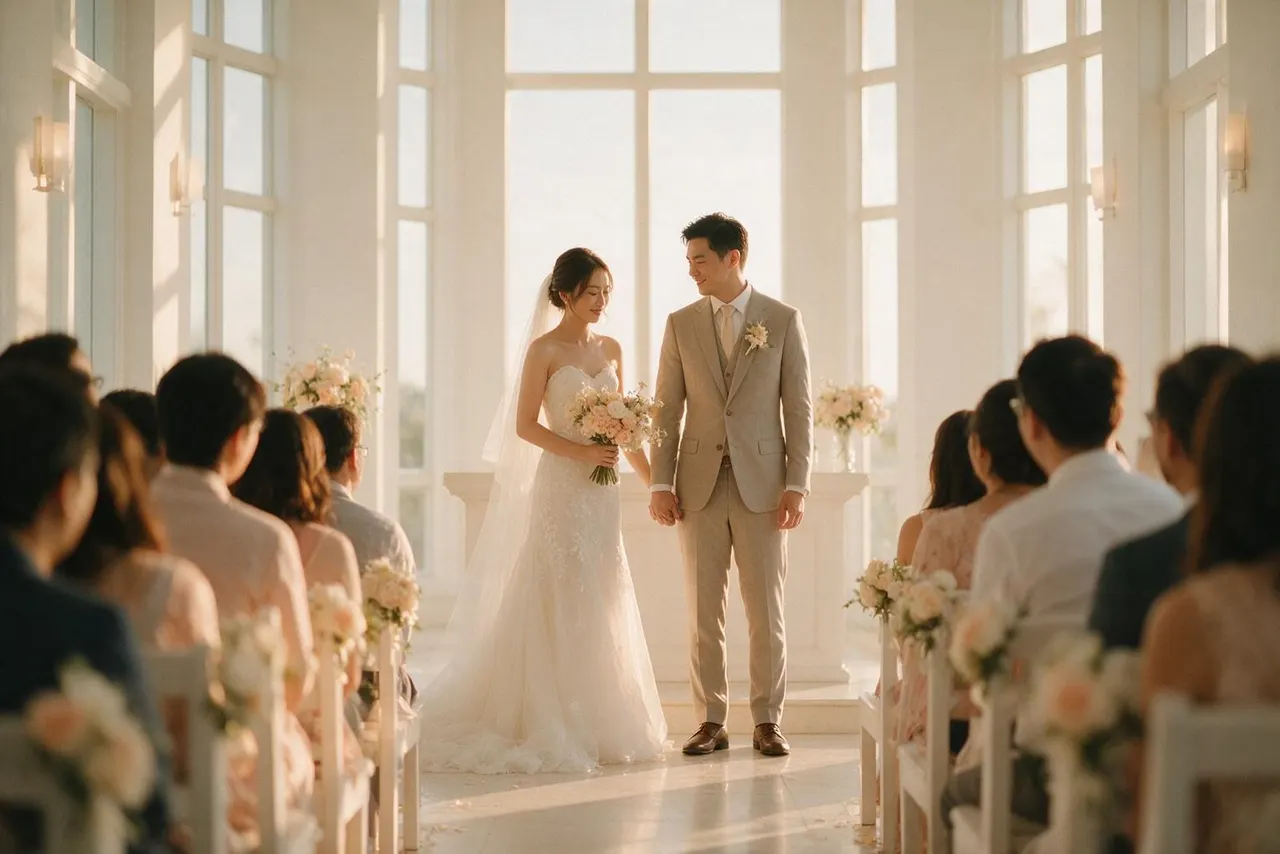
Coverage generally begins with the couple's or wedding party's arrival at the church, continues through the processional, the vows and any readings, and includes the recessional as the couple exits. Some churches have specific rules about where a photographer can stand, whether flash is permitted during the ceremony, and whether movement around the altar is restricted, so these should be confirmed with the church directly ahead of time, ideally when you first book the venue rather than close to the wedding date.
A photographer familiar with your specific church, or willing to check its rules in advance, can plan positioning that respects the venue while still capturing the vows and key reactions clearly, without needing to work these details out during the service itself.
Portraits after the ceremony before heading to the banquet
After the ceremony, couples generally take a block of time for portraits, often on the church steps, in the surrounding grounds, or at a nearby location if time allows. This session should have a planned length built into the schedule, since it is easy for portraits to run longer than expected once family groupings and wedding party shots are included.
If you want a specific type of portrait, such as an extended couple session away from the group shots, mention this when planning the timeline so enough time is set aside for it before you need to leave for the banquet, rather than trying to add it in once the schedule has already been agreed.
Handling the transition between the two locations
Once portraits are done, the crew and wedding party travel to the banquet venue, and this transition needs its own buffer separate from the time spent on photographs. Traffic and parking at the banquet venue can add unexpected time, particularly if the venue is some distance from the church or if travel falls during a busier period of the day.
Confirming a realistic departure time from the church, based on both the portrait schedule and the drive to the banquet venue, helps avoid a rushed arrival that cuts into pre-banquet preparation time, and gives the wedding party a moment to settle before guests start arriving.
What differs at a hotel banquet versus a restaurant afterward
Arriving at a hotel banquet after a church ceremony often means a larger space with more room for the crew to reposition and prepare for the march-in, while a restaurant banquet may require quicker, more compact positioning given tighter aisles and seating. Lighting conditions also shift from natural daylight at the church to indoor lighting at the banquet, which changes the photographer's technical approach and the equipment they choose to have ready.
Despite these differences, the coverage priorities, capturing the march-in, toasts and key reactions, stay consistent regardless of which type of venue follows the church ceremony. Sharing the banquet venue in advance means the photographer arrives already thinking about how the space affects positioning.
Briefing your photographer on the full flow
Share your church's specific rules, your planned portrait locations, and your banquet venue details with your photographer well before the wedding day, so the full flow from ceremony to banquet is planned as one continuous sequence rather than three separate bookings. This is also a good time to mention any family members who should be prioritised for portraits given limited time, and to flag anyone who may need to leave earlier than the rest of the group.
A clear picture of the whole day helps the photographer manage pacing, particularly around the portrait session, which is often the part of the day most at risk of running late. Reviewing this flow together before the wedding also gives you a chance to flag anything you feel has been left out.
If your wedding includes a church ceremony followed by a banquet, share your church's rules and your full schedule with us via contact, and see our guide on church wedding photography for more detail on this coverage.