
In short
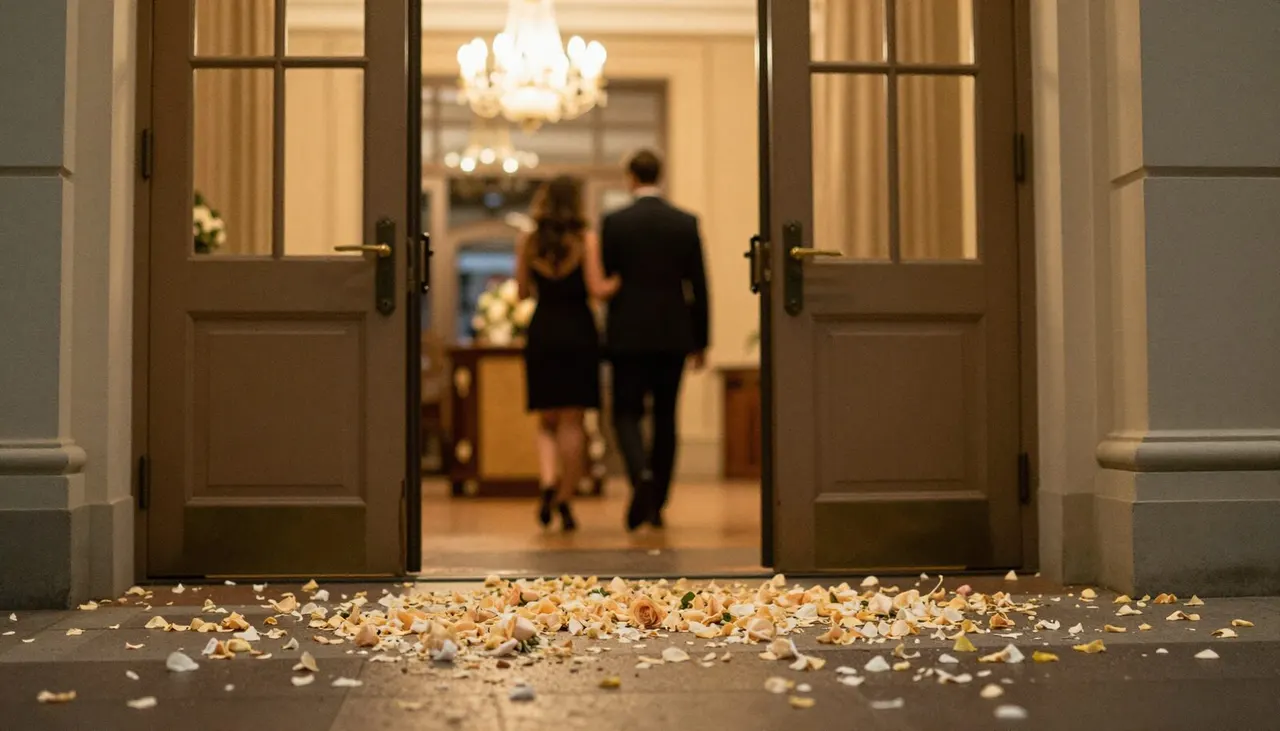
March-in photography covers the couple's entrance into the banquet hall, including the walk itself, the guests standing and reacting, and the moment the couple reaches the stage or head table. A photographer usually positions at the entrance first, then moves to capture the room's reaction as the couple passes through.
- March-in coverage includes the entrance walk and the guests' reactions, not just the couple.
- Photographers typically reposition partway through to catch both angles.
- Two separate march-ins for both families need a plan agreed on beforehand.
- The march-in sits within a wider actual-day timeline that shapes when it happens.
- Briefing your photographer and emcee together keeps the segment running smoothly.
What the march-in segment involves
The march-in is the couple's formal entrance into the banquet hall, usually accompanied by music, sometimes an announcement from the emcee, and applause from seated guests. It often marks the start of the evening's programme, following any earlier segments such as a solemnisation or tea ceremony held elsewhere.
For photography, this segment is less about a single posed shot and more about a short sequence: the doors opening, the couple's first steps in, their expressions, and the room responding. It usually lasts only a minute or two, so a photographer needs to know exactly where to stand before it begins.
Because it happens only once and moves quickly, there is little room to redo a missed angle. This is one reason experienced photographers treat the march-in as a segment that needs its own short plan, separate from the rest of the banquet coverage, rather than something to improvise on the spot.
Positioning for the couple's entrance and guest reactions
A common approach is to position near the entrance for the first few steps, capturing the couple walking in together, then move quickly to a wider angle that takes in the guests standing and reacting as the couple passes their tables. Some photographers work with a second shooter so both angles are covered at the same time rather than one after the other.
Lighting in a banquet hall can shift quickly during this segment, especially if there are spotlights or a change in the house lights timed to the entrance, so photographers familiar with the venue's typical setup tend to adjust faster.
Sound and music cues also matter here, since the tempo of the entrance music often signals how quickly the couple will be walking, which in turn affects how much time the photographer has to move between positions. A brief walkthrough with the banquet team beforehand helps confirm this.
Handling two separate march-ins for both families
Some banquets include two march-ins, one for the couple and another separately for one or both sets of parents, particularly at larger family-led celebrations. This means the photographer needs a plan for covering both entrances without missing either, which usually involves repositioning between the two or, again, working with a second shooter.
If your banquet includes two march-ins, tell your photographer well before the day so they can plan positioning and check the running order with your emcee in advance.
The gap between the two entrances also matters. A longer gap gives the crew time to reset and reposition calmly, while a short gap means the plan needs to be tighter, with positions agreed on in advance rather than decided in the moment.
How this fits into the wider actual-day timeline
The march-in is only one segment within a longer actual-day timeline that may include getting ready, a ceremony, portraits, and the rest of the banquet programme. Where it falls in that timeline affects how much daylight or venue lighting is available, and how much time the crew has to reset equipment beforehand.
Reviewing your full timeline with your photographer, not just the march-in itself, helps them plan realistically for what happens immediately before and after this segment.
If the march-in follows straight after a tight earlier segment, such as a ceremony that ran long, the crew may need to adjust on the fly. Building a small buffer into the schedule around the march-in gives everyone, photographer included, a bit more room to work with.
Working with the emcee and banquet team
The march-in usually runs on the emcee's cue, so it helps for your photographer to know roughly when it will happen and whether there will be any special effects such as confetti, sparklers, or a change in lighting. A short conversation between your photographer and emcee before the event, even briefly, tends to prevent both from being caught off guard.
Banquet staff also play a role, since they often manage the doors or curtains the couple walks through. Confirming this chain of communication ahead of time means the segment runs smoothly for everyone involved, not just the photography.
What to brief your photographer before the march-in
A short briefing beforehand helps your photographer plan for a segment that only happens once. Useful details include the entrance point, whether there are two march-ins, any special effects planned, and where you would like the emphasis to fall, on the couple, on guest reactions, or both equally.
- Where will the couple enter from, and is there more than one entrance?
- Are there two separate march-ins to plan for?
- Will there be lighting changes, confetti or other effects?
- Do you want more emphasis on guest reactions or on the couple?
To talk through how march-in coverage would work for your own banquet programme, visit our wedding photography page for more on how actual-day coverage is planned.