
In short
Choosing a temple for a wedding ceremony or blessing in Singapore, such as Sri Mariamman Temple or Sri Srinivasa Perumal Temple for Tamil temple weddings, means working within the temple's own layout, timing and etiquette rather than a venue built for private events. Photography needs to be planned around the ceremony itself, with attention to respectful positioning and briefing your photographer well in advance on what to expect before the day of the wedding.
- Temples such as Sri Mariamman Temple and Sri Srinivasa Perumal Temple host Tamil temple wedding ceremonies.
- Temple layout, lighting and available space differ from a hotel or banquet hall built for private events.
- Respectful positioning and briefing your photographer on etiquette matters as much as technical planning.
- The move from temple to banquet venue should be planned as part of your overall day schedule.
What to consider when choosing a temple for a ceremony
Temples such as Sri Mariamman Temple and Sri Srinivasa Perumal Temple host Tamil temple wedding ceremonies, and each has its own layout, capacity and scheduling that differs from a hotel or hall booked purely for private events. Because a temple continues to serve its regular religious functions alongside any wedding ceremony, it is worth discussing your planned date and timing directly with the temple well in advance rather than assuming a slot will be available.
Family preference and any existing connection your family has with a particular temple can matter as much as practical considerations like space or timing, so it is worth involving elders and close family members in the conversation early.
How temple layout and lighting affect photography
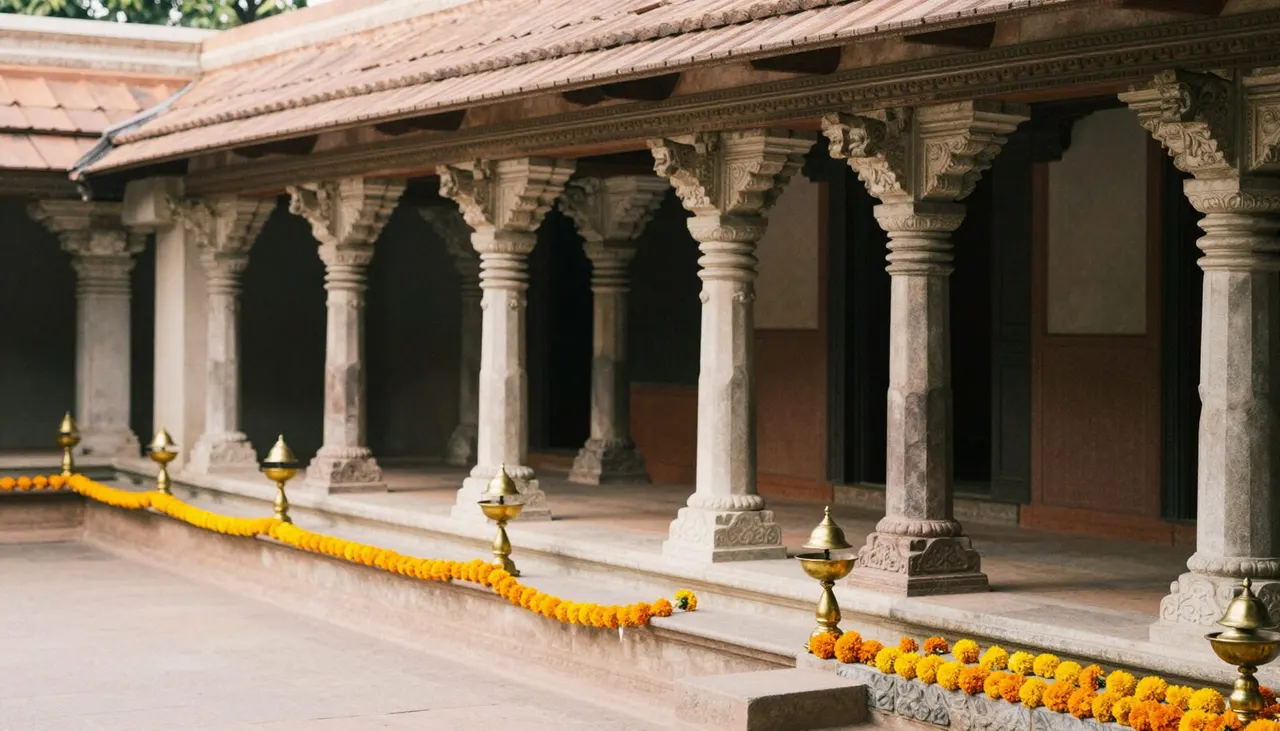
Temple interiors are generally designed around ritual and worship rather than photography, with lighting suited to the space's religious function rather than portraits, so your photographer needs to work with existing conditions rather than expecting a flexible, adjustable set-up. Ceiling height, column placement and the layout of the main hall all affect where photos can realistically be taken during the ceremony.
Because these conditions vary between temples, a photographer with prior experience covering Tamil temple weddings will generally have a better sense of how to work within a given space's lighting and layout.
Respecting etiquette while capturing key moments
Temple ceremonies involve specific rituals and etiquette, including appropriate positioning during certain parts of the service, that your photographer should be briefed on well before the day rather than learning on the spot. This includes understanding which moments are appropriate to photograph closely and which call for more distance and discretion out of respect for the ceremony itself.
Briefing your photographer alongside guidance from your family or the temple itself helps ensure coverage that captures the ceremony respectfully rather than intrusively, which matters both to your family and to other worshippers present at the temple that day.
Planning the move from temple to banquet venue
After the temple ceremony, moving your wedding party and guests to a separate banquet venue takes time, particularly if any additional photos are planned at the temple grounds before departure. Building a realistic buffer into your day's schedule avoids rushing this transition or arriving late to your banquet, and gives elders and guests time to make their own way over.
Sharing your full day timeline with your photographer, including the planned departure time from the temple, helps them plan any remaining photos without cutting into time needed for travel to the banquet venue.
Coordinating timing with the temple directly
Because temples operate on their own schedules alongside regular worship, confirming your ceremony timing, and how much time is realistically available for photography before and after, is worth doing directly with the temple rather than assuming flexibility. This is particularly relevant if your ceremony coincides with a period when the temple is also busier than usual with other worshippers and visiting families.
Passing this confirmed schedule to your photographer allows them to plan a realistic shot list around the temple's own timing rather than an assumed one, which reduces the chance of rushing key moments of the ceremony itself once things are underway.
What to brief your photographer about a temple ceremony
Let your photographer know which temple you have chosen, any etiquette or positioning guidance from your family or the temple, and your confirmed ceremony timing, so they can plan coverage that is both practical and respectful. This is especially useful if your photographer has not covered a ceremony at that specific temple before, so they can prepare rather than adapt on the spot.
It also helps to mention how this segment fits into your broader Indian wedding photography coverage, including any other ceremonies planned for the same day, so the temple portion fits into your overall shot list.
If you are planning a temple ceremony, get in touch to talk through timing and coverage, or see our guide on Indian wedding photography for how these ceremonies fit into a full day's coverage.