
In short
JW Marriott Hotel Singapore South Beach, on Beach Road, identifies the Grand Ballroom and Flow18 Sky Garden as wedding venues on its events page; Ebb6 Sky Garden appears in the capacity chart, but its availability for weddings needs confirmation. This guide sets out what the hotel and Singapore’s heritage sources state about the buildings, the spaces and their capacities, how an offsite civil solemnisation would work here, and what to confirm before booking.
- The hotel’s own events page lists the Grand Ballroom, inside a heritage building, alongside two outdoor Sky Garden spaces, Flow18 and Ebb6, each with capacities stated in guest numbers.
- Roots.gov.sg records four conserved buildings at South Beach: three blocks from the former Beach Road Camp and the former NCO Club, which it dates to 1952–53.
- A solemnisation at this hotel would be an offsite ceremony under the Registry of Marriages’ rules, not a ceremony at a Registry of Marriages site.
- The pages reviewed for this guide do not set out a photography or vendor policy for the Grand Ballroom or the Sky Gardens, so this is worth asking about directly.
What JW Marriott South Beach is
JW Marriott Hotel Singapore South Beach stands at 30 Beach Road. The hotel’s own events page, fetched 28 September 2026, says its Grand Ballroom sits inside one of three standalone heritage buildings on the property. The wider site, called South Beach, is described by Roots.gov.sg, the National Heritage Board’s heritage portal, as a development made up of four conserved historical buildings — Former Beach Road Camp Blocks 1, 9 and 14, and the Non-Commissioned Officers’ (NCO) Club — alongside two new towers.
Roots.gov.sg records that the former Beach Road Camp was a prominent military camp on the site, built in the 1930s and served as a headquarters for home-grown military forces handling recruitment, training and mobilisation. Block 9, the camp’s drill hall, was designed by architect Frank Dorrington Ward and was officially opened by Sir Cecil Clementi on 4 March 1933, housing the headquarters of the Singapore Volunteer Corps and the Straits Settlement Volunteer Force, as Roots.gov.sg records it. The hotel’s own events page separately states that its Grand Ballroom building was first built in 1933 as a drill hall for the former Straits Settlements Volunteer Force, though the pages reviewed for this guide do not explicitly confirm this is the same block that Roots.gov.sg names Block 9.
The fourth conserved building, the former NCO Club, is dated by Roots.gov.sg to 1952–53. BiblioAsia states that the clubhouse, designed by Palmer & Turner, opened on 17 December 1952 as the NAAFI Britannia Club for British forces; the government negotiated to buy the property in 1972, and it reopened as the NCO Club on 17 March 1974. All four buildings were gazetted for conservation by the Urban Redevelopment Authority in 2002, and South Beach Consortium was selected to develop the site in 2007, per Roots.gov.sg. BiblioAsia describes the resulting complex as a pairing of glass-encased twin towers built around the preserved low-rise structures.
Spaces the hotel lists for weddings
The hotel’s events page identifies the Grand Ballroom as a wedding venue in a 1930s heritage building, with a pre-function foyer, mezzanine, outdoor courtyards, a main ballroom with 10-metre-high ceilings, a Forest of Lights installation and a 15-metre by 10-metre LED wall. The page describes the Grand Ballroom as spanning over 700 square metres and elsewhere states that its building contains over 830 square metres of event space across three levels; these lower-bound descriptions are not necessarily inconsistent, so confirm the area included in your booking.
The hotel’s own capacity chart, which lists figures by layout style, gives the Main Ballroom level alone at 400 guests in a reception layout and 280 guests in a banquet layout. The ground-floor Foyer is listed at 150 guests in a reception layout and 60 in banquet, while the Mezzanine is listed at 50 in either layout. The chart gives separate capacities for other layouts too; ask the hotel which layout suits each part of your wedding.
The events page also lists two outdoor spaces at the hotel’s towers, called Sky Gardens. The page describes the Flow18 Sky Garden as a wedding venue offering an outdoor setting for events, surrounded by views of the city. The hotel’s capacity chart lists Flow18 at 100 guests in reception and 40 in banquet. The second space, Ebb6 Sky Garden, appears on the same chart at 50 guests in reception, with no banquet figure given; the pages reviewed for this guide do not describe Ebb6 as a wedding space in the way Flow18 is described, so ask the hotel whether it is offered for wedding use.
The Britannia Room is on the third floor of The NCO Club and is listed for meetings and special occasions, with capacities of 70 guests in reception and 60 in banquet; confirm whether it is available for weddings.
An offsite civil solemnisation at JW Marriott South Beach
For a civil marriage, a solemnisation here would be an offsite ceremony requiring the venue’s agreement, a licensed solemniser and completion of ROM’s application, declaration and marriage-licence requirements; offsite ceremonies may take place on weekends and public holidays. Coordinate the proposed venue, date and time with the hotel and your licensed solemniser before finalising arrangements. ROM says bookings can be made 3 to 6 months before the solemnisation date, and ROM notes that solemnisers may not be able to commit to a booking earlier than this. Submit the marriage application no earlier than six months and at least 21 days before the solemnisation, and arrange two witnesses who are above 21.
ROM’s own sites are separate from a hotel wedding: the Registry of Marriages at The Esplanade Mall (a temporary site while the Canning Rise building is redeveloped) and the Ficus Room at Gardens by the Bay, which holds a maximum of 40 people including the couple and witnesses. For an offsite solemnisation at JW Marriott Hotel Singapore South Beach, confirm the specific ceremony space with the hotel and arrange a licensed solemniser.
What the hotel states about photography and vendors
The events page states that Marriott Certified Wedding Planners are trained to assist couples, and are qualified to help with setting an event budget, deciding on a menu, arranging table settings, and finding florists, photographers, a band and other entertainment for the big day. This points to the hotel’s planners being able to help locate a photographer, but the pages reviewed for this guide do not state whether a couple may instead bring their own photographer or videographer, or whether an outside vendor needs approval beforehand.
For catering, the same page offers a traditional Chinese banquet or a selection of modern dishes for a wedding, and mentions a show kitchen and bar in the main ballroom for live culinary demonstrations. Ask the events team directly whether outside photographers and videographers are permitted for your booked space, whether a site visit or rehearsal is possible beforehand, and whether the Forest of Lights installation and LED wall can be used as a backdrop for portraits as well as for the reception programme.
Light and a wet-weather plan
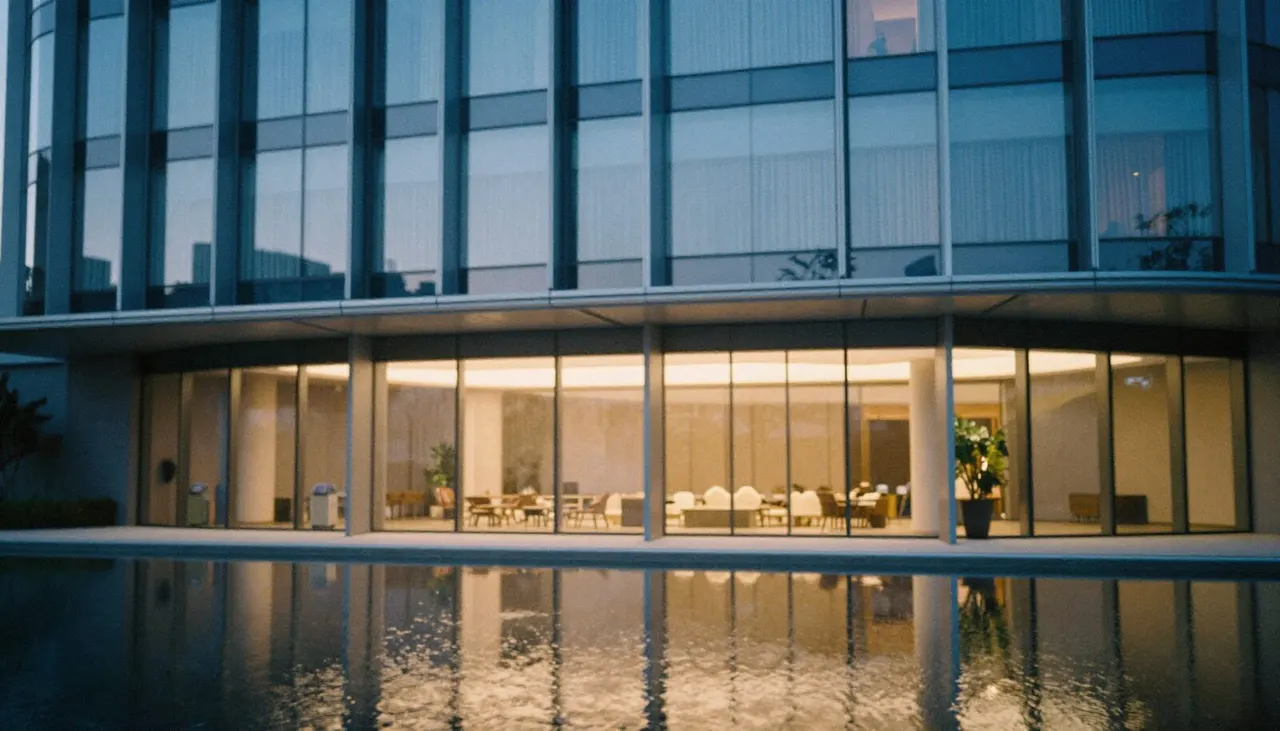
The Grand Ballroom is described on the hotel’s own page as combining classic art-deco and pillarless architectural features with a modern glass façade and designer interiors, though the page does not say which part of the room the glass faces or how daylight moves through it during the day. The Outdoor Courtyards named alongside the Pre-Function Foyer and Mezzanine are, as their name states, outdoor; the pages reviewed do not describe them as sheltered.
The two Sky Gardens are described as alfresco, open-air spaces at the hotel’s towers, with Flow18 said to offer views over the city. None of the pages reviewed for this guide state whether a covered backup area sits next to either Sky Garden. For any outdoor portion of your day at this hotel, ask whether an indoor alternative is available and what conditions apply.
What to ask before you book
Ask the events team which areas your booking includes, which spaces are available for your wedding and guest count, whether outside photographers and vendors are permitted, and, for any outdoor portion, ask whether an indoor alternative is available and what conditions apply.
If you are also planning an offsite solemnisation on the same day, coordinate the proposed venue, date and time with the hotel and your licensed solemniser before finalising arrangements. Our guide on how to find a solemniser in Singapore and our guide on how ROM solemnisation works set out the steps. For the rest of the day, our guide on building a wedding day timeline covers how much time to set aside between portraits and a banquet, our guide on crew size for a large banquet looks at coverage for a Grand Ballroom-sized guest count, and our guide on planning for wet weather at an outdoor wedding covers a backup plan for the Sky Gardens or the Outdoor Courtyards.
Prices, packages and space availability change, so confirm current details with JW Marriott Hotel Singapore South Beach directly before you book. If you would like to talk through coverage for the Grand Ballroom, a Sky Garden or an offsite solemnisation, check your date with us, or read more about our actual-day wedding photography.